
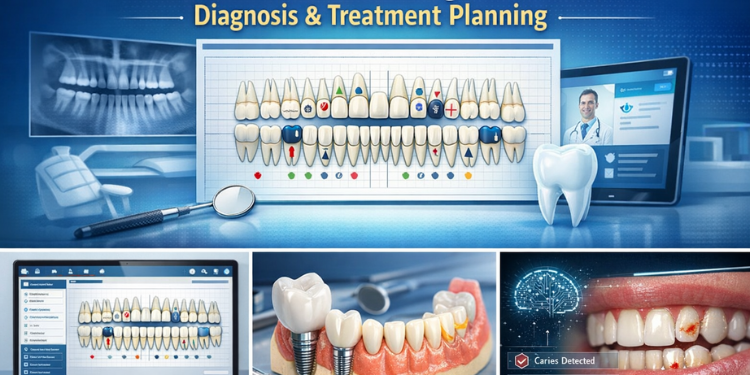
A dental odontogram is more than just a chart – it’s a roadmap for your oral health. Imagine having a complete, visual overview of your teeth, restorations, and dental history at your fingertips.
For dentists, this tool is essential in spotting problems early, designing personalized treatments, and tracking progress over time.
In this article, we’ll explore how odontograms support accurate diagnosis, efficient treatment planning, and better communication between dental professionals and patients.
What is an Odontogram
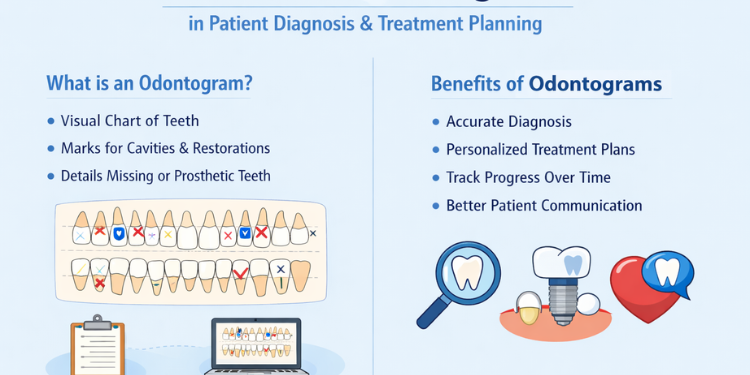
A dental odontogram is a detailed representation of a patient’s teeth and oral condition. It serves as a visual map that helps dentists organize information and plan care effectively. Key elements include:
- Schematic depiction of teeth for easy reference
- Notations for caries, restorations, and missing teeth
- Symbols for anomalies, prosthetics, and orthodontic appliances
Odontograms come in two forms:
- Paper-based charts are still used in many clinics
- Digital odontograms, integrated with EHR/EMR systems, offer real-time updates, easy sharing, and advanced visualization
Whether on paper or digital, the odontogram ensures that every dental detail is captured, creating a solid foundation for accurate diagnosis and treatment.
History and Evolution
Odontograms have come a long way. Traditionally, dentists recorded dental conditions manually on paper, which was effective but limited in accuracy and accessibility.
Today, digital solutions enable 3D visualizations, precise treatment tracking, and integration with advanced systems such as CAD/CAM.
These innovations have transformed odontograms from simple charts into powerful tools that enhance precision, collaboration, and patient care.
The evolution of odontograms reflects the broader trend of digitalization in dentistry, bringing efficiency and clarity to every step of treatment.
How Odontograms Help in Diagnosis
The dental odontogram is essential for understanding your oral health at a glance. Here’s how it supports diagnosis:
1. Collecting Comprehensive Data
- Track dental and periodontal problems clearly
- Record previous treatments and restorations
- Monitor daily oral hygiene habits and routine check-ups
2. Detecting Pathologies Early
- Identify caries, enamel defects, and tooth cracks
- Spot early signs of gum disease or other periodontal issues
- Track wear or damage to crowns, implants, and prosthetics
3. Monitoring Changes Over Time
- Compare your dental health across multiple visits
- Observe disease progression or improvement
- Adjust treatment plans based on real-time data
By providing a clear visual summary of your oral health, odontograms help dentists make informed decisions quickly, ensuring problems are treated before they become serious.
How Odontograms Improve Treatment Planning
Planning dental treatment can be complex, but odontograms simplify the process. They help dentists:
1. Assess the Whole Picture
- Evaluate the condition of every tooth and restoration
- Prioritize treatments according to urgency and patient needs
2. Create Personalized Plans
- Prosthodontics: crowns, bridges, or full-mouth rehabilitations
- Orthodontics: braces, aligners, and bite corrections
- Implantology: accurate implant placement and integration
3. Improve Team Communication
- Share precise information with specialists, hygienists, and lab technicians
- Standardize documentation to reduce errors
- Coordinate complex treatments seamlessly
With an odontogram, everyone on the dental team works from the same accurate map, leading to faster, more efficient treatments and a better patient experience.
Benefits of Using Odontograms
A well-maintained dental odontogram offers numerous advantages:
- Better diagnostic accuracy thanks to detailed visuals
- Consistent documentation across visits and specialists
- Easy comparison and analysis of progress over time
- Decision-making support for tailored treatment plans
- Enhanced patient understanding, helping patients feel confident about their care
Simply put, odontograms streamline the dentist’s workflow while empowering patients to participate in their treatment.
Digital Odontograms and the Future
The future of odontograms is digital, offering even greater capabilities:
- Integration with EHR/EMR systems for easy access and updates
- 3D modeling and visualization for prosthetics, implants, and restorations
- AI-assisted automation, using scans and templates for faster, precise diagnoses
Digital odontograms make the dental experience smoother for patients and professionals alike, saving time, reducing errors, and improving outcomes.
Practical Recommendations for Clinics
To make the most of odontograms, dental clinics should:
- Implement standardized charting schemes for consistency
- Train dental staff to use digital tools confidently
- Update odontograms regularly to reflect new treatments or changes
- Leverage digital platforms for storage, sharing, and analysis
- Integrate advanced technologies like AI, 3D scans, and specialized software
These practices enhance accuracy, efficiency, and patient satisfaction, while giving dental teams the tools they need to deliver high-quality care.
Conclusion
A dental odontogram is a powerful tool that brings clarity, precision, and efficiency to modern dentistry. From diagnosis to treatment planning and patient communication, it ensures every decision is informed and every outcome optimized. As technology advances, digital and AI-driven odontograms will continue to transform dental care, improving both the clinician’s workflow and the patient’s experience.