
The United States Embassy in Uganda has announced a temporary suspension of all visa services, citing concerns linked to an ongoing Ebola outbreak that has raised public health fears across the region.
In a notice on May 18, 2026, the embassy confirmed that all visa processing at its Kampala offices had been paused with immediate effect.
The decision affects all categories of visas, including tourist, student, and work permits, leaving many applicants uncertain about their travel plans.
The embassy said affected applicants had already been contacted directly regarding the changes to their scheduled appointments.
However, no clear timeline has been given for when the services will resume.
Travel Plans Thrown into Uncertainty
The suspension means that no visa interviews will take place during this period, and new appointment bookings have also been halted.
“At this time, no visa appointments can be scheduled at the U.S. Embassy Kampala, Uganda. We will update our website when appointment scheduling resumes and inform applicants directly when they can reschedule,” read part of the statement.
For many applicants, this has disrupted carefully planned travel schedules, including education and business-related trips.
Also Read: Woman Behind Viral Ruto Tattoo Dies After Horrific Attack
Some individuals had already secured interview slots and even finalized travel arrangements, including flight bookings and accommodation.
The embassy has urged applicants to remain patient and continue checking its official website for updates.
Officials say they will communicate once visa services resume and scheduling reopens.
The statement further said that the embassy will communicate once visa services resume and scheduling reopens.
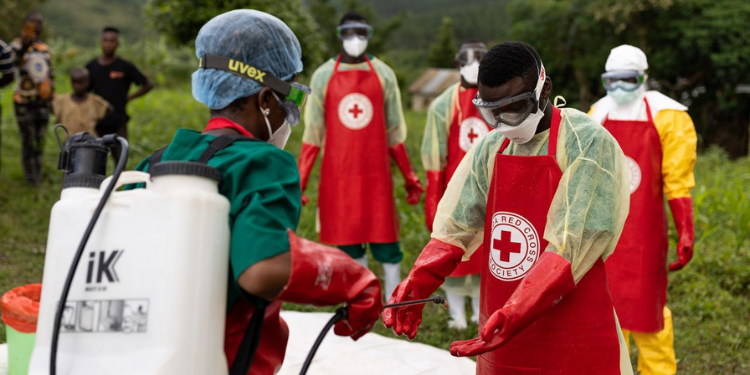
The move is part of efforts to manage risks associated with the Ebola outbreak, which has triggered heightened caution in several sectors.
Limiting physical interactions, especially in busy public service areas, is seen as a key step in reducing possible transmission.
300 Ebola Cases Reported in Uganda
Uganda is facing renewed concern after confirmed Ebola cases linked to the neighboring Democratic Republic of Congo (DRC), where the current outbreak began in early May 2026.
Also Read: Kenyans to Pay More for Electricity After EPRA Tariff Adjustment
Health officials say the virus has already crossed the border, with two laboratory-confirmed cases recorded in Uganda, including one death in Kampala.
The outbreak has escalated rapidly across the region, with the World Health Organization declaring it a Public Health Emergency of International Concern on May 17, 2026.
This followed reports of more than 300 suspected infections and at least 80 to 88 deaths, mostly in eastern DRC but with confirmed spillover into Uganda.
What makes this outbreak particularly dangerous is the strain of the virus involved.
Health experts have identified it as the Bundibugyo strain of Ebola, a rare variant first detected in Uganda in 2007.
Unlike some other strains, this one currently has no approved vaccine or specific antiviral treatment, making containment heavily dependent on early detection and supportive care.
Ebola is a highly infectious and often deadly disease. It spreads through direct contact with body fluids such as blood, vomit, saliva, sweat, or contaminated surfaces, rather than through the air.
Symptoms can appear between two and 21 days after infection, beginning with fever, headache, and weakness before progressing to vomiting, diarrhea, and, in severe cases, internal or external bleeding.
Uganda has experience dealing with Ebola, having recorded several outbreaks in the past, including a recent one in 2025.
During that outbreak, the country reported 14 cases and 4 deaths and successfully contained the virus through aggressive contact tracing and isolation.
However, experts warn that Uganda remains vulnerable due to its porous border with DRC and frequent cross-border movement for trade and family ties, which makes it easier for the virus to spread if not quickly contained.
The Ugandan government has since stepped up surveillance, border screening, and emergency response measures.