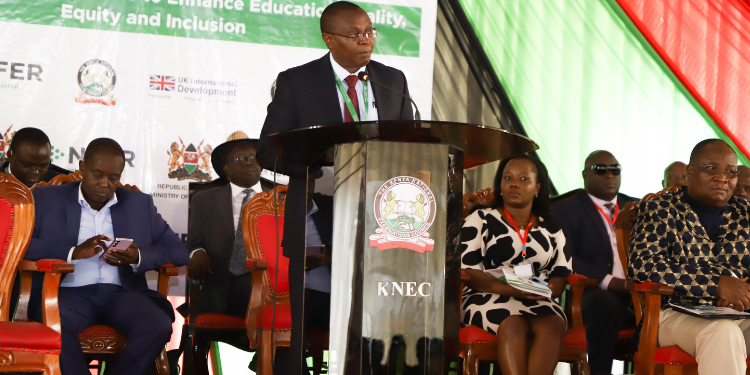

The Principal Secretary for the State Department of Technical and Vocational Education and Training (TVET), Esther Muoria, has announced that TVET graduates will no longer wear traditional academic gowns during graduation ceremonies.
Speaking during the 6th graduation ceremony of the Nyeri National Polytechnic on April 17, Muoria stated that graduands will now be required to wear attire reflective of their areas of training, in a move aimed at reinforcing the identity of technical education.
“Finally, I want to announce that in TVET we have Technical departments, TVET is not academic. So, starting with the next graduation, we are not going to graduate our students in gowns. For those who are now graduating in gowns, you are forgiven; this is the last time, no more gowns,” she said.
PS Esther Muoria Directs TVETs to End Use of Traditional Graduation Gowns
Muoria said the change is meant to clearly distinguish graduates by profession during graduation ceremonies, noting that the previous uniform gown system masked the diversity of technical specialization.
Giving examples, Muoria said the mechanics will graduate in overalls, chefs in culinary uniforms, while other fields will adopt appropriate industry-based attire.
In February 2023, Muoria disclosed that the government is in the process of coming up with a national uniform for all TVET institutions in the country.
She also said that the plan was part of the department’s efforts to improve educational standards.
Also Read: Govt Bans Schools From Selling Uniforms
Growth of TVET Institutions
The PS also reaffirmed the government’s commitment to strengthening the TVET sector through expanded infrastructure, modern equipment, and increased training capacity.
To support the rising enrolment, which has grown from 350,000 students in 2022 to 850,000 currently, the State plans to recruit 1,000 additional trainers.
Muoria further said the ongoing retooling of trainers under the Competency-Based Education and Training (CBET) program is being conducted through the Kenya School of TVET, with overflow trainees being accommodated in other approved institutions to ensure wider access to training.
Also Read: Storm as Ministry of Education Takes Firm Stand on Scrapping Diploma in ECDE
At the same time, she urged TVET institutions to pursue financial self-sufficiency by developing alternative sources of income, citing pressure on public resources and competing national demands.
The PS encouraged institutions to adopt sustainable cost-cutting measures such as solar power systems and rainwater harvesting to reduce operational expenses.
In addition, she challenged TVETs to maximize their internal technical capacity, particularly in construction-related departments, rather than outsourcing projects.
She noted that institutions should increasingly rely on their own students and trainers to develop infrastructure, reducing costs and enhancing hands-on learning.