Hezbollah has announced a fresh wave of attacks on Israeli forces in southern Lebanon.
The Lebanese group said it carried out several attacks against Israeli forces late Tuesday, May 12, as cross-border hostilities intensified amid the broader regional crisis tied to the ongoing U.S.-Israel war on Iran.
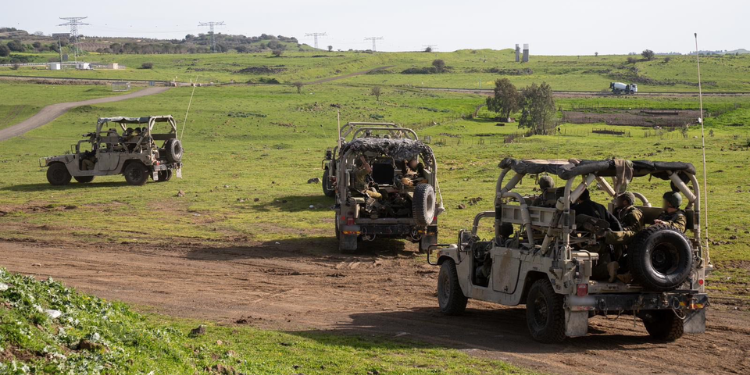
According to a report by Al Jazeera, Hezbollah said its fighters directly struck an Israeli Merkava tank in the Iskenderun area before later targeting another Merkava tank with a guided missile in the Ain el-Ouadi area between the towns of Biyyada and Bayt al-Sayyad.
Hezbollah targets Israeli forces
The group said artillery shells and rocket barrages were also launched against Israeli forces remaining in the area.
Earlier, Hezbollah announced additional operations targeting Israeli troops in southern Lebanon, saying the attacks were carried out in response to Israeli ceasefire violations and strikes on Lebanese villages.
Also Read: Israeli Forces Kill High-ranking Hezbollah Commander in Beirut
The armed group said it launched a “squadron of attack drones” against Israeli soldiers gathered in the Qouzah triangle and later conducted another drone strike targeting troops in the town of Rashaf.
The renewed attacks came as the wider Middle East conflict continued to deepen following weeks of fighting involving the United States, Israel and Iran.
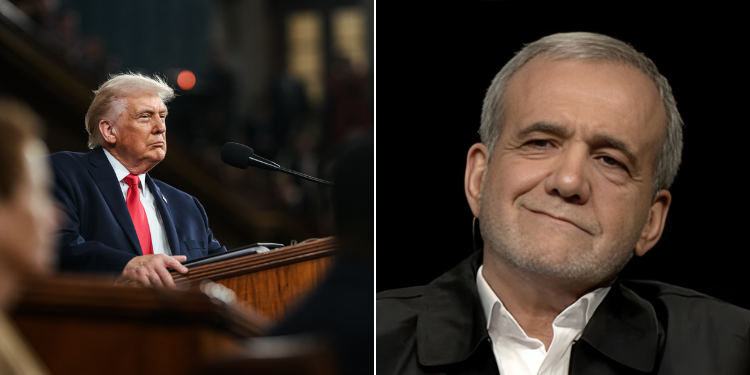
U.S. President Donald Trump earlier on Tuesday told reporters before departing for China that the conflict with Iran would end soon.
“As soon as this war is over, which will not be long, you’re going to see oil prices drop and you’re going to see a stock market … go through the roof,” Trump said.
The president also repeated his position that Iran must not be allowed to obtain nuclear weapons.
“If Iran has a nuclear weapon, the whole world would be in trouble because they happen to be crazy. They’re not going to have a nuclear weapon,” he told reporters gathered at the White House.
Trump maintains weakening Iranian military
The U.S. president additionally claimed the United States had already severely weakened Iran’s military capabilities.
“We’ll win it one way or the other. We’ll win it peacefully or otherwise,” Trump said.
“Their navy’s gone, their air force is gone, every single element of their war machine is gone.”
Despite ongoing diplomatic efforts, tensions across the region continued to rise.
The Lebanese government’s Disaster Risk Management Unit said at least 2,883 people had been killed and 8,787 wounded since Israel escalated its attacks on Lebanon on March 2.
The agency added that 127,721 displaced people and 33,125 displaced families were currently living in shelters.
Lebanese President Joseph Aoun also condemned an Israeli attack in southern Lebanon that killed two paramedics.
According to the Lebanese presidency, Aoun said targeting humanitarian workers represented “a flagrant violation of international law and all humanitarian principles”.
This comes as several regional governments and international actors continued pushing for diplomatic efforts aimed at preventing further escalation.
Turkish Foreign Minister Hakan Fidan told Al Jazeera that Ankara’s “most urgent concern” was ensuring the ceasefire between the United States and Iran continued to hold.
“I think there is enough will now … on both sides to stop the war,” Fidan said.
He warned that further escalation would damage the global economy and regional stability.
“We want to see a free passage of all the ships, just like was happening before the war,” Fidan added while discussing tensions around the Strait of Hormuz.
UK plans to back Strait of Hormuz mission
Meanwhile, the United Kingdom announced plans to contribute drones, Typhoon fighter jets, a warship and mine-hunting systems to a multinational defensive mission aimed at securing the Strait of Hormuz.
Also Read: Trump Advises Keir Starmer on What to Do Amid Resignation Pressure From Labour MPs
British Defence Minister John Healey said the operation would become active “when conditions allowed”.
Regional tensions also expanded into the Gulf. Kuwait accused four members of Iran’s Islamic Revolutionary Guard Corps of attempting to infiltrate Bubiyan Island to carry out hostile operations, allegations Tehran later denied.
Qatar condemned the alleged infiltration as “a blatant aggression against Kuwait’s sovereignty and a dangerous development that threatens the security and stability of the region”.
At the same time, the United Arab Emirates announced sanctions against 21 individuals and entities over alleged links to Hezbollah.
According to the Emirates News Agency, the measures targeted 16 Lebanese nationals and five Lebanon-based entities accused of connections to the armed group.
The UAE said authorities would identify linked financial and commercial relationships and freeze relevant assets within 24 hours under counterterrorism laws.
The developments came amid continuing uncertainty over negotiations between Washington and Tehran.
Iranian Deputy Foreign Minister Kazem Gharibabadi defended Tehran’s proposal to end the conflict, saying Iran was seeking a permanent end to the war, compensation for damages and the lifting of sanctions.