
A bloc of Gulf States has issued what is being described as a “final warning” to Iran, marking a sharp escalation in regional tensions following a string of attacks on energy infrastructure and growing fears of a wider conflict.
The warning was disclosed on Saturday, March 21, by Turkish Foreign Minister Hakan Fidan, who said Gulf countries are now prepared to take countermeasures if the situation continues to deteriorate.
The minister spoke to journalists about his recent regional tour, which took him to Saudi Arabia, Qatar, and the United Arab Emirates (UAE).
Fidan said that Gulf States expect the war to last another two or three weeks and stressed the important role of the US in the situation.
Gulf states say they may take measures
He also said that the Gulf countries made it clear from the beginning that they would not let their airspace or bases be used against Iran and would not take part in the war.
Also Read: Iran Blows Up Trump Oil Relief Plan With ‘Sold Out’ Response
The minister added that these countries believe Iran has intentionally attacked not just military bases, but also civilian infrastructure and economic sites.
“Israel will try to influence the U.S. and will seek to prevent a ceasefire or the achievement of peace in the near term. There has been a growing assessment that the U.S’s and Israel’s initial positions are drifting apart. This, in turn, could lead to a longer war,” he told reporters in the Turkish capital of Ankara.
Fidan said that talks are unlikely to happen while the fighting continues. He added that one possible scenario is a short-term ceasefire, during which “the parties could begin negotiations during that period while also keeping open the option of resuming the war if the talks fail.”
Fidan noted that Tel Aviv started the war and said the problem is not a lack of plans to end it, but Israel’s unwillingness to seek peace.
He cautioned that recent attacks have “escalated the situation,” pushing the region closer to a broader confrontation.
“Israel may adopt a policy of prolonging the war as much as possible in order to inflict greater damage on Iran.”
Qatar warns Iran
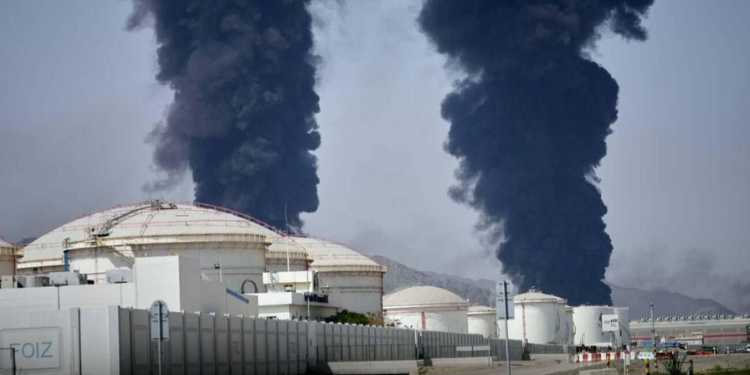
The warning from the Gulf States comes in the immediate aftermath of a missile strike on Qatar’s strategic energy hub, the Ras Laffan Industrial City.
In a strongly worded statement, Doha condemned what it called a “brutal” Iranian attack that caused fires and significant damage to the facility, describing it as a “flagrant violation” of sovereignty and a direct threat to national security.
Qatar said it reserves the “full right to respond” under Article 51 of the United Nations Charter, signaling that retaliation remains firmly on the table.
Later, Doha ordered Iranian military-linked officials to leave the country within 24 hours, declaring them persona non grata in a move that underscores the depth of the diplomatic rupture.
Also Read: Iranian Officials Given 24 Hours to Leave Foreign Nation After Missile Strike
Officials warned that further steps could follow if what they described as Iran’s “hostile approach” continues.
War could continue for weeks
At the same time, Turkey has sought to position itself as a balancing actor, rejecting attacks on both Iran and other states in the region.
Fidan warned that the conflict may not be over, saying fighting could continue for another two to three weeks.
He pointed to the role of the United States as decisive in shaping how the situation unfolds, but suggested that a key obstacle lies elsewhere.
According to Fidan, Israel is likely to continue military operations until it achieves its objectives, even as discussions around a temporary ceasefire for negotiations remain on the table.
He also indicated that Gulf States are preparing to strengthen internal security measures, reflecting mounting concern over vulnerabilities in critical infrastructure.
Direct threats to Gulf territory
Meanwhile, Iran’s Khatam al-Anbiya Central Headquarters spokesman Ebrahim Zolfaghari on Saturday said Iran could target the UAE’s Ras Al-Khaimah if attacks are launched from its territory against Iranian positions.
“We will attack the origin of any invasion against our territory and national sovereignty,” he said, warning of “crushing blows” if red lines are crossed.
The escalation has triggered international concern, with 22 countries on Saturday condemning Iranian attacks on commercial ships and civilian infrastructure in the region as tensions continue to rise.
In a joint statement, the UAE, Britain, France, Germany, Italy, the Netherlands, Japan, Canada, South Korea, New Zealand, Denmark, Latvia, Slovenia, Estonia, Norway, Sweden, Finland, Czechia, Romania, Bahrain, Lithuania, and Australia said they are deeply concerned about the situation.
The statement warned that recent events, such as the “de facto closure” of the Strait of Hormuz, could seriously threaten global trade and energy security.
“We call on Iran to cease immediately its threats, laying of mines, drone and missile attacks and other attempts to block the Strait of Hormuz,” the statement said, urging compliance with relevant United Nations Security Council resolutions.
Signatories warned that continued instability could have severe consequences for global trade and energy security.