
President Donald Trump’s administration has issued a temporary authorization allowing Russian oil stranded at sea to be sold and delivered to global markets.
The policy aimed at stabilizing energy supplies amid mounting geopolitical tensions was formalized through General License 134, issued on Thursday, March 12, by the Office of Foreign Assets Control under the U.S. Department of the Treasury.
The license authorizes transactions related to Russian crude oil and petroleum products that were loaded onto vessels before March 12, 2026, allowing them to be delivered and sold despite existing sanctions.
According to the authorization, the measure will remain in effect until April 11, 2026.
Treasury defends move to authorize sale of Russian oil
U.S. Treasury Secretary Scott Bessent said the decision is designed to prevent further disruption to global oil supplies amid rising geopolitical tensions.
Bessent said the policy allows cargoes already in transit to reach their destinations rather than remain stranded at sea due to sanctions.
“To increase the global reach of existing supply, @USTreasury is providing a temporary authorization to permit countries to purchase Russian oil currently stranded at sea,” the secretary said.
He described the authorization as a “narrowly tailored, short-term measure” intended to increase supply in global markets without significantly boosting Russia’s revenues.
Also Read: Oil Markets on Edge? Top Trump Official Reaffirms Tanker Escort Plan in Hormuz
According to Bessent, the majority of Russia’s energy revenue is generated through taxes assessed at the point of extraction rather than at the point of sale.
“This narrowly tailored, short-term measure applies only to oil already in transit and will not provide significant financial benefit to the Russian government, which derives the majority of its energy revenue from taxes assessed at the point of extraction.”
The move follows earlier remarks from Bessent on March 7 in which he suggested that the United States was considering ways to allow sanctioned Russian crude already on ships to re-enter the market.
He said hundreds of millions of barrels of Russian oil were effectively stranded at sea due to sanctions restrictions imposed during the war in Ukraine.
“We may unsanction other Russian oil,” Bessent said in a previous interview on FOX Business.
“There are hundreds of millions of barrels of sanctioned crude on the water. By unsanctioning them, Treasury can create supply.”
Allowing those shipments to reach buyers could ease pressure on global markets that have tightened due to supply disruptions and rising demand.
Energy markets strained by Middle East conflict
The policy comes as global oil markets face mounting volatility tied to escalating tensions involving the United States, Israel, and Iran.
Attacks on shipping routes and oil infrastructure across the region have disrupted supply chains and driven oil prices higher.
The Treasury Department says the temporary authorization is intended to prevent the situation from triggering deeper shortages in global energy markets.
It emphasized that the measure does not represent a broader change in sanctions policy toward Russia, but rather a short-term step to maintain market stability.
The United States issued a similar temporary waiver last week, allowing Indian refiners to purchase Russian oil cargoes that were already loaded before sanctions restrictions took effect.
Also Read: Another Win for Putin? U.S. Considers Sanctions Relief for Russian Oil Amounting Billions
The authorization allowed companies in India to take delivery of shipments that had already departed Russian ports. Bessent described the move as a stopgap measure to prevent disruptions to the global oil supply chain.
He said the administration ultimately expects India to increase purchases of American energy in the long term.
Naval escorts for tankers under consideration
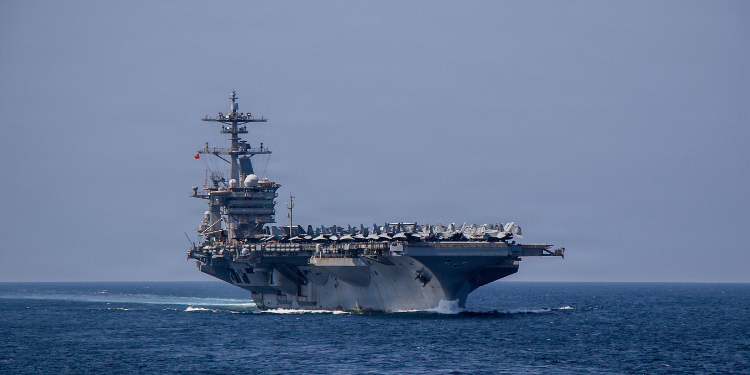
Earlier on Thursday, Bessent said the United States may also deploy naval escorts for oil tankers moving through the Strait of Hormuz as tensions with Iran threaten one of the world’s most critical energy corridors.
Speaking in an interview with Sky News, he said the United States Navy could begin escorting commercial vessels through the strait “as soon as it is militarily possible.”
The waterway connects the Persian Gulf with the Gulf of Oman and carries roughly one-fifth of the world’s oil supply, making any disruption a major concern for global markets.
Despite fears the route could be fully blocked, Bessent said some tankers are still moving through the strait.