
The United States is considering easing sanctions on certain Russian oil shipments amid global energy market pressures amid ongoing geopolitical conflicts.
U.S. Treasury Secretary Scott Bessent said Friday on FOX Business that Washington may allow previously sanctioned Russian crude to re-enter the market to stabilize global supply.
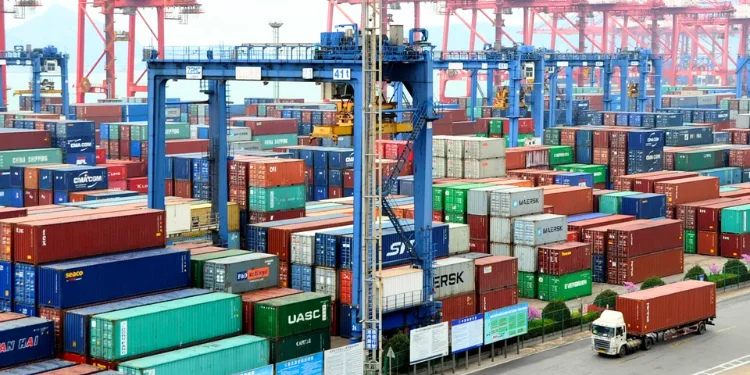
Bessent said the Treasury is exploring options to release oil restricted by sanctions. According to him, hundreds of millions of barrels of Russian crude remain stranded at sea due to sanctions restrictions.
“We may unsanction other Russian oil. The other thing Treasury can do here….is there are hundreds of millions of barrels of sanctioned crude on the water. And in essence, by unsanctioning them, Treasury can create supply. And we are looking at that.”
The potential move would allow these cargoes to enter global markets, easing pressure caused by supply gaps and rising demand.
The remarks come as the global oil market experiences tightening supply amid tensions in the Middle East due to the attacks between the United States, Israel, and Iran, and continued disruptions linked to the war in Ukraine.
Bessent added that the administration intends to continue announcing measures to provide “relief to the market during this conflict.”
The Treasury chief, however, warned of a big night of bombing in Iran on Saturday. He said that it would be the U.S.’s “biggest bombing campaign” in Iran. U.S. and Israeli officials have said this week that attacks on Iran would increase.
India granted temporary waiver for Russian oil
This comes shortly after the United States issued a limited waiver allowing India to purchase Russian oil shipments that had already been loaded onto vessels before new restrictions took effect.
The policy was formalized through Russia-related General License 133, issued by the Treasury Department’s Office of Foreign Assets Control.
The authorization allows Indian refiners to complete purchases of Russian crude that was already in transit before March 5, 2026.
It covers logistical activities required to safely deliver the cargo, including docking, vessel management, insurance, and related services.
Officials described the move as a temporary step to prevent disruptions to global oil supply, rather than a long-term shift in sanctions policy.
“To enable oil to keep flowing into the global market, the Treasury Department is issuing a temporary 30-day waiver to allow Indian refiners to purchase Russian oil,” Bessent said.
Also Read: Trump Hands Putin Billions Through New Oil Deal
The authorization applies only to oil that had already been loaded onto ships before the policy was introduced and requires that the cargo be delivered to ports in India and purchased by companies organized under Indian law.
Bessent emphasized that the waiver was intended as a short-term stabilization measure.
“This deliberately short-term measure will not provide significant financial benefit to the Russian government as it only authorizes transactions involving oil already stranded at sea.”
Energy markets under pressure
According to Bessent, India had responded positively to earlier requests to limit purchases of sanctioned Russian crude.
“The Indians had been very good actors,” he told FOX Business, noting that New Delhi had previously agreed to scale back purchases of restricted Russian oil in favor of American supply.
However, the administration decided to allow limited purchases again to help close a temporary gap in global oil availability.
U.S. officials say they still expect India to expand purchases of American crude over the longer term once market conditions stabilize.
The consideration to ease sanctions on certain Russian oil shipments comes amid geopolitical tensions involving Russia and the United States.
Also Read: UK Reports Missile Hit on Boat in Strait of Hormuz as Trump Unveils Billions for Maritime Shield
Russian Security Council Deputy Chairman Dmitry Medvedev on Friday criticized American military deployments in the Persian Gulf, arguing that U.S. bases in the region pose risks rather than providing protection.
“The Gulf Arab countries let American bases onto their territory,” Medvedev said in a statement posted on social media. “They expected protection from them… The U.S. just uses them while protecting only one country.”
Ukrainian strike damages Russian naval ships
Meanwhile, Ukraine’s General Staff has reported that a strike on the Russian naval base in Novorossiysk on March 2 damaged two ships belonging to Russia’s Black Sea Fleet as military tensions between Russia and Ukraine continue to escalate.
The vessels were identified as the frigates Admiral Essen and Admiral Makarov, both capable of carrying Kalibr cruise missiles.
According to Ukrainian officials, the strike also damaged additional naval vessels stationed at the base, including the minesweeper Valentin Pikul and the anti-submarine ships Yeysk and Kasimov.
“As a result of additional analysis of the damage inflicted on March 2, 2026, to the naval base ‘Novorossiysk’… damage to two ships of the Russian Black Sea Fleet has been confirmed,” Ukraine’s General Staff said.
Officials said the full extent of the damage is still being assessed. Ukraine’s military added that strikes targeting Russian military infrastructure would continue as part of its campaign to counter Moscow’s invasion.
Follow our WhatsApp Channel and X Account for real-time news updates.