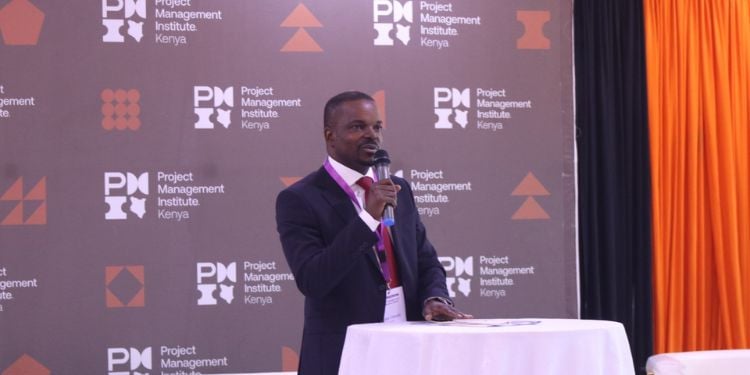
The Head of the Government Delivery Unit (GDU), Dr. Sitati Olando, on May 28th, announced a reduction in kidney treatment costs, from about KSh 3 million to KSh 650,000.
Speaking during the Government and Public Sector Industry Project Management Conference 2026, convened by the Project Management Institute (PMI) Kenya Chapter, under the theme “Delivering Kenya’s Development Agenda Through Project Management” and the tagline “From Policy to Impact,” in Nairobi, Dr. Olando said that project management is crucial to ensuring that policies translate into real results for the citizens.
Dr. Olando stated that the government has a responsibility to ensure that policies do not remain “beautiful documents on a shelf,” but are turned into tangible progress in people’s lives.
Revived Kidney Treatment Institute Offers Relief
Dr. Olando explained that the kidney institute is expected to perform 300 kidney transplants every year and to provide advanced dialysis, nephrology, urology, and renal training services, with the cost fully covered by the Social Health Authority (SHA).
To many patients, the drop in treatment costs offers new hope for treatment and survival, especially for those who had previously been locked out of care due to high costs
Also Read: SHA Approved Clinics and Hospitals in Kwale County [LIST]
Project Management as the Bridge from Policy to Impact
Dr. Olando said that the role of the Government Delivery Unit (GDU) is to ensure that policies are not left on paper but translated into real benefits for citizens.
“Project management must occupy a stronger place in the public space. If we are to influence policy and deliver meaningful impact, we must be at the decision-making table,” said Olando.
He added that strong systems for planning, monitoring, and accountability are necessary to ensure that public projects deliver the intended outcomes, stating that this is the only way to close the gap between policy promises and actual results.
Lessons from Public Projects
Sitati pointed to lessons from government projects, noting that while some initiatives have successfully transformed communities, others have failed due to poor planning and weak execution, and warned that such failures come at a high cost to citizens.
“Every shilling wasted on a failed project is a shilling deprived off from a child’s education, a mother’s healthcare, or a father’s retirement,” Orlando stated.
The GDU chairman added that projects in sectors such as healthcare, infrastructure, water, and energy are now being revived, with the kidney institute (EAKI) being an example of what can be achieved when delivery systems are improved.
Strengthening Healthcare Through SHA
Furthermore, Dr. Olando highlighted the role of programs such as the Social Health Authority (SHA), which has registered 29 million Kenyans as of early 2026, and the Inua Jamii Programme, which digitally disbursed 2.4 billion Kenya shillings in
April 2026 alone to support over 1.2 million vulnerable citizens.
He emphasized that government efforts are focused on ensuring that major health projects like East African Kidney Institute (EAKI) not only become operational but also remain accessible and sustainable for citizens.
Also Read: Top Kiambu SHA-Approved Hospitals and Health Facilities [LIST]
Turning Policies into Results
The conference brought together leaders from the government, county administrations, development agencies, academia, and the private sector to discuss ways of improving project delivery.
PMI Kenya Chapter President Maureen Ochang said that while Kenya has strong policies and development plans, the main challenge is implementation.
“Kenya has no shortage of strong policies and ambitious development plans. The challenge has consistently been execution. This conference is about equipping public sector professionals with the tools, frameworks, and networks needed to translate policy into tangible, measurable impact,” she said.
Maureen stated that strengthening project management systems will improve efficiency, reduce delays, and enhance accountability in the use of public resources.
Measuring Success Through Lives Improved
Dr. Olando added that government’s success should be measured not by the number of projects completed but by the number of lives improved, praising initiatives like the kidney institute, which demonstrate that when projects are well managed, they can reduce costs, expand access, and restore dignity to citizens.
Follow our WhatsApp Channel and X Account for real-time news updates.