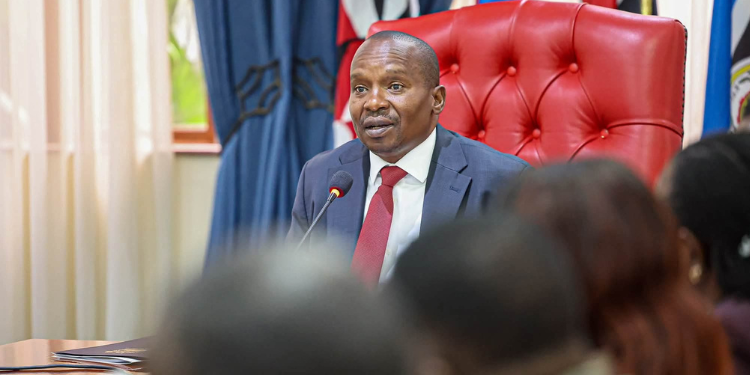
Deputy President Kithure Kindiki has announced plans to formalize and license traditional alcoholic brews that meet Kenya Bureau of Standards (KEBS) requirements as the government intensifies its crackdown on illicit alcohol.
Speaking in Karen, Nairobi, on Wednesday, October 21, Kindiki said the government had finalized legislative proposals to tighten controls on manufacturers, distributors, and individuals linked to the sale of illicit ethanol and chemical-laced alcoholic drinks.
“The Government has finalized legislative proposals that will tighten the noose on manufacturers, distributors and enablers of ethanol and drug cartels that are supplying dangerous chemical-laced alcoholic drinks to members of the public,” Kindiki said.
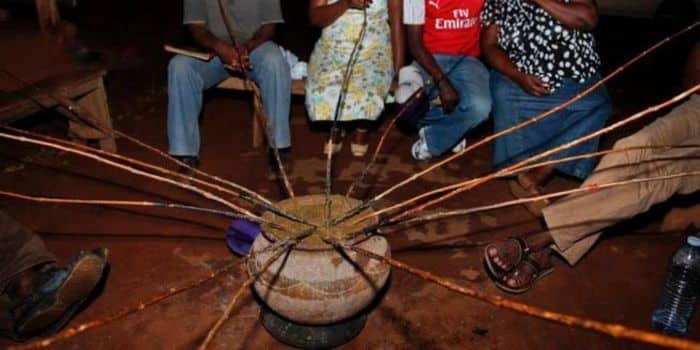
“Traditional brews that meet the Kenya Bureau of Standards requirements will be formalized and licensed.”
Kindiki Announces Tougher Laws Against Illicit Alcohol Cartels
Additionally, Kindiki said legislation on the forfeiture and confiscation of assets and funds linked to illicit alcohol and drug cartels was being finalized. Proceeds recovered through the measures would be directed towards rehabilitating people struggling with addiction.
He added that the government has classified the manufacture, distribution, sale and consumption of illicit alcohol as organized crime, placing it alongside terrorism and banditry in its enforcement framework.
“The government has also elevated the manufacturing, distribution, sale and consumption of illicit alcohol as organized crime, listing it in the category of terrorism and banditry, and directed firm action against cartels destroying the youth and, by extension, the country’s future,” part of the statement read.
Kindiki cautioned against politicizing the crackdown, saying enforcement agencies should be allowed to carry out raids, arrest suspects and pursue cases through the courts without interference.
He said the Office of the Deputy President set up a permanent multi-agency secretariat on the sixth floor of Harambee House to coordinate operations and maintain pressure on illicit alcohol networks.
Also Read: Govt Cautions Kenyans Over Jaba-Infused Drinks
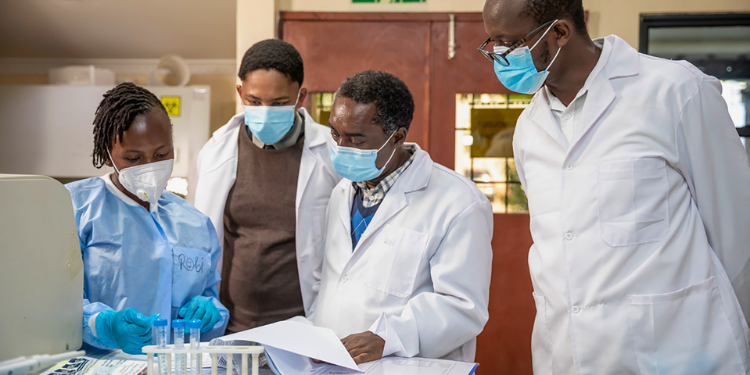
The team comprises representatives from the National Police Service, Kenya Bureau of Standards (KEBS), National Authority for the Campaign Against Alcohol and Drug Abuse (NACADA), Anti-Counterfeit Authority, National Intelligence Service (NIS), Directorate of Criminal Investigations (DCI), Ethics and Anti-Corruption Commission (EACC), and the ministries of Trade and Health, alongside the Kenya Revenue Authority (KRA) and alcohol manufacturers.
Kindiki also urged religious institutions, community organizations, business leaders, politicians, academics and professionals to support government efforts to curb the production and sale of illicit alcohol and drugs.
He said intelligence-led, multi-agency operations conducted nine raids targeting illicit ethanol and 116 other raids on illicit brews that failed to meet public health and quality standards in the past 10 days.
Also Read: KRA Raids Home, Forces Past Six Gates, Uncovers Alcohol Chamber Under Bathroom
Key Measures in the Illicit Alcohol Crackdown
The government has intensified enforcement against illicit alcohol through coordinated raids, arrests and the closure of premises that fail to meet regulatory requirements.
The operations have resulted in 25,219 raids, 12,443 arrests and the shutdown of 9,269 non-compliant establishments. Authorities have also seized more than 1.4 million litres of illicit brew, 46,273 litres of counterfeit alcohol and 2,559 litres of illegal ethanol.
Separately, the National Authority for the Campaign Against Alcohol and Drug Abuse (NACADA) has introduced a 100-day Rapid Results Initiative targeting unregulated second-generation alcohol across the supply chain, from manufacturers and distributors to retailers and consumers.
NACADA Chief Executive Officer Dr Anthony Omerikwa has also announced plans to pursue the seizure and confiscation of properties and other assets linked to the financing and distribution of illicit alcohol, shifting the focus beyond arrests to the financial networks sustaining the trade.
Follow our WhatsApp Channel and X Account for real-time news updates.