Oil tankers are expected to arrive at Kenyan ports over the next 14 days as fuel supply concerns persist, keeping the upcoming arrivals in focus.
The latest announcement by the Kenya Ports Authority (KPA) has drawn attention to incoming vessel traffic at the country’s two major ports.
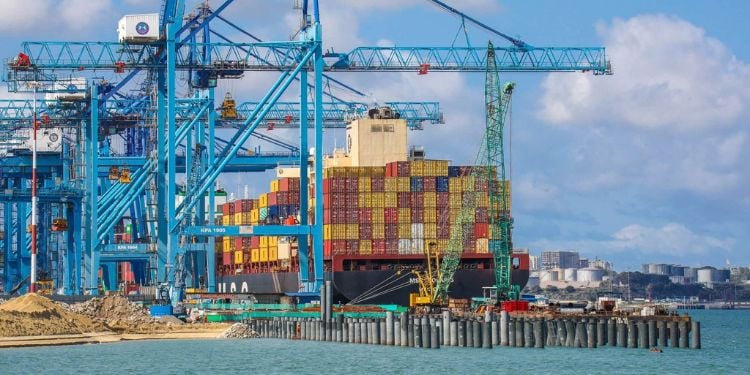
In a statement on October 21, 2026, the KPA announced that 51 vessels were expected to call at the ports of Mombasa and Lamu over the next 14 days.
Mombasa Port is expected to receive 41 vessels, including six oil tankers, 26 container ships, seven conventional cargo vessels and two car carriers.
“Six oil tankers are among 51 vessels expected to call at the ports of Mombasa and Lamu over the next 14 days. The Port of Mombasa will welcome 41 ships, including 6 oil tankers, 26 container ships, 7 conventional cargo vessels and 2 car carriers,” KPA said.
Lamu Port is projected to handle 10 vessels, comprising nine container ships and one general cargo vessel.
Six Oil Tankers Carrying Petroleum Products Expected at Mombasa Port
Among the vessels expected at Mombasa Port are the Atlantic Victory, scheduled to arrive on October 19 carrying butane, and the Torm Sublime, expected on October 21 with gasoil. The Bellatrix, carrying V Power, is also listed for arrival at Mombasa on October 20.
Other vessels expected at Mombasa include the Jupiter, carrying palm oil, and the Bow Lynx, carrying base oil. Both are scheduled to arrive between October 20 and October 21.
Lamu Port is expected to receive several container ships, including the Behran Box, Zanzibar Express, MSC Sky II, and MSC Barbara, listed for October 19. The port is also scheduled to receive the MV Great Prosperity, carrying general cargo.
The schedule includes additional vessels carrying containers, clinker, wheat, steel coils, cars, and other cargo.
Kenya’s Fuel Crisis Deepens as Pump Prices
The oil crisis in Kenya has triggered a series of developments in October 2026, including rising international crude oil prices, higher pump prices, matatu fare increases, and protests in Nairobi.
In a weekly bulletin published on October 9, 2026, the Central Bank of Kenya (CBK) reported that Murban crude oil prices had increased to USD 101.67 per barrel on October 8, up from USD 95.76 on October 1.
“Murban crude oil prices increased to USD 101.67 per barrel on October 8 from USD 95.76 per barrel on October 1, driven by supply concerns associated with ongoing geopolitical tensions in the Middle East,” CBK stated.
On October 14, the Energy and Petroleum Regulatory Authority (EPRA) announced new maximum retail fuel prices, effective from October 15 to November 14, 2026.
“In accordance with Section 101(y) of the Petroleum Act 2019 and Legal Notice No.192 of 2022, the Energy & Petroleum Regulatory Authority (EPRA) has calculated the maximum retail prices of petroleum products which will be in force from 15th October 2026 to 14th November 2026,” the authority stated.
Also Read: Matatu Operators Clarify on Countrywide Strike Over Fuel Prices
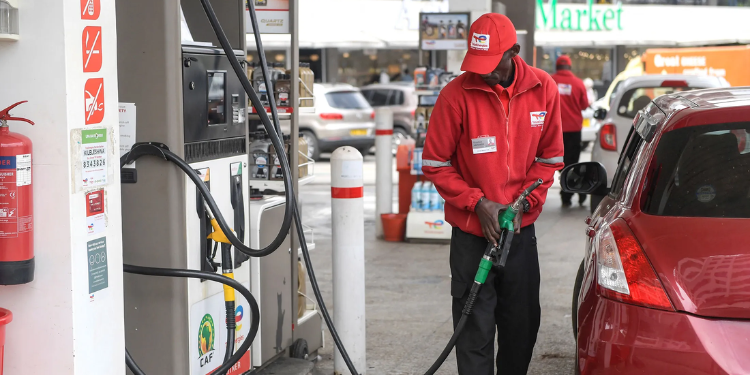
EPRA increased the price of super petrol by KSh12.93 per liter, diesel by KSh9.90, and kerosene by KSh28.49. The new prices in Nairobi are KSh226.96 per liter for super petrol, KSh227.76 for diesel, and KSh219.87 for kerosene.
EPRA Director General Eng. Edward Mwirigi Kinyua said international fuel prices had risen sharply during the conflict.
“September has been the worst month ever since this war broke out. Super petrol has reached USD 1,300 per metric tonne from the initial USD $600 per metric tonne,” Kinyua said.
Matatu Fares and Protests Rise
The Motorists Association of Kenya (MAK) condemned the price increases in a statement issued on October 14 and demanded an independent audit of EPRA’s pricing and the government-to-government fuel deal.
“The Motorists Association strongly condemns the petroleum price increases announced by the Energy and Petroleum Regulatory Authority (EPRA), under its newly appointed Director General, Eng. Edward Mwirigi Kinyua, for the period beginning 15 October and ending 14 November 2026,” the association stated.
MAK warned that the higher fuel costs would affect households, transport operators and businesses.
Also Read: EPRA Given Ultimatum to Revoke New Fuel Prices
“It is a direct assault on the productive capacity of the Kenyan economy, the disposable income of ordinary citizens, the viability of public transport, the survival of road freight operators and the dignity of households already struggling with an unbearable cost of living,” the association added.
On October 20, activists protested against the fuel price increases along Kimathi Street in Nairobi’s central business district. Police arrested two activists, Citizen TV journalist Francis Ode and a street boy, during the protest.
Ode said he was roughed up by plainclothes officers and detained at Central Police Station while covering the demonstration.
Police said they acted because Mashujaa Day celebrations were taking place and they could not allow another demonstration in the city.
The Kenya Editors Guild and the Media Council of Kenya condemned Ode’s arrest and called for an investigation and an apology from Inspector-General of Police Douglas Kanja.
Follow our WhatsApp Channel and X Account for real-time news updates.