Wednesday, October 21, 2026
  • News
    • Latest News
    • Breaking News
    • Fact Check
    • Investigations
    • Explainers
  • Politics
    • Global Politics
    • Elections
    • Government & Policy
    • Diplomacy
    • Conflicts & Security
    • Political Analysis
  • Business
    • Global Economy
    • Markets
    • Technology
    • Startups
    • Energy
    • Finance
  • World News
    • Americas
    • Asia
    • Asia Pacific
    • Africa
    • Europe
    • Middle East
  • Africa
    • Central Africa
    • East Africa
    • West Africa
    • Southern Africa
  • Health
    • Global Health
    • Public Health
    • Health Policy
    • Medical Research
    • Diseases & Conditions
    • Mental Health
    • Nutrition
    • Climate & Health
    • Health Explainers
  • Sports
    • World Cup 2026
    • Athletics
    • Basketball
    • Boxing
    • Cricket
    • Football
    • Formula 1
    • Golf
    • Rugby
  • Weather
    • Climate Business
    • Climate Change
    • Climate Solutions
    • Living Green
  • Culture
    • Arts
    • Film & TV
    • Food and Recipes
    • Music
    • Lifestyle
    • People
    • Travel
  • Opinion
    • Editorials
    • Letters
  • Behind The Brand
REGISTER
LOGIN
No Result
View All Result
The Kenya Times
  • News
    • Latest News
    • Breaking News
    • Fact Check
    • Investigations
    • Explainers
  • Politics
    • Global Politics
    • Elections
    • Government & Policy
    • Diplomacy
    • Conflicts & Security
    • Political Analysis
  • Business
    • Global Economy
    • Markets
    • Technology
    • Startups
    • Energy
    • Finance
  • World News
    • Americas
    • Asia
    • Asia Pacific
    • Africa
    • Europe
    • Middle East
  • Africa
    • Central Africa
    • East Africa
    • West Africa
    • Southern Africa
  • Health
    • Global Health
    • Public Health
    • Health Policy
    • Medical Research
    • Diseases & Conditions
    • Mental Health
    • Nutrition
    • Climate & Health
    • Health Explainers
  • Sports
    • World Cup 2026
    • Athletics
    • Basketball
    • Boxing
    • Cricket
    • Football
    • Formula 1
    • Golf
    • Rugby
  • Weather
    • Climate Business
    • Climate Change
    • Climate Solutions
    • Living Green
  • Culture
    • Arts
    • Film & TV
    • Food and Recipes
    • Music
    • Lifestyle
    • People
    • Travel
  • Opinion
    • Editorials
    • Letters
  • Behind The Brand
No Result
View All Result
The Kenya Times ~ Trending, Breaking News and Videos
No Result
View All Result
ADVERTISEMENT

How Quality PhDs Can Power Kenya’s Knowledge Economy and Innovation

The Kenya Times - Opinion DeskbyThe Kenya Times - Opinion Desk
October 21, 2026
Reading Time: 6 mins read
Social Justice Netherlands Announces Fully Funded Scholarship For Kenyan Students

The University of Nairobi management during the institution’s 73rd graduation. PHOTO/UoN.

FacebookTwitterLinkedInRedditWhatsApp
Advertisement

Kenya’s ambition to become a prosperous, industrialised and knowledge-driven economy will depend not merely on how many people graduate from our universities, but on what they know, what they create and how effectively they solve society’s problems. The Doctor of Philosophy (PhD) is among the highest academic qualifications, but its true value lies not in the title before or after one’s name. It lies in the ability to generate new knowledge, challenge established thinking, develop solutions and translate discoveries into measurable public and economic value.

A PhD should therefore be understood as a national investment in intellectual leadership, scientific capability and innovation. For Kenya, pursuing this investment is essential to achieving Vision 2030, the Bottom-Up Economic Transformation Agenda (BETA), and the African Union’s Agenda 2063.

PhD holders are expected to lead advanced research, train future generations, inform evidence-based policymaking, strengthen institutions and drive technological advancement. In agriculture, they can improve crop yields and livestock productivity; in healthcare, develop better diagnostics and treatments; in engineering, design local industrial solutions; and in governance, generate evidence for more effective public services.

The Quantitative Challenge in Kenya and the Missing National Picture

However, the challenge is both quantitative and qualitative. According to the Commission for University Education’s University Statistics Report 2025, Kenya produced 852 PhD graduates in 2025, down from 1,022 in 2024—a decline of about 16.6 percent. This reversal should prompt us all to examine doctoral enrolment, completion rates, research financing and the availability of qualified supervisors, especially at universities.

The figures must also be interpreted carefully. Annual doctoral graduates are not the same as the total number of PhD holders in the country. As a country, we need a reliable national database showing the stock of doctoral graduates, their disciplines, employment, research productivity, and contribution to development. Without such information, workforce planning and recruitment will remain insufficiently evidence-based. The state department for science, research and innovation is working to create a database to complement CUE’s work.


Also Read: More Kenyans Earn Master’s Degrees as PhD Graduates Drop

ADVERTISEMENT

International comparisons demonstrate the scale of the challenge. OECD data indicate that the UK had almost 17 doctorate holders per 1,000 working-age people in 2024, while Denmark had 15 per 1,000. These figures do not directly measure research quality, but they illustrate the depth of doctoral-level expertise available in advanced knowledge economies. Kenya should establish its own baseline and progressively increase doctoral capacity, particularly in strategically important fields.

Raising the Quality Bar in Doctoral Training

Increasing doctoral numbers without strengthening quality would be a costly mistake. A credible PhD must demonstrate originality, methodological rigour, ethical research, critical thinking and a defensible contribution to knowledge. It should not be a prolonged academic exercise whose findings remain on library shelves.

Universities must reform doctoral training through competitive admissions, rigorous coursework, interdisciplinary supervision, independent examination, research integrity safeguards and timely completion. Doctoral candidates should work on problems identified jointly with industry, government, communities and research institutions. External examiners, plagiarism detection, transparent assessment and international peer review should be standard practice.

Equally important, universities must invest in supervisors, laboratories, digital research infrastructure, research libraries and competitive doctoral scholarships. Kenya’s national annual target of 2,400 PhD graduates, as indicated by CUE, provides a useful planning benchmark, but achieving it must be matched by measurable improvements in quality and impact. I am more into 100 PhD per million population, but we must carefully analyze the data, identify the gaps, and strategically the areas of PhD as we look beyond 2030.

From Publications to Commercial and Societal Impact

A knowledge-based economy does not simply consume knowledge; it produces, protects, applies and commercialises it. PhD holders must therefore become solution creators, not merely paper authors. Universities should establish stronger technology-transfer offices, patent support services, innovation hubs, business incubators and seed-funding mechanisms. Doctoral researchers should be encouraged to develop agricultural technologies, medical innovations, artificial intelligence applications, clean-energy solutions and new manufacturing processes.

ADVERTISEMENT

Entrepreneurship must become an integral component of doctoral training. A PhD graduate should be equipped to establish a research-based enterprise, license intellectual property, advise a start-up, attract private investment or develop a commercially viable product. Not every PhD holder must become an entrepreneur, but every graduate should understand how knowledge creates economic and social value.

This calls for stronger partnerships among government, academia, industry, and communities. Research priorities should address national challenges, while businesses should help identify problems, co-finance research and adopt successful innovations. The performance of doctoral programmes must be measured not only by publications and citations, but also by patents, licences, start-ups, jobs created, technologies adopted, policy improvements and benefits to citizens.

Putting PhD Expertise to Work in the Public Sector

The reform agenda must extend beyond universities to the Public Service Commission (PSC), ministries and public institutions. Recruitment and promotion should recognise demonstrated competence, research excellence, relevant experience and the ability to solve complex problems.

For specialised scientific, technological, policy and research positions, doctoral qualifications should be required where the work genuinely demands them. PhD holders should not automatically be preferred for every position, nor should possession of a doctorate guarantee promotion. Selection must remain competitive, transparent and merit-based.

The PSC and other public employers should introduce competency frameworks that reward evidence-based decision-making, innovation, analytical capability and measurable institutional performance. Structured research fellowships, secondments between universities and government, and joint appointments could enable doctoral experts to translate knowledge into better public services.

As Government, we must also create meaningful career pathways for researchers. Recruiting PhD holders without providing research budgets, appropriate responsibilities or opportunities to apply their expertise risks wasting public investment and encouraging skilled professionals to seek opportunities abroad.

Financing, Monitoring and the Path to Transformation

As a country, we cannot build a research-intensive economy without sustained financing. UNESCO identifies research and development expenditure as a share of GDP and the number of researchers per million inhabitants as essential indicators for tracking national research capacity.

Kenya should progressively expand domestic research financing, strengthen competitive grants through the National Research Fund, and increase private-sector participation. Funding should prioritise national missions in food security, health, climate resilience, manufacturing, digital transformation, the blue and bioeconomies, and AI. Every investment should have clear milestones, independent evaluation and pathways to application.

Also Read: How to Get a PhD in Kenya in 2026: Qualifications, Fees, Duration and New Research Licence Costs

We should monitor progress through a national PhD and research scorecard covering doctoral completion, supervision quality, graduate employment, research funding, publications, intellectual property, commercialisation and measurable societal impact. International benchmarks should inform our ambitions without ignoring Kenya’s economic circumstances.

Ultimately, the measure of a PhD is not the prestige of the title, but the value of the knowledge created and the lives improved. Kenya needs scholars who question, discover, innovate and serve; universities that uphold excellence; and public institutions that deploy expertise where it matters most. If we can do this, then leapfrogging to first-world status will be within reach.

The PhD must become an instrument of national transformation—converting knowledge into innovation, innovation into enterprises, enterprises into jobs, and research into prosperity. That is how Kenya can build an evidence-based, competitive and inclusive knowledge economy aligned with BETA, Vision 2030 and beyond.

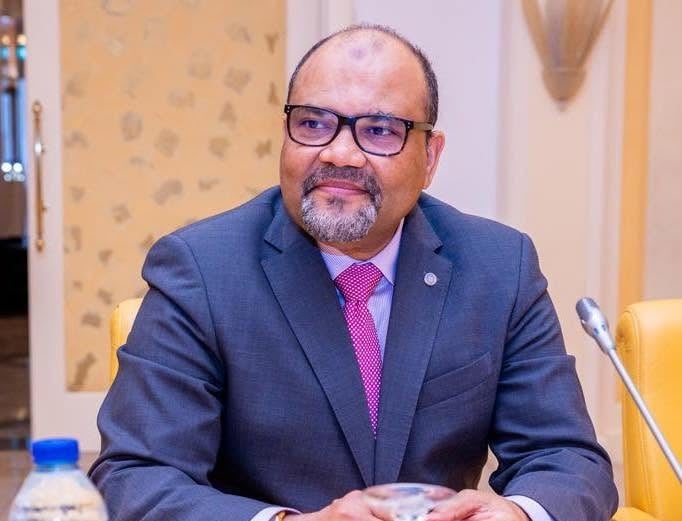
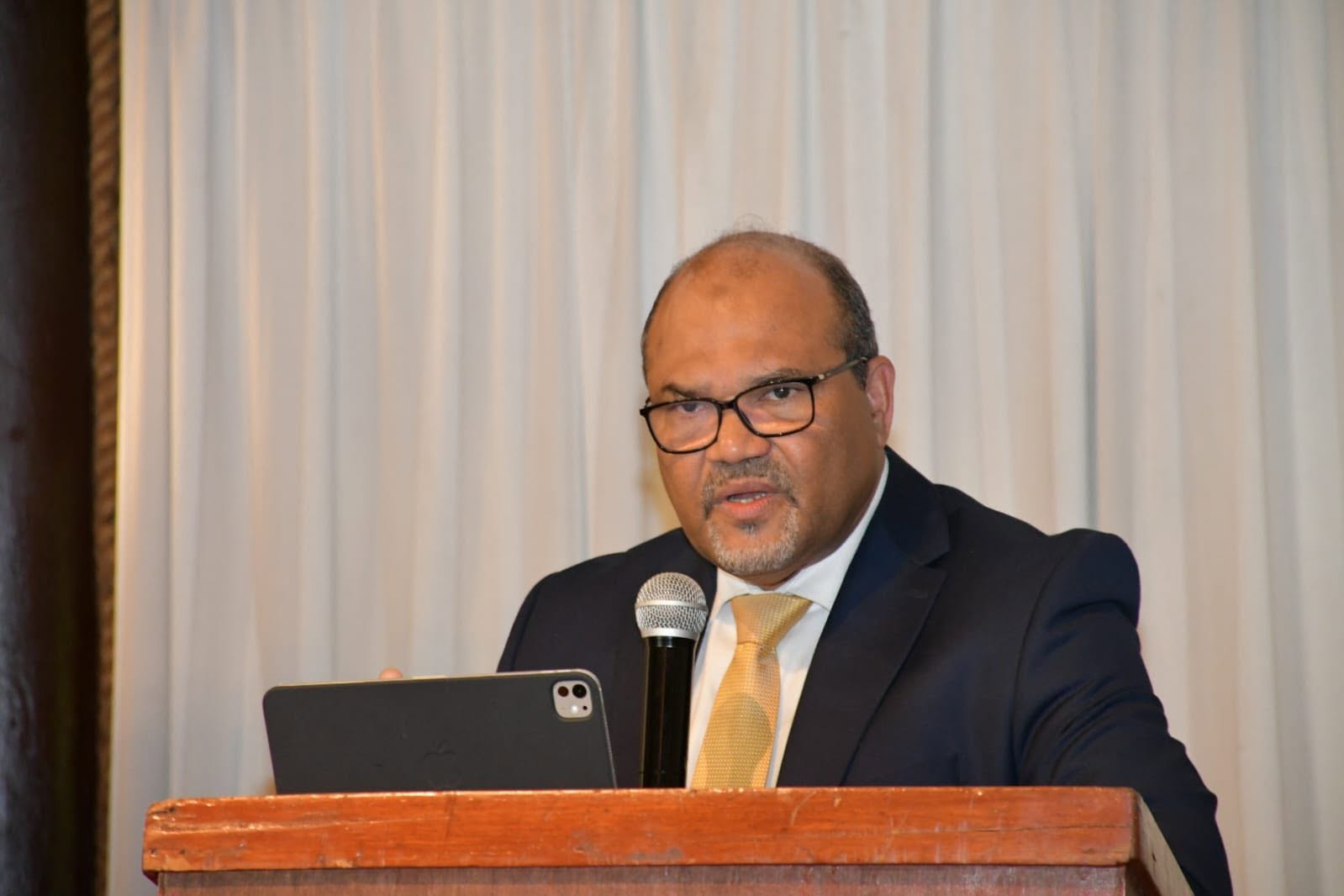
This article was written by Prof. Shaukat Abdulrazak, Principal Secretary, Science, Research and Innovation, Government of Kenya. He can be reached at [email protected].

Follow our WhatsApp Channel and X Account for real-time updates and subscribe to our YouTube Channel for in-depth video content. 

 

Tags: Doctoral InnovationKenya PhDKnowledge Economy
The Kenya Times - Opinion Desk

The Kenya Times - Opinion Desk

The Kenya Times Opinion Desk publishes independent commentary and analysis from contributors and invited voices. Views expressed are those of the authors and do not represent the newsroom’s reporting or editorial positions.

Related Posts

Binge-Eating Among College Students With Abundant Junk Food, A Common Setting Linked To Binge-Eating Risks.

How Globalization and Food Insecurity Fuel Disordered Eating Behavior in Young Adults

October 14, 2026
From Knowledge To Impact: A New Era Of Kenya–Uk Science Diplomacy

From Knowledge Sharing to Innovation: A New Chapter in Kenya–UK Science Diplomacy

October 10, 2026
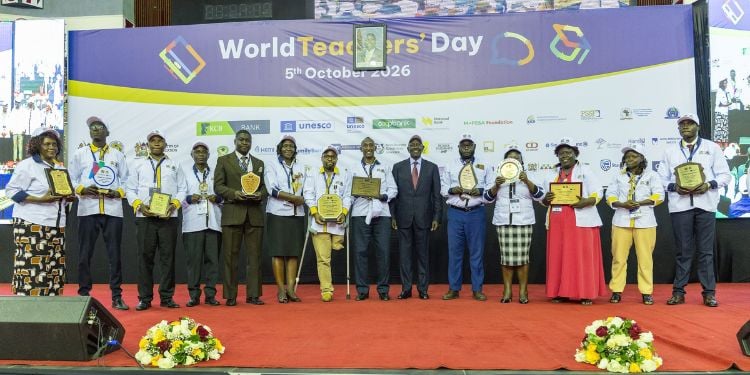
Kenyan Teaching And Teachers Received Awards For Outstanding Contributions On October 5, At The Kasarani Indoor Arena During National World Teachers’ Day.

What Would a Truly Professional Teaching Profession Look Like in Kenya?

October 7, 2026
Beyond Borders: Why Science Diplomacy Must Drive The Next Era Of Development

Why Science Diplomacy Must Drive the Next Era of Development

October 5, 2026

Leave a Reply Cancel reply

Your email address will not be published. Required fields are marked *

ADVERTISEMENT

The Kenya Times Facebook

LATEST NEWS

  • Traffic Snarl-Up as University Students Protest in Nairobi, Block Roads
  • Detectives Corner Suspect Caught on Camera Robbing Foreigner in Parklands
  • Ndindi Nyoro Makes Fresh Allegations Over KSh42 Billion KPC Share Sale After Parliament Suspension
  • Six Workers Feared Trapped After Quarry Collapses
  • Who Is Ahmed Kalebi? Kenyan Pathologist Inducted to Global Hall of Fame
  • Oil Tankers Expected at Kenyan Ports in Next 14 Days as Fuel Supply Concerns Persist
  • Can a DNA Test Name the Wrong Father? What Rare Cases Reveal
  • Former Accountant Loses Apartments, Cars and Ksh53M Bank, M-PESA Deposits
  • Who Was Eva Ngigi Sarwari? Oxford-Trained Equity Bank Executive Who Died in China
  • Why Kenya is Using COVID-19 Drug to Treat Ebola
  • How Quality PhDs Can Power Kenya’s Knowledge Economy and Innovation
  • 600 CEOs List 6 Things They Want Ruto to Change
  • Govt Responds to Trump’s New Travel Advisory on Kenya
  • ‘No Ebola Here’: Uganda Hits Back After Nigeria Links Case to Kampala
  • Mosiria Exposes Plot to Fire Him from Sakaja Govt
ADVERTISEMENT

Company

About Us

Our Authors

Our Experts

Social Media

Policies

Privacy Policy

House Rules

Standards and Policies

Terms and Conditions

Subscription

My Account

Contact Us

Contact Us

Join Our Team

Advertise With Us

© Copyright 2026 | The Kenya Times | All Rights Reserved

Welcome Back!

Sign In with Facebook
Sign In with Google
Sign In with Linked In
OR

Login to your account below

Forgotten Password? Sign Up

Create New Account!

Sign Up with Facebook
Sign Up with Google
Sign Up with Linked In
OR

Fill the forms below to register

All fields are required. Log In

Retrieve your password

Please enter your username or email address to reset your password.

Log In
Your Privacy and Cookies
We use cookies on our website to give you the most relevant experience by remembering your preferences and repeat visits. By clicking “Accept”, you consent to the use of ALL the cookies.
Do not sell my personal information.
Cookie settingsACCEPT
Privacy & Cookies Policy

Privacy Overview

This website uses cookies to improve your experience while you navigate through the website. Out of these cookies, the cookies that are categorized as necessary are stored on your browser as they are essential for the working of basic functionalities of the website. We also use third-party cookies that help us analyze and understand how you use this website. These cookies will be stored in your browser only with your consent. You also have the option to opt-out of these cookies. But opting out of some of these cookies may have an effect on your browsing experience.
Necessary
Always Enabled
Necessary cookies are absolutely essential for the website to function properly. This category only includes cookies that ensures basic functionalities and security features of the website. These cookies do not store any personal information.
Functional
Functional cookies help to perform certain functionalities like sharing the content of the website on social media platforms, collect feedbacks, and other third-party features.
Performance
Performance cookies are used to understand and analyze the key performance indexes of the website which helps in delivering a better user experience for the visitors.
Analytics
Analytical cookies are used to understand how visitors interact with the website. These cookies help provide information on metrics the number of visitors, bounce rate, traffic source, etc.
Advertisement
Advertisement cookies are used to provide visitors with relevant ads and marketing campaigns. These cookies track visitors across websites and collect information to provide customized ads.
Others
Other uncategorized cookies are those that are being analyzed and have not been classified into a category as yet.
SAVE & ACCEPT
LOGIN | REGISTER
  • Login
  • Sign Up
  • Cart
No Result
View All Result
  • News
    • Latest News
    • Breaking News
    • Investigations
    • Explainers
    • Fact Check
  • Politics
    • Global Politics
    • Conflicts & Security
    • Elections
    • Diplomacy
    • Government & Policy
    • Political Analysis
  • Business
    • Global Economy
    • Markets
    • Technology
    • Startups
    • Energy
    • Finance
  • World News
    • Americas
    • Asia
    • Asia Pacific
    • Africa
    • Europe
    • Middle East
  • Africa
    • East Africa
    • West Africa
    • Southern Africa
    • Central Africa
  • Health
    • Global Health
    • Public Health
    • Health Policy
    • Medical Research
    • Diseases & Conditions
    • Mental Health
    • Nutrition
    • Climate & Health
    • Health Explainers
  • Sports
    • World Cup 2026
    • Athletics
    • Basketball
    • Boxing
    • Cricket
    • Football
    • Formula 1
    • Golf
    • Rugby
  • Weather
    • Climate Business
    • Climate Change
    • Climate Solutions
    • Living Green
  • Culture
    • Arts
    • Film & TV
    • Food and Recipes
    • Lifestyle
    • Music
    • People
    • Travel
  • Opinion
    • Editorials
    • Letters
  • Behind The Brand
  • Contact Us

Not enough quota to unlock this post
Unlock left : 0
Are you sure want to cancel subscription?