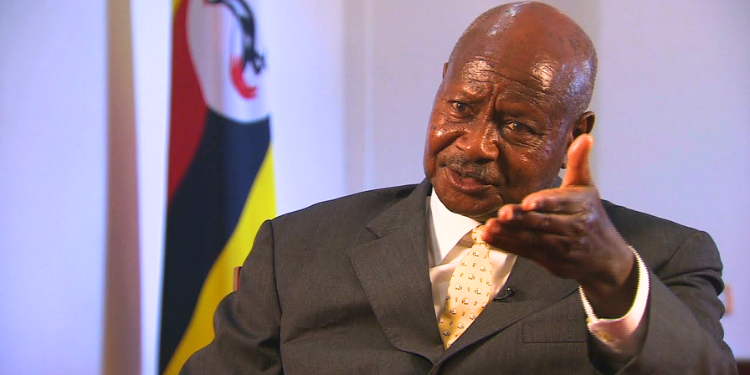

Kenya’s Foreign Affairs Principal Secretary Korir Sing’Oei has defended the United States’ decision to raise its travel advisory for Kenya from Level 2 to Level 3, saying America has the right to warn citizens about potential health risks.
Speaking in an interview on October 21, Sing’Oei said the advisory did not bar American citizens from travelling to Kenya, describing the move as a cautionary measure following the Ebola cases reported in the country.
“The United States is duty-bound to advise its citizens with respect to decisions that it deems important. The issue around Ebola is a sensitive matter, and it is important for them to advise their citizens,” he said.
On October 20, the Ministry of Health announced that Kenya had confirmed a new Ebola case, bringing the total number of confirmed infections to nine.
PS Sing’Oei Addresses Concerns Over US Travel Advisory on Kenya
PS Sing’Oei said that Kenya had worked closely with the US and other international partners on preparedness measures for months before the first local case was reported.
He noted that the government had previously sought to establish infrastructure to isolate and contain potentially infected people before the disease reached the country.
According to the PS, the first case involved a Kenyan national who had been working in the Democratic Republic of Congo (DRC) before travelling back to Kenya.
Sing’Oei said the incident highlighted the need for stronger cross-border disease surveillance and greater cooperation among countries to prevent the spread of infectious diseases.
He warned that gaps in surveillance systems across countries could leave populations vulnerable, arguing that nations needed to share information and maintain comparable standards in responding to public health threats.
The PS also cautioned against imposing blanket border closures, saying such measures could have far-reaching consequences for travel, trade, tourism, education and social services.
He argued that governments should adopt measures proportionate to the risk, considering how Ebola spreads and the level of contact required for transmission.
Instead of closing borders, Sing’Oei called for stronger preventive measures, sustained surveillance at border entry points and improved information sharing between countries.
He maintained that the measures taken so far were adequate, provided surveillance remained rigorous and consistent across all border points.
The PS made the remarks amid growing concerns over the implications of the US travel advisory and the need for regional and international cooperation in containing the Ebola cases reported in Kenya.
Also Read: Kenya Remains Open, No Ebola Lockdown, Health Ministry Says
Partnership Between US and Kenya On Ebola
The travel advisory comes despite longstanding cooperation between Kenya and the United States on Ebola preparedness and regional health security.
In July, the US announced $14.5 million (approximately Ksh1.9 billion) in planned support to strengthen Kenya’s ability to prevent, detect and respond to potential Ebola outbreaks.
The funding supports disease surveillance, laboratory capacity, healthcare worker training, emergency response coordination, public risk communication and screening at points of entry. The initiative targets 22 high-risk counties identified by the Kenyan government.
Under the program, more than 800 laboratory professionals received training in biosafety, biosecurity and testing procedures for viral hemorrhagic fevers.
More than 1,700 disease surveillance specialists were also trained through the Field Epidemiology and Laboratory Training Programme, alongside 120 national responders and more than 160 county-level responders in high-risk border counties.
Also Read: US Raises Kenya Travel Advisory with Strict Message to Its Citizens
The partnership also supported two mobile laboratories to expand rapid diagnostic capacity, while 27 county and national Emergency Operations Centres were activated to coordinate responses to public health threats.
However, in its advisory on October 19, the US Department of State raised concerns about access to medical services in Kenya, warning that facilities outside major urban centres may have limited capacity, equipment and medicines.
The department noted that medical services are often unavailable in rural areas, while many health conditions may require medical evacuation at the traveller’s expense.
“Medical services in Kenya are limited. They are often unavailable in rural areas. Medical facilities in Kenya often lack sufficient medicine and equipment,” read part of the advisory.
Follow our WhatsApp Channel and X Account for real-time news updates.