
Wednesday, October 21, 2026
  • News
    • Latest News
    • Breaking News
    • Fact Check
    • Investigations
    • Explainers
  • Politics
    • Global Politics
    • Elections
    • Government & Policy
    • Diplomacy
    • Conflicts & Security
    • Political Analysis
  • Business
    • Global Economy
    • Markets
    • Technology
    • Startups
    • Energy
    • Finance
  • World News
    • Americas
    • Asia
    • Asia Pacific
    • Africa
    • Europe
    • Middle East
  • Africa
    • Central Africa
    • East Africa
    • West Africa
    • Southern Africa
  • Health
    • Global Health
    • Public Health
    • Health Policy
    • Medical Research
    • Diseases & Conditions
    • Mental Health
    • Nutrition
    • Climate & Health
    • Health Explainers
  • Sports
    • World Cup 2026
    • Athletics
    • Basketball
    • Boxing
    • Cricket
    • Football
    • Formula 1
    • Golf
    • Rugby
  • Weather
    • Climate Business
    • Climate Change
    • Climate Solutions
    • Living Green
  • Culture
    • Arts
    • Film & TV
    • Food and Recipes
    • Music
    • Lifestyle
    • People
    • Travel
  • Opinion
    • Editorials
    • Letters
  • Behind The Brand
REGISTER
LOGIN
No Result
View All Result
The Kenya Times
  • News
    • Latest News
    • Breaking News
    • Fact Check
    • Investigations
    • Explainers
  • Politics
    • Global Politics
    • Elections
    • Government & Policy
    • Diplomacy
    • Conflicts & Security
    • Political Analysis
  • Business
    • Global Economy
    • Markets
    • Technology
    • Startups
    • Energy
    • Finance
  • World News
    • Americas
    • Asia
    • Asia Pacific
    • Africa
    • Europe
    • Middle East
  • Africa
    • Central Africa
    • East Africa
    • West Africa
    • Southern Africa
  • Health
    • Global Health
    • Public Health
    • Health Policy
    • Medical Research
    • Diseases & Conditions
    • Mental Health
    • Nutrition
    • Climate & Health
    • Health Explainers
  • Sports
    • World Cup 2026
    • Athletics
    • Basketball
    • Boxing
    • Cricket
    • Football
    • Formula 1
    • Golf
    • Rugby
  • Weather
    • Climate Business
    • Climate Change
    • Climate Solutions
    • Living Green
  • Culture
    • Arts
    • Film & TV
    • Food and Recipes
    • Music
    • Lifestyle
    • People
    • Travel
  • Opinion
    • Editorials
    • Letters
  • Behind The Brand
No Result
View All Result
The Kenya Times ~ Trending, Breaking News and Videos
No Result
View All Result
ADVERTISEMENT

Can a DNA Test Name the Wrong Father? What Rare Cases Reveal

Wiltord OtienobyWiltord Otieno
October 21, 2026
Reading Time: 6 mins read
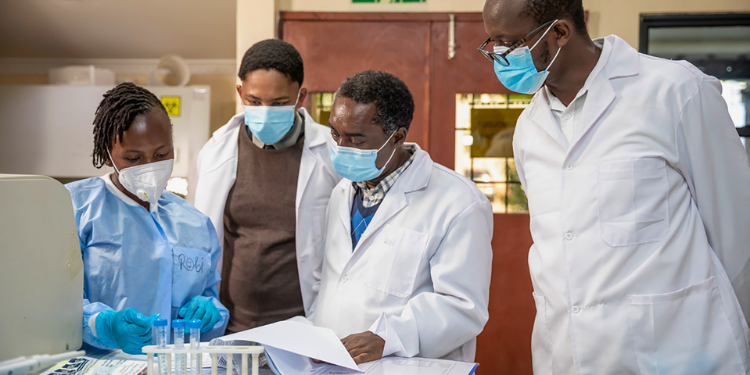
Dna Paternity Tests: What Can Lead To Incorrect Results?

Photo of Laboratory scientists process and analyse DNA samples during testing. PHOTO/WHO

FacebookTwitterLinkedInRedditWhatsApp
Advertisement

DNA paternity tests are widely used to establish biological relationships, but under certain circumstances, they can produce misleading results.

Sample mix-ups, unusual genetic conditions and the involvement of close biological relatives can complicate the interpretation of DNA evidence.

Most properly conducted paternity tests are highly reliable, with accredited laboratories reporting accuracy rates above 99.9 per cent.

However, scientific studies have documented cases in which initial results wrongly excluded a biological father or failed to distinguish him from a close relative.

How DNA Paternity Tests Can Produce Wrong Results

A paternity test compares genetic markers a child inherits from the biological mother and father.

Laboratories examine specific regions of DNA to determine whether the alleged father is genetically consistent with being the child’s biological parent.

ADVERTISEMENT

The Association for the Advancement of Blood and Biotherapies (AABB), which accredits relationship-testing laboratories, says accredited facilities follow quality standards designed to maintain sample traceability, validate testing procedures and reduce the risk of incorrect reporting.


Also Read: Why Kenya is Using COVID-19 Drug to Treat Ebola


However, errors can occur when samples are collected, labelled, transported or processed incorrectly.

If a sample is attributed to the wrong person, the laboratory may produce a technically accurate analysis of someone else’s DNA.

The AABB advises people who dispute their results to contact the testing facility and request a review.

According to the Kenya Ministry of Health, facilities must maintain procedures for addressing such complaints.

ADVERTISEMENT

When a Biological Father Is Wrongly Excluded

A rare genetic condition known as tetragametic chimerism can complicate paternity testing.

It occurs when one individual has two genetically distinct populations of cells, meaning DNA obtained from different tissues may not produce identical genetic profiles.

In a study published in the European Journal of Medical Genetics in August 2023, researchers Andrei Semikhodskii, Tatiana Makarova, and Daria Sutyagina documented a case in which they initially excluded a man as a child’s biological father.

The initial analysis compared a cheek-swab sample from the child with a blood sample from the alleged father.

The results excluded paternity at six genetic markers.

Further testing using the man’s semen and samples from other tissues revealed a different picture.

The researchers found genetic evidence supporting his paternity, explaining that chimerism had complicated the initial results.

The study demonstrated how testing a different tissue and conducting further genetic analysis can resolve an apparent exclusion.

A separate case published in 2018 also documented a man whose paternity was initially excluded by repeated DNA tests.

Researchers eventually confirmed that he was the child’s biological father after investigating his genetic condition.

When a Close Relative Is Mistaken for the Father

Another challenge arises when the alleged father is a close relative of the biological father, such as a brother.

A 2013 study published in Croatian Medical Journal examined the risk of falsely identifying a close relative as a child’s father.

Researchers used 10,000 computer-simulated families to assess how genetic similarities could affect paternity conclusions.

The study found that the risk of false inclusion was highest when a sibling was presented as the father and the mother’s DNA profile was unavailable.

The researchers reported a simulated false-inclusion rate of approximately 19% in that specific scenario using 15 genetic markers.


Also Read: Who Is Ciggie Johnson? Viral Club Host at Center of Shocking DNA Test Revelation


The figure does not represent the general error rate of paternity tests.

Instead, it demonstrates how the absence of the mother’s DNA and the genetic similarity between close relatives can affect particular cases.

Including the mother’s DNA profile and examining additional genetic markers can help laboratories distinguish between possible relationships.

How to Verify a Disputed DNA Result

The AABB recommends contacting the laboratory that conducted a disputed test.

Accredited facilities follow established procedures for reviewing complaints and maintaining records linking samples to the people tested.

For legal proceedings, documented identity verification and a clear chain of custody are important because they establish who provided each sample and how it was handled.

If concerns remain, independent testing by an appropriately accredited laboratory may help resolve the dispute.

In cases involving unusual genetic findings, additional samples from different tissues or more extensive genetic analysis may be necessary.

In an interview with The Kenya Times, James Mekenye, Program Director at the Family Peace Association (FPA) Kenya, says that mandatory DNA testing at birth could create chaos and expose families to painful consequences.

“DNA testing should ideally be considered when paternity is questioned or concerns are raised by a third party, rather than being conducted routinely,” he stated.

He further observed that the decision to seek DNA testing often stems from a lack of trust between couples.

Follow our WhatsApp Channel and X Account for real-time news updates.
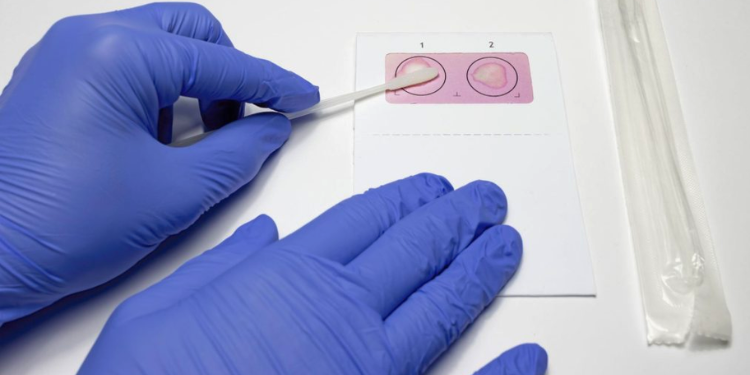
Dna Paternity Tests: What Can Lead To Incorrect Results?
Photo of a lab technician testing DNA samples. PHOTO/WHO
Tags: DNA test
Wiltord Otieno

Wiltord Otieno

Wiltord Otieno is a passionate journalist at The Kenya Times with a keen eye for impactful stories. He specializes in sports writing, digital content, and storytelling that informs and inspires. Wiltord is driven by curiosity, delivering clear, engaging narratives that inform, challenge, and inspire audiences, and always ready to grow in this fast-evolving media landscape. He holds a Bachelor of Arts in Journalism and Mass Communication from The Technical University of Kenya. He can be reached at [email protected]

Related Posts

Kenya Receives 500 Doses Of Remdesivir, Covid-19 Drug, To Treat Ebola Patients

Why Kenya is Using COVID-19 Drug to Treat Ebola

October 21, 2026
Knh Ceo Speaks Out After Video Raising Concerns About Hospital Services Goes Viral

KNH Announces Next Step After Viral Video On Patient’s Experience

October 18, 2026
Who Stand On Lockdown As Kenya'S Ebola Cases Hit 3

WHO Stand on Lockdown as Kenya’s Ebola Cases Hit 3

October 17, 2026
Knh Performs Africa’s First-Ever Windpipe Reconstruction Without A Breathing Tube

 KNH Performs Africa’s First-Ever Windpipe Reconstruction Without a Breathing Tube

October 16, 2026

Leave a Reply Cancel reply

Your email address will not be published. Required fields are marked *

ADVERTISEMENT

The Kenya Times Facebook

LATEST NEWS

  • Traffic Snarl-Up as University Students Protest in Nairobi, Block Roads
  • Detectives Corner Suspect Caught on Camera Robbing Foreigner in Parklands
  • Ndindi Nyoro Makes Fresh Allegations Over KSh42 Billion KPC Share Sale After Parliament Suspension
  • Six Workers Feared Trapped After Quarry Collapses
  • Who Is Ahmed Kalebi? Kenyan Pathologist Inducted to Global Hall of Fame
  • Oil Tankers Expected at Kenyan Ports in Next 14 Days as Fuel Supply Concerns Persist
  • Can a DNA Test Name the Wrong Father? What Rare Cases Reveal
  • Former Accountant Loses Apartments, Cars and Ksh53M Bank, M-PESA Deposits
  • Who Was Eva Ngigi Sarwari? Oxford-Trained Equity Bank Executive Who Died in China
  • Why Kenya is Using COVID-19 Drug to Treat Ebola
  • How Quality PhDs Can Power Kenya’s Knowledge Economy and Innovation
  • 600 CEOs List 6 Things They Want Ruto to Change
  • Govt Responds to Trump’s New Travel Advisory on Kenya
  • ‘No Ebola Here’: Uganda Hits Back After Nigeria Links Case to Kampala
  • Mosiria Exposes Plot to Fire Him from Sakaja Govt
ADVERTISEMENT

Company

About Us

Our Authors

Our Experts

Social Media

Policies

Privacy Policy

House Rules

Standards and Policies

Terms and Conditions

Subscription

My Account

Contact Us

Contact Us

Join Our Team

Advertise With Us

© Copyright 2026 | The Kenya Times | All Rights Reserved

Welcome Back!

Sign In with Facebook
Sign In with Google
Sign In with Linked In
OR

Login to your account below

Forgotten Password? Sign Up

Create New Account!

Sign Up with Facebook
Sign Up with Google
Sign Up with Linked In
OR

Fill the forms below to register

All fields are required. Log In

Retrieve your password

Please enter your username or email address to reset your password.

Log In
Your Privacy and Cookies
We use cookies on our website to give you the most relevant experience by remembering your preferences and repeat visits. By clicking “Accept”, you consent to the use of ALL the cookies.
Do not sell my personal information.
Cookie settingsACCEPT
Privacy & Cookies Policy

Privacy Overview

This website uses cookies to improve your experience while you navigate through the website. Out of these cookies, the cookies that are categorized as necessary are stored on your browser as they are essential for the working of basic functionalities of the website. We also use third-party cookies that help us analyze and understand how you use this website. These cookies will be stored in your browser only with your consent. You also have the option to opt-out of these cookies. But opting out of some of these cookies may have an effect on your browsing experience.
Necessary
Always Enabled
Necessary cookies are absolutely essential for the website to function properly. This category only includes cookies that ensures basic functionalities and security features of the website. These cookies do not store any personal information.
Functional
Functional cookies help to perform certain functionalities like sharing the content of the website on social media platforms, collect feedbacks, and other third-party features.
Performance
Performance cookies are used to understand and analyze the key performance indexes of the website which helps in delivering a better user experience for the visitors.
Analytics
Analytical cookies are used to understand how visitors interact with the website. These cookies help provide information on metrics the number of visitors, bounce rate, traffic source, etc.
Advertisement
Advertisement cookies are used to provide visitors with relevant ads and marketing campaigns. These cookies track visitors across websites and collect information to provide customized ads.
Others
Other uncategorized cookies are those that are being analyzed and have not been classified into a category as yet.
SAVE & ACCEPT
LOGIN | REGISTER
  • Login
  • Sign Up
  • Cart
No Result
View All Result
  • News
    • Latest News
    • Breaking News
    • Investigations
    • Explainers
    • Fact Check
  • Politics
    • Global Politics
    • Conflicts & Security
    • Elections
    • Diplomacy
    • Government & Policy
    • Political Analysis
  • Business
    • Global Economy
    • Markets
    • Technology
    • Startups
    • Energy
    • Finance
  • World News
    • Americas
    • Asia
    • Asia Pacific
    • Africa
    • Europe
    • Middle East
  • Africa
    • East Africa
    • West Africa
    • Southern Africa
    • Central Africa
  • Health
    • Global Health
    • Public Health
    • Health Policy
    • Medical Research
    • Diseases & Conditions
    • Mental Health
    • Nutrition
    • Climate & Health
    • Health Explainers
  • Sports
    • World Cup 2026
    • Athletics
    • Basketball
    • Boxing
    • Cricket
    • Football
    • Formula 1
    • Golf
    • Rugby
  • Weather
    • Climate Business
    • Climate Change
    • Climate Solutions
    • Living Green
  • Culture
    • Arts
    • Film & TV
    • Food and Recipes
    • Lifestyle
    • Music
    • People
    • Travel
  • Opinion
    • Editorials
    • Letters
  • Behind The Brand
  • Contact Us

Not enough quota to unlock this post
Unlock left : 0
Are you sure want to cancel subscription?