

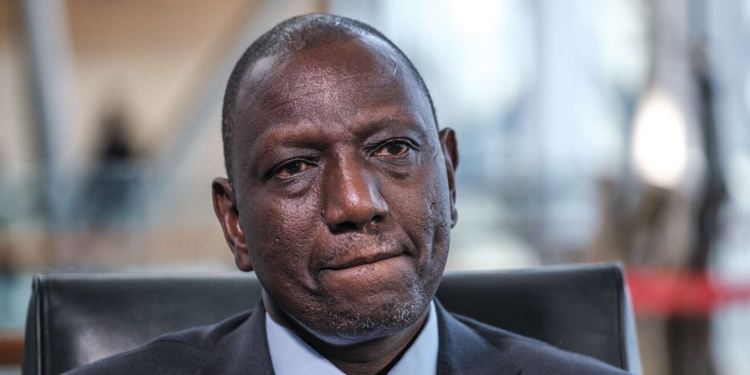
President William Ruto is facing fresh pressure from business leaders who want his administration to cut the cost of doing business, make loans more affordable, and provide predictable tax policies to support private-sector growth.
The demands are contained in the Central Bank of Kenya (CBK) September 2026 Chief Executive Officers’ Survey Report, which outlines six interventions respondents say could improve Kenya’s business environment.
The survey targeted the CEOs of 600 private-sector firms between September 7 and 18, 2026, seeking their views on business activity, growth prospects and the challenges facing companies.
One of the main demands is to reduce the cost of doing business, with business leaders calling for lower levies, license fees, compliance costs, and production expenses.
“Reduce the cost of doing business by lowering levies and license fees, compliance costs and production costs to improve competitiveness and preserve households’ disposable income,” the CEOs said.
The recommendation comes as firms continue to identify high operating expenses and energy prices among the constraints affecting their growth prospects.
Ruto Asked by CEOs to Lower Cost of Business Loans
The business leaders also want the government to support access to affordable credit, particularly for small and medium-sized enterprises (SMEs).
They have called for lower lending rates, simpler loan application requirements, and more flexible repayment terms to help businesses finance operations and expansion.
“Expand access to affordable credit through lower lending rates, simpler loan requirements and flexible repayment terms, particularly for SMEs,” the CEOs said.
According to the survey, 26.7 percent of respondents rated access to bank loans as difficult or very difficult in the third quarter of 2026.
High collateral requirements, lengthy approval processes and documentation demands continued to limit access to financing, particularly for smaller businesses.
Although some firms reported lower lending rates, the report noted that borrowing costs and cautious lending practices remained obstacles for some businesses.
Also Read: CBK Report Reveals Why Many Kenyans Are Still Struggling to Find Jobs
Ruto’s government was urged to provide predictable tax policies
CEOs also raised concerns about taxation and regulatory uncertainty, and want greater clarity before the government introduces new measures.
They called for consultation with the private sector and better coordination among government agencies to reduce overlapping requirements and the administrative burden on companies.
“Maintain predictable tax and regulatory policies, with adequate consultation and better coordination across government agencies before implementation,” the report states.
The recommendation, according to the CEOs, emphasizes consistency in government decisions, allowing businesses to plan investments, manage expenses, and make longer-term financial commitments.
The CEOs also want the government to simplify business licensing by consolidating national and county permits.
At the same time, they want Ruto’s government to reduce bureaucracy and speed up import clearance.
“Simplify business licensing and regulatory processes by consolidating national and county permits, reducing bureaucracy and expediting import clearance,” the recommendation reads.
Also Read: Ruto Announces New PAYE Tax Exemption for Millions of Kenyans
Governance, electricity costs among key concerns
The sixth set of concerns covers governance, infrastructure and the cost of energy, which affect how businesses operate and compete.
The CEOs called for stronger adherence to the rule of law, action against corruption and reduced wasteful public spending. They also want long-term development plans that extend beyond election cycles to give businesses greater certainty.
The report says the government should “Strengthen governance and the rule of law, combat corruption and reduce wasteful spending.”
On infrastructure, the respondents called for lower energy costs, more reliable electricity, better transport networks and improved digital infrastructure. They also highlighted the need to support local production, skills development and access to export markets.
These measures, the report says, could help businesses manage production costs and improve their competitiveness.
What the survey says about business growth
Despite the concerns, the September survey found that business leaders remained optimistic about growth prospects for their companies and the Kenyan economy over the next 12 months, with optimism improving compared with the July 2026 survey.
Demand, orders and sales improved during the third quarter, while production and employment remained broadly stable. However, purchase prices increased, putting pressure on businesses’ operating expenses.
The CBK report also noted that firms expected business activity to improve in the fourth quarter of 2026, supported by seasonal demand.
Follow our WhatsApp Channel and X Account for real-time news updates.