
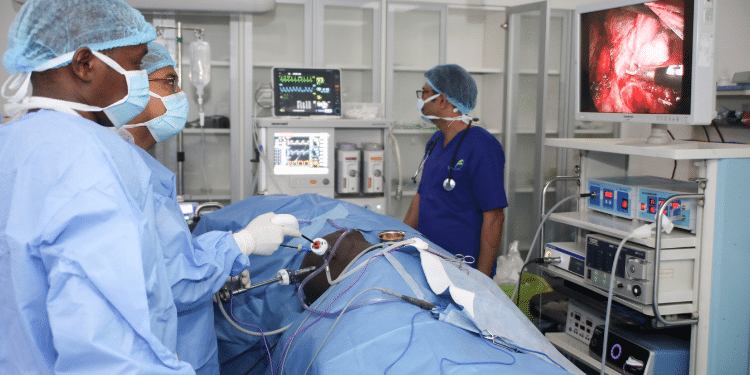
Kenyan-trained doctors seeking to practice medicine in the United States must navigate a complex licensing and certification process to ensure they meet US standards.
Foreign medical graduates (FMGs) often need to complete additional coursework beyond their original medical training abroad.
Those practicing in the U.S. must complete extra education and training beyond their existing medical degree to meet American standards.
Foreign doctors can work in the U.S. healthcare system even before full licensure, taking roles such as patient care technicians, medical assistants, registered nurses, or laboratory technicians, which allow them to remain in the medical field while completing the licensing process.
Steps for Foreign Doctors to Practice Medicine in the U.S.
- Verify Medical Credentials
- Obtain ECFMG (Educational Commission for Foreign Medical Graduates) certification.
- Ensure your medical school and graduation year are listed in the Medical Education World Directory.
- Pass USMLE Exams
- Step 1 – Basic medical sciences.
- Step 2 CK (Clinical Knowledge) – Clinical knowledge.
- Step 2 CS (Clinical Skills) – Assesses patient interaction, communication, and spoken English proficiency (if required; currently under review by USMLE).
- Apply for Residency
- Enroll in a residency program in the U.S., accredited by the ACGME.
- Residency duration depends on specialty (3–7 years).
- Some U.K.-trained specialists may qualify for partial exemptions.
- Complete Graduate Medical Education (GME)
- Gain hands-on clinical experience under supervision.
- Completion of at least 1–3 years of GME is required for licensure.
- Pass USMLE Step 3
- Tests medical knowledge with emphasis on patient management in ambulatory settings.
- Typically taken after the first year of residency.
- Obtain State Medical License
- Apply to the medical board of the state where you plan to practice.
- Each state has specific licensure requirements.
Also Read: Duale Moves to Stop Foreign Doctors from Flooding Kenya
-
Optional: Board Certification
- Voluntary but recommended for career advancement and certain specialties.
- Administered by specialty boards under the American Board of Medical Specialties (ABMS).
Also Read: How Much Kenyan Doctors Earn: Salaries, Allowances, and Pay Gaps
- Alternative Pathways
- Some states allow certain foreign-trained doctors to skip portions of residency if they meet certain criteria (USMLE passed, clinical experience, provisional supervised work).
- Work in Related Healthcare Roles (Optional)
- While completing licensure, foreign doctors may work as registered nurses, patient care technicians, medical assistants, or lab technicians.
Why the US Hires Foreign Doctors
The U.S. relies heavily on foreign-trained doctors because domestic medical schools train too few physicians to meet growing demand.
Many foreign-trained doctors are critical to addressing physician shortages, particularly in primary care specialties such as family medicine, internal medicine, and pediatrics, where nearly a third of practitioners are foreign-trained.
They also bring valuable cultural competency, diverse perspectives, and advanced clinical skills, enhancing care for varied patient populations.
Follow our WhatsApp Channel and X Account for real-time news updates.