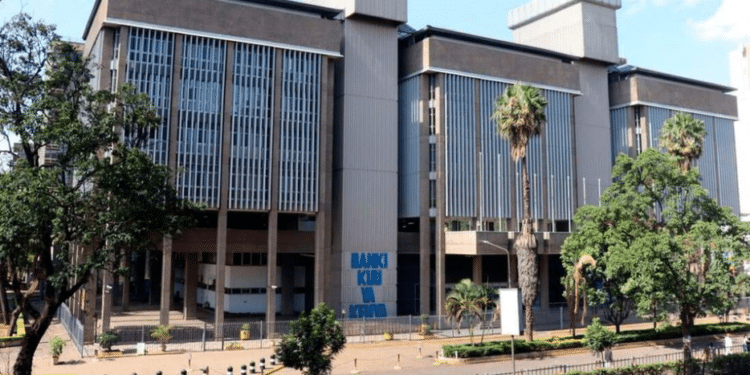
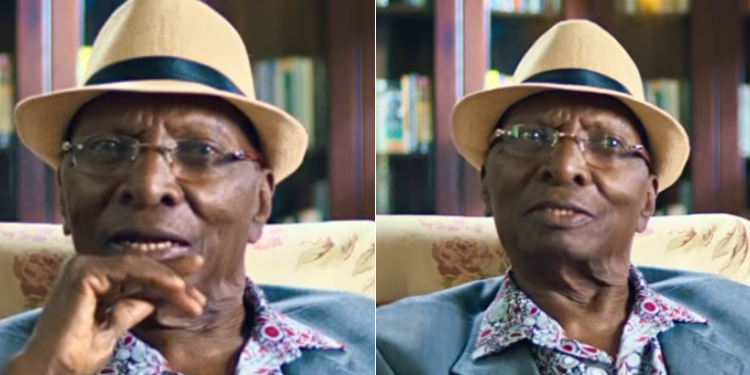
Former Central Bank of Kenya (CBK) Governor Andrew Mullei has recounted how a career that began in a small village in Makueni County took him to the BBC in London, the International Monetary Fund (IMF) in Washington and eventually to the top of Kenya’s banking sector.
Speaking about his life and career in an interview with CBK, Mullei said he never imagined that he would one day head the institution responsible for managing Kenya’s monetary policy.
He was born in Mbooni village on the Mbooni Hills and attended Mutito Primary School before joining Bugenia Missionary College in Uganda for his secondary education.
After leaving school, he did not have a specific career in mind. His first job was as a salesperson in the pharmaceutical industry, where he traveled across Kenya meeting health workers and customers.
That job exposed him to different parts of the country and gave him his first experience working across East Africa.
Denied Entry Into a Hotel During the Colonial Period
One incident from those years has remained with him.
In 1959, while traveling to Mombasa, his European supervisor asked him to meet him at Savo Inn. When Mullei arrived, he was stopped at the entrance because Africans were not allowed inside the hotel during the colonial period.
His supervisor came outside to meet him before asking him to continue his journey to Arusha and later Dar es Salaam.
Mullei said such experiences reflected the realities of the time, but they did not stop him from pursuing further opportunities.
Also Read: CBK Moves to Protect Borrowers with Tough New Lending Rules
A Job at the BBC Changed His Direction
In the early 1960s, many of Mullei’s friends secured scholarships to study abroad. He also wanted to continue his education and traveled to London in 1961 hoping to secure a scholarship.
Instead, he found employment.
A Kenyan working at the BBC introduced him to his supervisor, Mr Harrison, who offered him a broadcasting job.
Mullei prepared and presented Kiswahili programs explaining events in Britain to listeners in Kenya, Uganda, Tanzania and other parts of Eastern and Southern Africa.
Although he enjoyed broadcasting, he decided to leave the BBC after receiving a scholarship to study economics at the University of Prague.
He first attended a language school, learned Czech and then began his university studies.
From Prague to Washington
His studies later took him to the United States.
He enrolled at George Washington University, completed his undergraduate studies, and later earned a master’s degree at Howard University while continuing with doctoral studies.
During that period, IMF officials visited American universities to recruit economists.
Mullei was interviewed and offered a position as Technical Assistant to an Executive Director at the IMF as he was finishing his PhD studies.
He later joined the United Nations Economic Commission for Africa in Addis Ababa as a Trade Policy Adviser.
Also Read: How Money Is Printed in Kenya: CBK, Constitution, Currency History and Printing Firms
Meeting Kibaki and Duncan Ndegwa
While working abroad, Mullei met senior Kenyan officials, including the late President Mwai Kibaki and Duncan Ndegwa.
Kibaki was Kenya’s representative at the World Bank while Duncan Ndegwa represented the country at the IMF.
During a dinner meeting in Washington, Kibaki questioned him on economic issues, including monetary policy and supply curves.
The discussion later turned to Kenya’s coffee export earnings.
Mullei argued that releasing the foreign exchange proceeds into the economy immediately would increase inflation. Instead, he said the money should remain in a separate account until it was needed.
Duncan Ndegwa agreed with the proposal.
Not long afterward, Ndegwa telephoned Mullei and asked him to return to Kenya.
“I had already decided that I wanted to come home,” Mullei said, adding that serving the country mattered more to him than the salary.
Joining the Central Bank
After returning to Kenya, Andrew Mullei met Kibaki at the Treasury.
Kibaki asked him to examine Kenya’s monetary policy, exchange rates, interest rates and lending practices and recommend improvements.
He was appointed Counselor to the Governor.
When Philip Ndegwa succeeded Duncan Ndegwa as Governor, he asked Mullei to prepare a paper explaining how the Central Bank was organized, what it did, how it operated and where improvements were needed.
The assignment became the foundation of Mullei’s work at the bank.
Philip Ndegwa later promoted him to Director of Research.
The two also worked together on a policy paper outlining how Kenya’s monetary and fiscal policies should respond after the failed 1982 coup attempt.
Appointed CBK Governor
After leaving government and establishing an economic research institution, Mullei did not expect to return to public service.
He said he first learned about his appointment as Governor through a radio announcement.
His predecessor’s term had not ended, making the appointment unexpected.
He took office at a time when Kenya was dealing with high government spending, economic uncertainty and pressure from development partners to implement reforms.
Rather than introducing sweeping structural changes, Mullei said his focus was to strengthen an institution that already had experienced staff and established systems.
Changes Inside the Central Bank
Mullei said one of his first assignments was reviewing how the Central Bank operated.
He assessed employees’ qualifications, training and experience before moving staff into positions that matched their skills.
The changes were made gradually through internal administrative decisions.
He also introduced regular salary reviews to reward good performance instead of waiting years before recognizing employees.
Another area he wanted to change was the working culture.
He said senior officers rarely interacted with junior staff and different departments operated in isolation.
According to Mullei, some of those practices dated back to the colonial administration.
“We were all working towards the same objective,” he said.
“The contribution of a cleaner was just as important as that of a director because everyone was working towards the same institutional goals.”
He said the bank also introduced staff retreats to improve teamwork and conducted salary surveys to ensure employees remained competitive with other institutions.
Promotion criteria, he added, had to be clear and staff salaries should never be delayed.
Working With President Kibaki
Mullei said President Mwai Kibaki respected the independence of the Central Bank.
He recalled Kibaki telling him:
“You are the Governor. You tell us what to do with the exchange rate, not the other way round.”
According to Mullei, the policy changes introduced during Kibaki’s administration began producing results within the first year.
His View on Economic Management
Looking back, Mullei said improving an economy requires sound public finance and consistent monetary policy.
He said governments should focus on creating jobs, ensuring families have enough food and enabling children to attend school.
In his view, achieving those goals depends on making the right policy decisions and implementing them consistently.
Follow our WhatsApp Channel and X Account for real-time news updates.