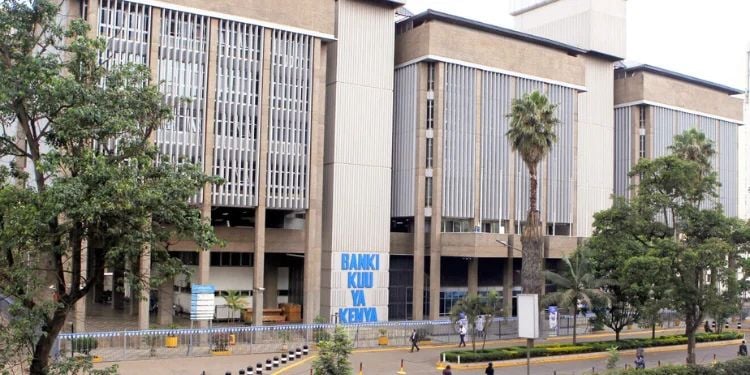
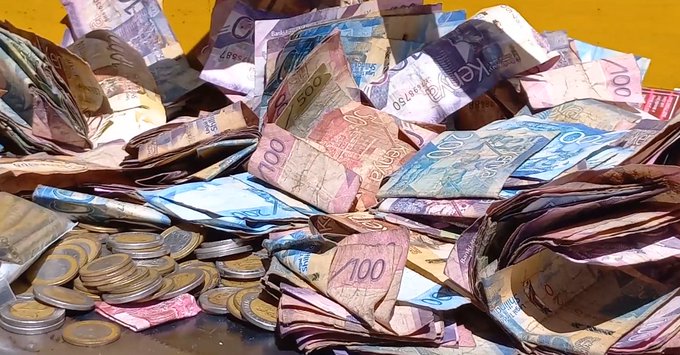
Every Kenyan banknote and coin in circulation goes through a controlled process involving constitutional authority, monetary regulations, security printing companies, and strict approval procedures.
The Central Bank of Kenya (CBK) has a legal responsibility, through its mandate, to issue currency.
Kenya relies on international security printing companies to manufacture banknotes.
For more than five decades, British firm De La Rue and its predecessors produced Kenyan currency before Kenya transitioned to a new printing partner, Germany’s Giesecke+Devrient Currency Technologies GmbH (G+D) in 2023.
Constitutional and Legal Framework Governing Kenya’s Currency
Article 231 of the 2010 Constitution of Kenya defines the responsibilities of the Central Bank of Kenya.
“The Central Bank of Kenya shall be responsible for formulating monetary policy, promoting price stability, issuing currency and performing other functions conferred on it by an Act of Parliament,” reads the Constitution.
CBK determines when new currency is required, the denominations to be produced, the security features included and the conditions under which money enters circulation.
Also Read: Questions Emerge After Kenyan Forex Traders Lose Ksh7 Billions Despite Lavish Lifestyle Displays
The Kenyan Constitution does not require CBK to manufacture banknotes physically. Instead, the Central Bank can engage specialized currency printing companies with the technical capacity to produce secure banknotes while maintaining control over the process.
According to the Constitution, Article 231(3) provides for the independence of CBK, allowing it to make monetary policy decisions without interference, including decisions relating to currency supply.
“The Central Bank of Kenya shall be independent and shall not be subject to direction or control by any person or authority in the exercise of its powers or in the performance of its functions,” reads part of the constitution.
This independence is also guided by the Constitution, which states that notes and coins issued by CBK may bear images that symbolize Kenya or an aspect of Kenya, but shall not bear the portrait of any individual.
The constitutional mandate is supported by the Central Bank of Kenya Act, which gives CBK powers to issue, manage and regulate currency.
Under the Act, CBK is responsible for ensuring an adequate supply of clean currency, withdrawing damaged notes from circulation and protecting the integrity of Kenya’s money.
De La Rue’s 57-Year Role in Printing Kenyan Banknotes
Since 1966, the source of Kenyan banknotes was largely linked to De La Rue International (DLR) and its predecessors, including Thomas De La Rue & Company Limited (TDR) and Bradbury & Wilkinson, all based in the United Kingdom.
Thomas De La Rue later took over Bradbury & Wilkinson in 1986, consolidating the companies’ involvement in security printing.
In October 1992, De La Rue expanded its operations into Kenya by establishing a banknote printing factory at Ruaraka, Nairobi County. The facility became responsible for printing Kenyan banknotes locally.
Initially, the plant was fully owned by De La Rue. However, in 2017, the Government of Kenya, through the National Treasury, acquired a 40% stake in De La Rue Kenya EPZ Limited.
The partnership produced Kenya’s 2019-series banknotes, which were issued following changes introduced under the 2010 Constitution, including the removal of individual portraits and the introduction of designs representing Kenya’s national heritage.
According to CBK, previous currency printing contracts were awarded through direct procurement. However, the contract for the 2019-series banknotes underwent a competitive bidding process.
The procurement process took five years, beginning from the pre-qualification stage until the final delivery of the banknotes.
How Banknotes Are Produced in Kenya
Following the end of the De La Rue arrangement, CBK selected Giesecke+Devrient Currency Technologies GmbH (G+D), a German security printing company, to produce Kenya’s new banknotes.
The contract was valued at KSh14.2 billion over a five-year period.
The 2024-series banknotes maintain many design elements from the 2019 series, including national symbols and security features. The new notes also carry the signatures of the CBK Governor and the Principal Secretary, National Treasury, since 1966.
Also Read: EAC Central Bank Governors Detail Challenges Slowing Adoption of a Single Currency
Stages of Currency Printing in Kenya
CBK first approves the design and specifications before the contracted printer produces the banknotes.
The process includes multiple printing layers and the incorporation of security features such as watermarks, security threads, microprinting, and color-changing elements
Every batch is checked using both automated systems and human inspectors, where defective notes are destroyed.
Coins are manufactured by stamping metal blanks using high-pressure presses.
This is then followed by quality checks to ensure every note meets required standards.
Once printed and approved, the banknotes are delivered to CBK and later distributed to commercial banks for circulation.
Follow our WhatsApp Channel and X Account for real-time news updates.