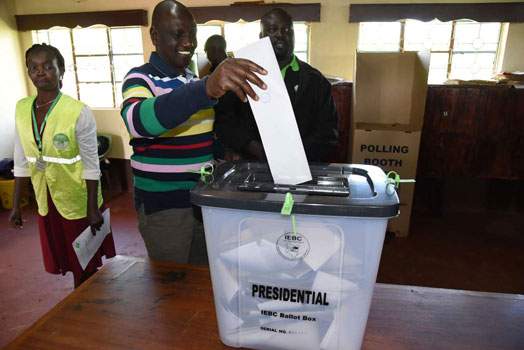
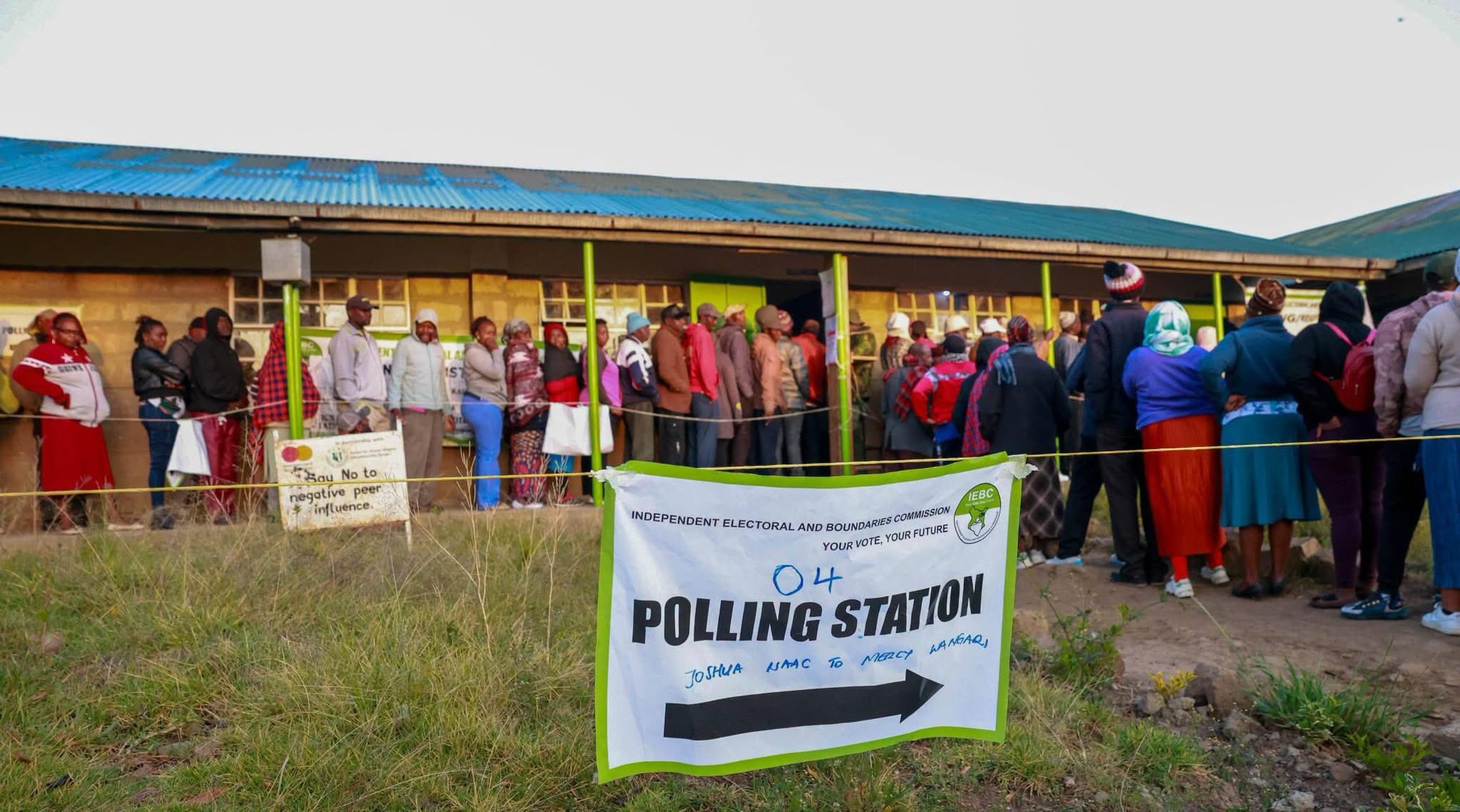
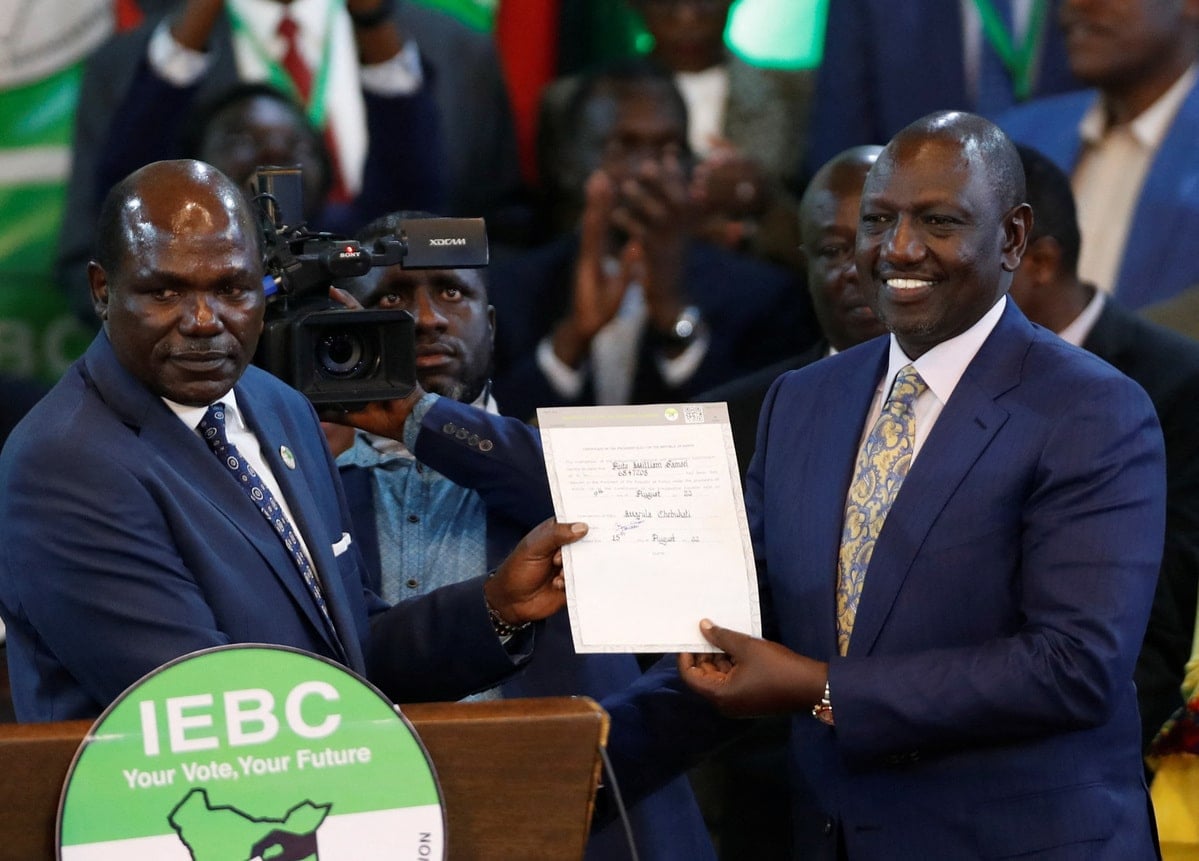
During the 2022 presidential petition, lawyer Julie Soweto projected a Form 34A from Gacharaigu Primary School in Kangema Constituency onto a screen in the Supreme Court. The name Jose Camargo, a Venezuelan employee of IEBC’s technology supplier, appeared across the image. To many viewers, the name looked like visible proof that a foreign technician had entered Kenya’s results system and handled a polling-station return.
IEBC produced the original form and gave a less dramatic explanation. The presiding officer had photographed it while it lay on a document bearing Camargo’s name, creating an image overlay. The figures on the portal image matched those on the original return. After examining the evidence, the Supreme Court said the allegation had sent it on a “wild goose chase” that yielded nothing of value.
What KIEMS Actually Does and What It Does Not
The allegation gained force because many Kenyans had never been told where one part of election technology ended and another began. By 2027, IEBC must explain those boundaries before politicians falsely explain them.
KIEMS is commonly discussed as if one machine registers voters, identifies them, counts ballots, transmits results and declares the winner. In fact, several components perform different tasks and leave different records. Biometric registration creates voter records before the election. On polling day, a kit checks whether a person appears in the register assigned to that station. After counting, the device may transmit an image of Form 34A. The public portal displays received images, while official tallying adds figures from legally prescribed forms.
This distinction changes what a failure can prove. If a kit rejects a voter’s fingerprint, the failure concerns identification. It does not show that the votes recorded later on Form 34A were altered. If a network cannot transmit an image, the paper form still contains the polling-station result. If the wrong image appears on the portal, that raises a publication and authentication problem, but the error must be compared with the original form and agents’ copies before anyone concludes that the tally changed.
When the Screens Go Blank, Paper Still Counts
The electoral body and the country ignored these distinctions in 2013. Electronic voter identification failed in many polling stations, and the results transmission system stopped after receiving figures from fewer than half. Officials returned to printed registers and manually delivered constituency returns. The election could still be completed through paper records, but IEBC had allowed technology to carry public expectations without explaining its fallback procedures. When the screens went blank, the public saw one general collapse called “the system.”
The legal position changed before the 2017 election. Section 39 of the Elections Act required IEBC to electronically transmit polling-station results in the prescribed form. The Supreme Court later annulled the August election after finding, among other failures, that IEBC had not transmitted and verified results in accordance with the Constitution and the law. The judgment did not declare that every missing electronic transmission represented stolen votes. It held IEBC to the procedures Parliament had made part of a verifiable presidential election.
Also Read: Ahead of 2027, IEBC Must Account for Every Voter Added or Transferred
The 2022 election performed better against Section 39 of the Election Act. Form 34A images were placed on a public portal that parties, newsrooms and citizens could download and tally independently. Petitioners still alleged interception, unauthorized access and alteration. The Supreme Court’s scrutiny did not find significant differences among portal images, physical returns and copies held by agents that would support those claims. That finding concerns the evidence presented in 2022; it is not a permanent certificate that the same technology will be secure in 2027.
Also, the successful transmission does not prove that the result written on a form was correct. The device photographs what polling officials have completed. It cannot determine whether ballots were counted accurately, whether an alteration was properly countersigned or whether an agent was unlawfully excluded. Those questions require ballot reconciliation, signatures, original forms, observer records and, where justified, scrutiny of the ballot box.
Technology therefore strengthens an election only when it produces records that can be compared with evidence created outside the device. A biometric log should correspond with the number of voters marked in the register. A transmitted image should match the signed form displayed at the polling station and the copies given to agents. The constituency total should be traceable to its polling-station forms. When two records differ, IEBC must preserve both and document who resolved the difference.
What IEBC Must Publish Before 2027
Before procurement for 2027 is completed, IEBC should publish a system map in ordinary language. It should name every component, its supplier, the data it receives, the officials allowed to access it, and the record created whenever they do. The commission should state which functions require connectivity, what happens when power or network coverage fails, and which paper document becomes authoritative. A voter should not need an information-technology degree to understand what happens after a kit refuses a fingerprint.
IEBC should then subject the system to an independent test whose method and results are public. The test should include failed fingerprints, duplicate identification attempts, loss of network coverage, delayed uploads, an incorrect polling-station code, and an attempted unauthorized login. Parties and observers should watch the exercise, record what the system does, and see whether the audit log identifies the user, device, action, and time.
Also Read: IEBC Split Before Declaration in 2022 and Kenya Still Has No Binding Tally Protocol
The commission must also control the language it uses. Calling every component “KIEMS” allows officials to answer a precise complaint with a general assurance that the system worked, while politicians can present one failed device as proof that the presidential tally was manipulated. Neither claim identifies the disputed component or record.
In 2027, the useful question will not be whether technology failed or succeeded. Kenyans should ask which component acted, what record it produced, and whether that record agrees with the paper held at the polling station. If IEBC cannot answer those questions before election day, the next unfamiliar name appearing beneath a photographed form may again become more persuasive than the form itself.
This article was written by George Nyongesa, a lecturer in philosophy and logic at the University of Nairobi and Chuka University.
Follow our WhatsApp Channel and X Account for real-time news updates.