Tuesday, September 1, 2026
  • News
    • Latest News
    • Breaking News
    • Fact Check
    • Investigations
    • Explainers
  • Politics
    • Global Politics
    • Elections
    • Government & Policy
    • Diplomacy
    • Conflicts & Security
    • Political Analysis
  • Business
    • Global Economy
    • Markets
    • Technology
    • Startups
    • Energy
    • Finance
  • World News
    • Americas
    • Asia
    • Asia Pacific
    • Africa
    • Europe
    • Middle East
  • Africa
    • Central Africa
    • East Africa
    • West Africa
    • Southern Africa
  • Health
    • Global Health
    • Public Health
    • Health Policy
    • Medical Research
    • Diseases & Conditions
    • Mental Health
    • Nutrition
    • Climate & Health
    • Health Explainers
  • Sports
    • World Cup 2026
    • Athletics
    • Basketball
    • Boxing
    • Cricket
    • Football
    • Formula 1
    • Golf
    • Rugby
  • Weather
    • Climate Business
    • Climate Change
    • Climate Solutions
    • Living Green
  • Culture
    • Arts
    • Film & TV
    • Food and Recipes
    • Music
    • Lifestyle
    • Travel
  • Opinion
    • Editorials
    • Letters
  • Behind The Brand
REGISTER
LOGIN
No Result
View All Result
The Kenya Times
  • News
    • Latest News
    • Breaking News
    • Fact Check
    • Investigations
    • Explainers
  • Politics
    • Global Politics
    • Elections
    • Government & Policy
    • Diplomacy
    • Conflicts & Security
    • Political Analysis
  • Business
    • Global Economy
    • Markets
    • Technology
    • Startups
    • Energy
    • Finance
  • World News
    • Americas
    • Asia
    • Asia Pacific
    • Africa
    • Europe
    • Middle East
  • Africa
    • Central Africa
    • East Africa
    • West Africa
    • Southern Africa
  • Health
    • Global Health
    • Public Health
    • Health Policy
    • Medical Research
    • Diseases & Conditions
    • Mental Health
    • Nutrition
    • Climate & Health
    • Health Explainers
  • Sports
    • World Cup 2026
    • Athletics
    • Basketball
    • Boxing
    • Cricket
    • Football
    • Formula 1
    • Golf
    • Rugby
  • Weather
    • Climate Business
    • Climate Change
    • Climate Solutions
    • Living Green
  • Culture
    • Arts
    • Film & TV
    • Food and Recipes
    • Music
    • Lifestyle
    • Travel
  • Opinion
    • Editorials
    • Letters
  • Behind The Brand
  • News
    • Latest News
    • Breaking News
    • Fact Check
    • Investigations
    • Explainers
  • Politics
    • Global Politics
    • Elections
    • Government & Policy
    • Diplomacy
    • Conflicts & Security
    • Political Analysis
  • Business
    • Global Economy
    • Markets
    • Technology
    • Startups
    • Energy
    • Finance
  • World News
    • Americas
    • Asia
    • Asia Pacific
    • Africa
    • Europe
    • Middle East
  • Africa
    • Central Africa
    • East Africa
    • West Africa
    • Southern Africa
  • Health
    • Global Health
    • Public Health
    • Health Policy
    • Medical Research
    • Diseases & Conditions
    • Mental Health
    • Nutrition
    • Climate & Health
    • Health Explainers
  • Sports
    • World Cup 2026
    • Athletics
    • Basketball
    • Boxing
    • Cricket
    • Football
    • Formula 1
    • Golf
    • Rugby
  • Weather
    • Climate Business
    • Climate Change
    • Climate Solutions
    • Living Green
  • Culture
    • Arts
    • Film & TV
    • Food and Recipes
    • Music
    • Lifestyle
    • Travel
  • Opinion
    • Editorials
    • Letters
  • Behind The Brand
No Result
View All Result
The Kenya Times ~ Trending, Breaking News and Videos
No Result
View All Result
ADVERTISEMENT

Ceasefires Like the One Between Iran and Israel Often Fail – But an Agreement With Specific Conditions Is More Likely To Hold

The ConversationbyThe Conversation
July 14, 2025
Reading Time: 8 mins read
A Photo Collage Of Iran President Masoud Pezeshkian, U.s President Donald Trump And Israeli Prime Minister Benjamin Netanyahu. Photo/Post/Britannica/The New York Times. Trump

A photo collage of Iran’s President Masoud Pezeshkian, U.S President Donald Trump and Israeli Prime Minister Benjamin Netanyahu. PHOTO/Post/Britannica/The New York Times.

FacebookTwitterLinkedInRedditWhatsApp
Advertisement

Within hours of President Donald Trump unexpectedly announcing an upcoming ceasefire between Israel and Iran on June 23, 2025, both countries launched airstrikes against the other.

“We basically have two countries that have been fighting so long and so hard that they don’t know what the f–k they’re doing,” an angry and frustrated Trump told reporters outside the White House on June 24.

While Iran and Israel have tentatively agreed to the truce – and Trump reiterated on June 24 that the “ceasefire is in effect” – it is not clear whether this deal can hold. Some research shows that an estimated 80% of ceasefire deals worldwide fail.

Amy Lieberman, a politics and society editor at The Conversation U.S., spoke with former Ambassador Donald Heflin, an American career diplomat who serves as the executive director of the Edward R. Murrow Center at the Fletcher School, Tufts University, to understand how ceasefires typically work – and how the Israel-Iran deal stacks up against other agreements to end wars.

How do ceasefire deals typically happen?

There are classes taught on how to negotiate ceasefires, but it is ad hoc with each situation.

For example, in one scenario, one of the warring parties wants a ceasefire and has decided that the conflict isn’t going well. The second party might not want a ceasefire, but could agree that it is getting tired or the risks are too high, and agrees to work something out.

The next scenario, which leads to more success, is when both parties want a ceasefire. They decide that the loss of life and money has gone too far for both sides. One of the parties approaches the other through intermediaries to say it wants a ceasefire, and the other warring party agrees.

In a third situation – which is what we are seeing with the Iran-Israel deal – the outside world imposes a ceasefire. Trump likely told both Israel and Iran: Look, it’s enough. This is too dangerous for the rest of the world. We don’t care what you think. Time for a ceasefire.”

The U.S. has done this in the Middle East before, like after the Yom Kippur War in 1973 between Israel and a coalition of Arab countries led by Egypt and Syria. Israel was achieving big military victories, but the risk was pretty great for the world. The U.S. came in and said, “That’s enough, stop it now.” And it worked.

Does the US bring the warring parties to a table in this kind of situation, or simply pressure the countries to stop fighting?

It is more of the U.S. saying, “We are done.” When the U.S. does something like this, it is often going to have backup from the European Union and other countries like Qatar, saying, “The Americans are right. It is time for a ceasefire.”

It appears that this Israel-Iran deal does not have specific conditions attached to it. Is that typical of a ceasefire deal?

This deal doesn’t seem to have any specific details attached to it. Ceasefires work better when they have that. Lasting ceasefires need to address the concerns of the warring parties and give each side some of what it wants.

For instance, in the Ukraine and Russia war, we have not seen either one of those countries push for a ceasefire. Part of the problem is Crimea and eastern Ukraine, sections of land in Ukraine that Russia has annexed and claims as its own. Russia would be happy with a deal that puts it in charge of Crimea and Ukraine, but Ukraine won’t agree to that. The question of who controls specific areas of land has to be addressed in this conflict; otherwise, the ceasefire isn’t going to last.
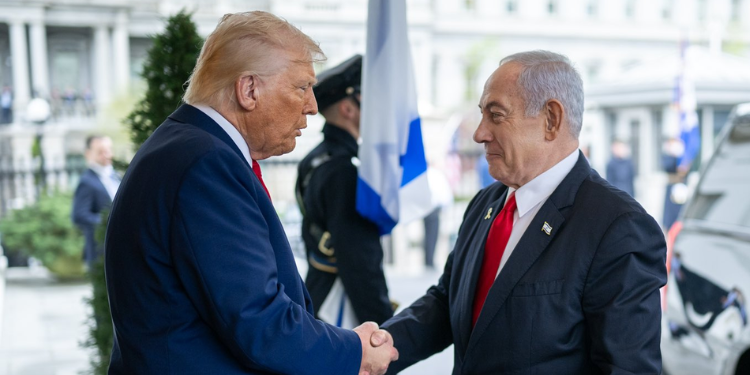
President Donald Trump And Israel Prime Minister Benjamin Netanyahu. Photo/White House. Iran
President Donald Trump and Israeli Prime Minister Benjamin Netanyahu. PHOTO/White House.

Who is responsible for ensuring that both sides uphold a ceasefire?

Security guarantees are an important part of negotiating and maintaining long-term ceasefires. Big countries like the U.S. could say that if a warring party violates a ceasefire agreement, they are going to punish them.

In the 1990s, the U.S. and Europe assured Ukraine that if it gave up its nuclear arsenal, the U.S. would defend Ukraine if Russia ever invaded it. Russia has invaded Ukraine twice since then, in 2014 and 2022. The U.S. gave a more substantial response in the form of sending weapons and other war materials to Ukraine after the 2022 invasion, but there have been no real consequences for Russia.

That has created a problem for ceasefires in the future, because the U.S. didn’t deliver on its past security guarantees.

The further away you get from Europe, the less interested the West is in wars. But in those kinds of disputes, United Nations and other international peacekeeping troops can be sent in. Sometimes, that can work brilliantly in one place, like with the example of international peacekeeping troops called the multilateral Observer Mission stationed between Israel and Egypt helping maintain peace between those countries. But you can copy it to another place and it just doesn’t work as well.


Also Read: Iran Cuts Ties with UN Nuclear Watchdog After Kicking Out America’s GPS Network


How does this ceasefire fit within the history of other ceasefires?

It’s too early to tell. What matters is how the details get fleshed out.

Ideally, you can get representatives of the Israeli and Iranian governments to sit around a conference table to reach a detailed agreement. The Israelis might say, “We have got to have some kind of assurances that Iran is not going to use a nuclear weapon.” And the Iranians could say, “Assassinations of our military generals and scientists has got to stop.” That kind of conversation and agreement is what is missing, thus far, in this process.


Also Read: Iran Gives Condition for Accepting Talks with U.S


Why is it so common for ceasefire deals to fail?

Some ceasefire deals don’t get to the underlying conditions of what really caused the problem and what made people start shooting this time around. If you don’t get to the core issues of a conflict, you are putting a Band-Aid on the situation. Putting a Band-Aid on someone when they are bleeding is a good move, but you ultimately might need more than that to stop the bleeding.

The outside world might be pretty happy with a ceasefire deal that seems to stop the fighting, but if the details are not ironed out, the experts would say, “This isn’t going to last.”The Conversation

Donald Heflin, Executive Director of the Edward R. Murrow Center and Senior Fellow of Diplomatic Practice, The Fletcher School, Tufts University.

This article is republished from The Conversation under a Creative Commons license. Read the original article.

Follow our WhatsApp Channel and X Account for real-time news updates.

Iran Responds To Reports Of Attacking Kenya
Iran’s supreme leader, Ali Khamenei. PHOTO/ Abedin Taherkenareh / EPA.
Tags: IranIsrael
The Conversation

The Conversation

The Conversation is an independent news organization that publishes evidence-based articles written by experts to help readers understand diverse topics. We cover a wide range of areas including arts, culture, education, health, politics, science, and more¹. Their content is characterized by in-depth analysis, research, news, and ideas from leading academics and researchers. The Conversation aims to provide academic rigor with journalistic flair.

Related Posts

Teachers Service Commission (Tsc) Has Advertised 1,631 Promotional Vacancies For Serving Teachers Across The Country

TSC Advertises 1,631 Promotional Vacancies for Teachers: How to Apply

September 1, 2026
Jkia Paralysis Forces Govt Apology After Widespread Flight Delays

Kenya Finally Apologizes to the World After JKIA Mess

September 1, 2026
Kenya Inflation Hits 6.6% As Food, Transport And Housing Costs Rise In August- Knbs Report

Cost of Living Rises in Kenya as Food, Transport and Housing Costs Climb

August 31, 2026
Investors Show Confidence In Kenya As Shilling Holds Steady

Investors Show Confidence in Kenya as Shilling Holds Steady

August 31, 2026
ADVERTISEMENT

The Kenya Times Facebook

LATEST NEWS

  • TSC Advertises 1,631 Promotional Vacancies for Teachers: How to Apply
  • Ministry of Water Announces One-Year Internship with Monthly Pay: How to Apply
  • Kenya Airways Announces Further Flight Delays After End of Strike
  • Kenya Finally Apologizes to the World After JKIA Mess
  • Flight Operations Resume After Aviation Workers Call Off Strike
  • Jane Kere Imbunya: Profile of Only Female Professor in Ruto’s Top Government
  • Cost of Living Rises in Kenya as Food, Transport and Housing Costs Climb
  • Investors Show Confidence in Kenya as Shilling Holds Steady
  • PHOTO STORY: Chemelil Sugar Revival Breathes New Life Into Kenya’s Sugar Belt
  • Full List of SHA-Accredited Health Facilities in Baringo County
  • More Revenue for Health Will Not Be Enough Without Budget Credibility
  • UK Warns Its Citizens Against Travel to Kenya in Fresh Advisory
  • Why Naming a Next of Kin at Work Won’t Decide Who Gets Your Money After Death
  • Kenya Airways Cancels Flights as JKIA Delays Top Six Hours
  • How AI Is Changing the Way We Write — and Why Knowing What’s Real Matters More Than Ever
ADVERTISEMENT

Company

About Us

Our Authors

Our Experts

Social Media

Policies

Privacy Policy

House Rules

Standards and Policies

Terms and Conditions

Subscription

My Account

Contact Us

Contact Us

Join Our Team

Advertise With Us

© Copyright 2026 | The Kenya Times | All Rights Reserved

Welcome Back!

Sign In with Facebook
Sign In with Google
Sign In with Linked In
OR

Login to your account below

Forgotten Password? Sign Up

Create New Account!

Sign Up with Facebook
Sign Up with Google
Sign Up with Linked In
OR

Fill the forms below to register

All fields are required. Log In

Retrieve your password

Please enter your username or email address to reset your password.

Log In
Your Privacy and Cookies
We use cookies on our website to give you the most relevant experience by remembering your preferences and repeat visits. By clicking “Accept”, you consent to the use of ALL the cookies.
Do not sell my personal information.
Cookie settingsACCEPT
Privacy & Cookies Policy

Privacy Overview

This website uses cookies to improve your experience while you navigate through the website. Out of these cookies, the cookies that are categorized as necessary are stored on your browser as they are essential for the working of basic functionalities of the website. We also use third-party cookies that help us analyze and understand how you use this website. These cookies will be stored in your browser only with your consent. You also have the option to opt-out of these cookies. But opting out of some of these cookies may have an effect on your browsing experience.
Necessary
Always Enabled
Necessary cookies are absolutely essential for the website to function properly. This category only includes cookies that ensures basic functionalities and security features of the website. These cookies do not store any personal information.
Functional
Functional cookies help to perform certain functionalities like sharing the content of the website on social media platforms, collect feedbacks, and other third-party features.
Performance
Performance cookies are used to understand and analyze the key performance indexes of the website which helps in delivering a better user experience for the visitors.
Analytics
Analytical cookies are used to understand how visitors interact with the website. These cookies help provide information on metrics the number of visitors, bounce rate, traffic source, etc.
Advertisement
Advertisement cookies are used to provide visitors with relevant ads and marketing campaigns. These cookies track visitors across websites and collect information to provide customized ads.
Others
Other uncategorized cookies are those that are being analyzed and have not been classified into a category as yet.
SAVE & ACCEPT
LOGIN | REGISTER
  • Login
  • Sign Up
  • Cart
No Result
View All Result
  • News
    • Latest News
    • Breaking News
    • Investigations
    • Explainers
    • Fact Check
  • Politics
    • Global Politics
    • Conflicts & Security
    • Elections
    • Diplomacy
    • Government & Policy
    • Political Analysis
  • Business
    • Global Economy
    • Markets
    • Technology
    • Startups
    • Energy
    • Finance
  • World News
    • Americas
    • Asia
    • Asia Pacific
    • Africa
    • Europe
    • Middle East
  • Africa
    • East Africa
    • West Africa
    • Southern Africa
    • Central Africa
  • Health
    • Global Health
    • Public Health
    • Health Policy
    • Medical Research
    • Diseases & Conditions
    • Mental Health
    • Nutrition
    • Climate & Health
    • Health Explainers
  • Sports
    • World Cup 2026
    • Athletics
    • Basketball
    • Boxing
    • Cricket
    • Football
    • Formula 1
    • Golf
    • Rugby
  • Weather
    • Climate Business
    • Climate Change
    • Climate Solutions
    • Living Green
  • Culture
    • Arts
    • Film & TV
    • Food and Recipes
    • Lifestyle
    • Music
    • Travel
  • Opinion
    • Editorials
    • Letters
  • Behind The Brand
  • Contact Us

Not enough quota to unlock this post
Unlock left : 0
Are you sure want to cancel subscription?