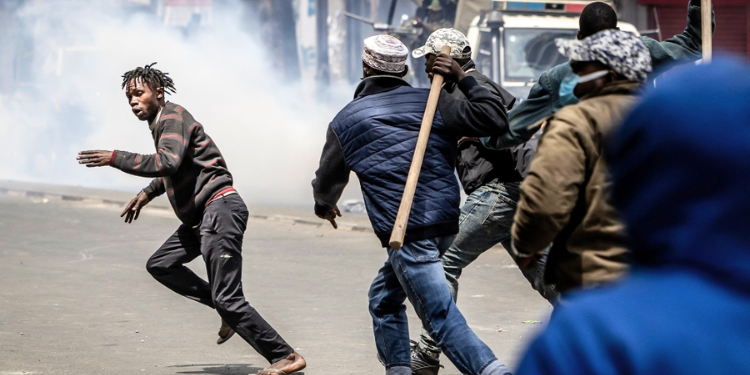
October 2026 has seen strikes, protests and public unrest in several countries, including Kenya, as workers, students and residents demonstrate over economic and social issues.
From Kenya’s university lecturers’ strike and fuel price disputes to demonstrations in France, Belgium, Italy, Albania and Portugal, the protests have centred on rising living costs, education reforms, housing affordability and government policies.
Kenya’s economic pressure intensified in October 2026 as university lecturers continued their strike and transport operators raised fares after fuel prices rose.
Kenya Faces Lecturers’ Strike
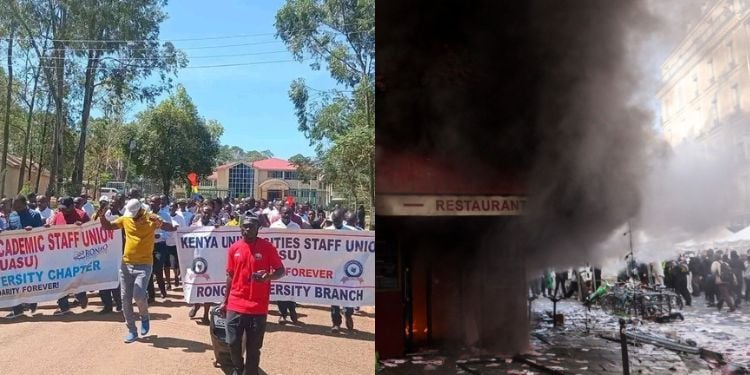
The UASU-led university lecturers’ strike began on October 2, 2026, after UASU, KUSU and KUDHEIHA rejected a proposed 4% annual salary increment, citing inflation and rising living costs.
The unions are demanding implementation of the 2025–2029 Collective Bargaining Agreement (CBA) and payment of KSh 7.9 billion in salary arrears.
Talks collapsed again on October 12 after the unions rejected a reported KSh 12 billion government package, prolonging the strike and disrupting learning. Students continue to incur accommodation and living expenses, while final-year students face uncertainty over examinations and graduation dates.
In a letter dated October 12, 2026, UASU National Secretary General Dr Constantine Wasonga Opiyo notified the Inspector General of the National Police Service of plans for a peaceful procession on Thursday, October 15.
The union said its members would assemble at the University of Nairobi’s Graduation Square at 10 am, then proceed to Parliament Buildings, the National Treasury, and the Ministry of Education offices before returning to the university.
“I wish to notify you that there will be a peaceful procession by members of the University of Nairobi Academic Staff Union (UASU). The procession will be on Thursday, 15th October,2026 from the University of Nairobi, Graduation Square to Parliament Building, National Treasury, Ministry of Education offices and back to University of Nairobi, Graduation Square.”
Wasonga requested security for the procession and copied the notice to regional and local police commanders in Nairobi. The letter was signed by Wasonga in his capacity as UASU National Secretary General.
Fuel Price Hikes and Matatu Fare Increases
On October 15, 2026, the Energy and Petroleum Regulatory Authority (EPRA) announced fuel price increases, raising petrol by KSh 12.93 per litre, diesel by KSh 9.90 and kerosene by KSh 28.49. The increases put additional pressure on households, transport operators, and businesses, as fuel costs affect public transport, freight charges, and the movement of goods.
Also Read: University Lecturers Announce Mega Protests as Strike Deepens
In a statement issued on October 15, the Matatu Owners Association announced a 10% fare increase, citing rising operating costs. The increase added to the financial burden on commuters who rely on public transport for their daily travel.
“The Motorists Association strongly condemns the petroleum price increases announced by the Energy and Petroleum Regulatory Authority (EPRA), under its newly appointed Director General, Eng. Edward Mwirigi Kinyua, for the period beginning 15 October and ending 14 November 2026,” the statement read in part.
Meanwhile, the Motorists Association of Kenya threatened peaceful nationwide protests over concerns about fuel pricing transparency, taxes and levies.
Ride-hailing drivers also proposed a minimum fare of KSh 350 for short trips and threatened protests over rising operating expenses, including fuel and vehicle maintenance costs.
Other Protesting Countries
In other countries, public unrest continued in October 2026, with demonstrations over education reforms, rising living costs, housing affordability, austerity measures and government policies.
In France, protests took place across the country on October 17, including in Paris, Marseille, Lyon, Lille, Toulouse, Nantes, Bordeaux, Strasbourg, Nice and Limoges. The demonstrations began around education concerns before expanding to include grievances over fuel prices, public services and the cost of living.
France’s Interior Ministry estimated that about 550,000 people participated in 110 marches nationwide, while organisers put attendance at up to 800,000. Prime Minister Sébastien Lecornu later said more than 1,200 people had been arrested and over 150 police officers injured. In Limoges, protesters set fire to the historic city hall built in 1883, causing severe damage to the building.
Also Read: Matatu Owners Announce New Fares With Immediate Effect
In Belgium, demonstrations took place in Brussels and Liège on October 17 over education reforms, tuition costs, austerity measures, working conditions and inequality. Police used water cannon and tear gas in Brussels following clashes with demonstrators, while a separate march involving about 250 people in Liège was reported to have remained peaceful.
Italy also experienced protests over the weekend of October 17–18, with demonstrations reported in Milan and Bologna. Participants raised concerns about war and rising living costs. In central Milan, police used tear gas to clear the area around the cathedral square following disorder. Two officers were reportedly injured, while about 50 people were detained.
In Albania, anti-government demonstrations in Tirana entered their fifth consecutive day on October 17. The protests began over a proposed luxury coastal tourism project linked to Jared Kushner before expanding into broader anti-corruption demands and calls for Prime Minister Edi Rama to resign. Students joined the demonstrations, during which police reportedly used tear gas and water cannons. Authorities said they arrested 167 people and prosecuted 388 over the five days.
Portugal saw housing protests on October 17, with tens of thousands marching in Lisbon, Porto, Coimbra, and other cities. Demonstrators demanded affordable housing and measures to address rising living costs. Inflation stood at 3.6% in September, while house prices had more than doubled since 2017. Police had cleared a housing protest camp in Porto on October 12, before demonstrators set up tents in Lisbon on October 17.
Follow our WhatsApp Channel and X Account for real-time news updates.