Deputy President Kithure Kindiki has stepped up on-the-ground government interventions to cushion millions of Kenyans affected by the worsening drought, directing intensified food distribution, water trucking, and livestock support across the hardest-hit regions.
Kindiki said the State has mobilised resources and coordinated multiple agencies to ensure relief reaches vulnerable households swiftly, describing the response as a national priority aimed at preventing loss of life and safeguarding livelihoods.
“I assure the people of Kenya that the government will not spare any resources to make sure we don’t lose human life and mitigate the effects of the drought on livestock and wildlife,” the Deputy President declared.
Kindiki Meet Top Leaders to Plan Relief
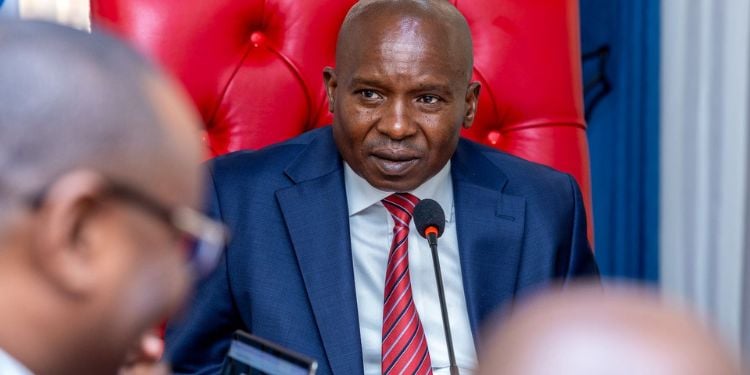
Kindiki spoke while chairing a high-level coordination meeting at the Official Residence in Karen, Nairobi, that brought together Cabinet Secretaries, Principal Secretaries, and heads of implementing agencies to review progress and streamline response mechanisms for maximum impact.
The Deputy President emphasised the urgency of rapid last-mile delivery of assistance, noting that at least 3.3 million people in 23 counties are affected following poor rainfall between October and December 2025.
“Many counties are in need of food for the people and livestock feed. We are tirelessly working on effective last-mile delivery of food so it does not take long to reach the people. We are also trucking water to the people and livestock,” he said.
Also Read: UDA Schedules Election Dates for Mbeere Ahead of Another Looming Kindiki-Gachagua Showdown
Counties in the Crisis Stage
Counties classified in the crisis stage include Mandera, Wajir, Garissa, Tana River, Marsabit, Turkana, Kwale, Meru North, Samburu, and Isiolo, where the government has prioritised emergency food supplies, pasture support, livestock interventions, and access to safe water.
Kindiki said the most vulnerable groups, including school-going children, women, and persons with disabilities, are receiving targeted support to cushion them from the harsh effects of the drought.
“We need food to reach our schools so that learners are not disrupted by the ongoing drought situation. We have reviewed and resolved to upscale the ongoing interventions. We have also resolved to diversify the provision of food to take care of special members of society, including children, women, and vulnerable members of society,” he stated.
Also Read: DP Kindiki Sets Stage for Drought Mitigation in 32 High-Risk Counties
Funding and Projections
The Deputy President’s push follows a Cabinet meeting chaired by President William Ruto that authorised the release of Ksh 4.1 billion to scale up drought response operations across affected regions.
The government said drought conditions have deteriorated rapidly since January 2026 after the failure of the 2025 short rains, pushing millions into acute food insecurity, a figure projected to rise to 3.6 million by June if mitigation measures are not sustained.
Mandera, Wajir, Kwal,e and Kilifi counties are currently in the Alarm phase, while 12 others remain on Alert, most showing a worsening trajectory. Acute malnutrition is also rising, affecting more than 810,000 children and 104,000 pregnant and lactating women.
The additional funding will supplement earlier allocations made in December 2025 and January 2026 for relief food, logistics, and limited non-food assistance, with current stocks projected to last only two to three weeks.
Government officials say the intensified coordination is focused on accelerating response, strengthening the distribution network,s and ensuring that no affected community is left behind as the country navigates the unfolding climate-driven crisis.
Follow our WhatsApp Channel and X Account for real-time news updates.

Photo: Kenya Red Cross Society