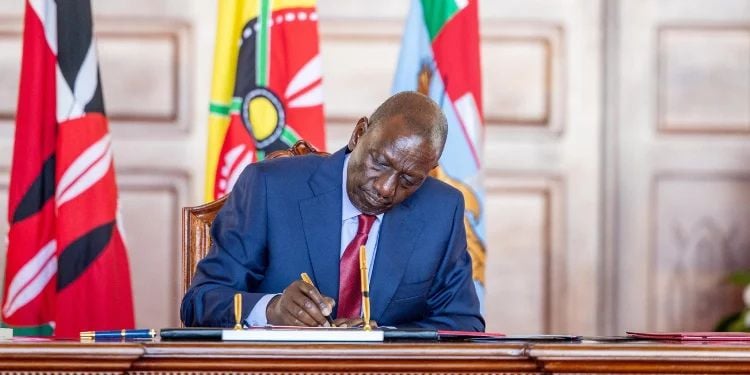
Treasury Cabinet Secretary John Mbadi on Monday, May 18, 2026, sought to defend the government’s continued imposition of fuel levies.
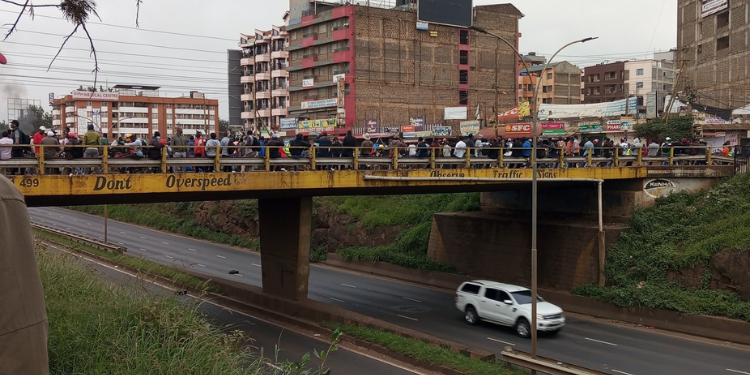
His remarks come amid growing public frustration over rising fuel prices, which have led the a nationwide public transport strike.
Speaking during a media interview, Mbadi explained that fuel taxes and levies are directly tied to critical government functions, particularly infrastructure development.
“There is road maintenance levy in the price of fuel. We need to maintain our roads, and we need to do our roads. If you are going to remove the road maintenance levy, are the Matatu operators going to be willing to drive in potholes? Because one must give way for the other,” said Mbadi
Levies Are Crucial for the Development Agenda
Mbadi defended the taxation framework, saying it plays a key role in supporting Kenya’s development agenda.
Also Read: LIVE UPDATES: Matatu Operators Announce 3 Days Strike Back-to-Back
He emphasized that the fuel levies are allocated to road construction and maintenance, ensuring connectivity and supporting economic activity across the country.
“If you look at those levies, the levies and the taxes are supposed to help our development agenda. This economy is a big economy and we all know it,” added Mbadi.
Mbadi noted that the roads depend heavily on the road maintenance levy, for repairs and upgrades.
According to Mbadi, removing fuel levies would force the government to either cut back on infrastructure projects or find alternative funding sources, which could strain the national budget and slow development.
Mbadi Defends Kenya’s Fuel Cost
Mbadi also defended Kenya’s fuel prices, arguing that rising prices are not unique to Kenya but part of an international energy trend, and that Kenya has done what it can to prevent further hikes.
He noted that even countries with stronger economies and higher production capacity have experienced fuel price hikes, driven by global market pressures.
“There are two things that this government has done that should be appreciated. Number one is to ensure continuous supply of fuel. You go to Burundi today. What decision have they taken? That you cannot take more than 30 liters of fuel per week. There are some countries where they have told staff to work from home. People are taking desperate measures at this time because we are in desperate times. We need to also look across and see what is happening elsewhere. Look at the United States of America. The United States of America, which is a net exporter of fuel, the prices have shot up 80% higher,” added Mbadi.
Why Fuel Prices Have Risen in East Africa Region
The rise in fuel prices across the region has largely been driven by global oil market volatility, weakening local currencies, and higher import costs.
Also Read: Kenyans to Pay More for Electricity After EPRA Tariff Adjustment
Following EPRA’s review on May 14, Super Petrol in Kenya is retailing at about Ksh 214 per litre, while diesel has risen to Ksh 243 per litre, making it the highest diesel price among major East African countries.
Tanzania’s Energy and Water Utilities Regulatory Authority (EWURA) earlier in May announced that the retail price of Super Petrol in Dar es Salaam rose to Ksh 205 (4,115 Tanzanian shillings) per litre, while that of Diesel increased to Ksh 211 (4,248 Tanzanian shillings) per litre. The price of Kerosene in the country rose to Ksh 233 (4,677 Tanzanian shillings) per litre.
In Kenya, the high diesel prices are expected to continue pushing up transport and commodity costs, as diesel remains the main fuel used by public transport vehicles, cargo transporters, and industries.