
Government spokesperson Isaac Mwaura has outlined key factors that affect fuel prices in Kenya.
In a statement on April 20, Isaac Mwaura noted that recent tax adjustments approved by Parliament have contributed to a downward revision in pump prices, offering relief to consumers.
“The Government wishes to express gratitude to Parliament for its swift and decisive action in approving amendments to the tax structure related to fuel pricing. The recent changes in the law have helped adjust fuel prices downward, providing relief to Kenyan consumers,” the statement read in part.
Middle-Income status
The government spokesperson stated that Kenya is classified as a middle-income economy with a relatively high GDP per capita, estimated at about US$123 billion.
According to the statement, Kenya’s economic status differs from that of many neighboring countries classified as least developed countries (LDCs), and fuel price comparisons should be made with other middle-income economies, where prices are often similar to or higher than Kenya’s.
“Therefore, a fair comparison of fuel prices should be made against other middle-income nations, where prices are often comparable or even higher than those in Kenya,” Isaac Mwaura explained.
In his statement, Mwaura described Kenya as one of the largest economies in Africa and ranked sixth on the continent overall.
Isaac Mwaura Links Fuel Prices to Major Road Infrastructure Costs
Isaac Mwaura stated that Kenya’s fuel price structure reflects the need to support a large national transport infrastructure network.
He explained that Kenya maintains about 20,000 kilometers of tarmac roads, with an additional 6,000 kilometers currently under construction, funded through the Road Maintenance Levy Fund (RMLF).
Over the next seven years, a further 28,000 kilometers of tarmac roads are expected to be built, significantly expanding the national road network.
Also Read: Ruto Explains Why Fuel Prices Are Higher in Kenya Than in Regional Neighbors
The Government stated that these maintenance costs are partly reflected in fuel prices due to the high cost of infrastructure development and upkeep.
“These maintenance costs are embedded in fuel prices, emphasizing self-reliance, since we all rely on these roads for transportation,” Isaac Mwaura said.
Govt Explains Fuel Procurement and Monthly Pricing System
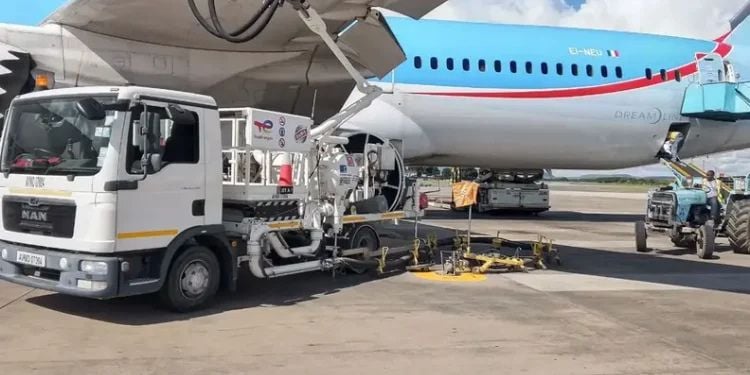
The government spokesperson further defended Kenya’s fuel procurement program under the government-to-government model, which sources fuel from major suppliers such as Saudi Arabia and the United Arab Emirates under credit terms of up to 180 days.
This arrangement, he said, reduces immediate demand for foreign currency and helps stabilize exchange rates.
Also Read: Is Isaac Mwaura a Marked Man in Ruto’s Government?
According to the statement, the extended credit facility has eased pressure on foreign exchange reserves and reduced inflationary pressures on fuel, transport, and food prices.
The government also noted that fuel pricing in other countries is often based on earlier monthly rates, typically from February and March, while Kenya reviews prices on the 14th of every month to reflect current market conditions.
The spokesperson explained that the shift from 30-day to 180-day credit terms has helped avoid monthly foreign exchange shortages previously estimated at around US$500 million.
According to the statement, this financial arrangement has contributed to overall economic stability and supported the performance of the Kenyan shilling in global markets.