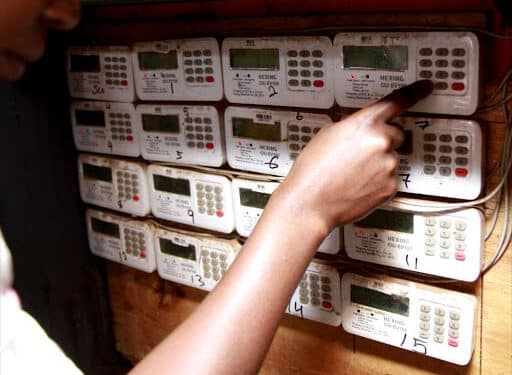
The Kenya Power and Lighting Company (KPLC) has provided clarity on how electricity tariffs are applied, emphasizing that the monthly electricity bill depends largely on the number of units a household consumes.
The clarification comes amid growing consumer questions about their electricity bills and the varying costs associated with different consumption levels.
“Please note that the number of units one gets depends on the tariff rate that one is in,” said KPLC on X
Kenya Power has encouraged its consumers to regularly monitor their electricity usage to understand which domestic category they fall under each month.
How Charges are applied
- Domestic Category 1
For households that consume up to 30 units of electricity per month, Kenya Power applies the Domestic Category 1 (DC-1) tariff.
Under this category, each unit of electricity is charged at Ksh 12.14.
Also Read: KPLC Manager Lists Top Token Consumers at Home and Tips to Save Your Power
This rate is designed for low-consumption households, typically those with few electrical appliances or smaller family sizes.
The DC-1 tariff is considered the most affordable domestic electricity rate, allowing households to manage costs while still accessing essential electricity services.
This tiered approach aims to reward households that conserve and use electricity efficiently.
- Domestic Category 2 and 3
Households consuming between 31 and 100 units monthly fall under Domestic Category 2 (DC-2).
In this category, the unit cost increases to Ksh 16.50 per unit.
DC-2 is suitable for medium-sized households or those with moderate electricity needs, including multiple appliances and higher daily usage.
For households that consume more than 100 units per month, the tariff moves to Domestic Category 3 (DC-3), with electricity billed at Ksh 18.57 per unit.
This category generally applies to larger households, those with energy-intensive appliances, or those using electricity for additional purposes such as home offices or small-scale commercial activities.
Kenya Power has emphasized that these charges apply exclusive of other electricity fees, including service charges, fuel adjustments, and taxes, which affect the final bill.
Also Read: EPRA Reduces Fuel Prices for January and February Cycle
EPRA applies adjustments for January 2026 electricity bills
Kenyans face higher electricity bills this January following a series of adjustments announced by the Energy and Petroleum Regulatory Authority (EPRA).
Consumers will pay a KSh0.46 per kWh inflation adjustment and a KSh0.0138 per kWh levy for the Water Resource Management Authority (WRMA), which supports sustainable water use in hydropower generation. The combined effect of these surcharges amounts to roughly Ksh5.52 per kWh added to the base tariff.
The adjustments affect both household and commercial electricity consumers. For example, the average household consuming 250 kWh per month can expect a bill increase of approximately Ksh1,380, while small and medium-sized enterprises relying on 2,000 kWh per month may face an additional cost of around Ksh11,040.
Follow our WhatsApp Channel and X Account for real-time news updates.