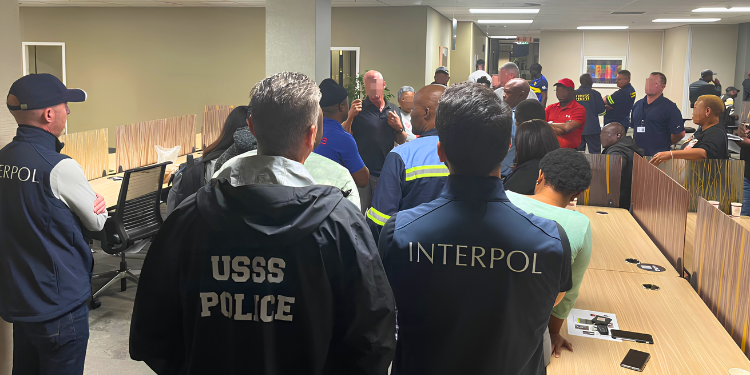
Kenya was among 21 countries that took part in a major cybercrime crackdown coordinated by INTERPOL that led to the arrest of 1,462 suspects and the recovery of more than USD 105 million (about Ksh13.5 billion) in illicit funds across Africa.
The operation, dubbed Operation Serengeti III, ran from June 29 to August 31, 2026, bringing together law enforcement agencies across the continent to target cyber-enabled fraud, ransomware attacks, business email compromise schemes, online scams, and digital extortion.
According to INTERPOL, authorities disrupted 10,909 malicious networks during the operation and identified 65,929 victims targeted by cybercriminal groups operating across Africa and beyond. Financial investigations linked the criminal activities to losses exceeding USD 385 million (Ksh 49.5 billion).
“Cybercrime networks operate without regard for borders, exploiting technology to target victims on an unprecedented scale,” said Neal Jetton, INTERPOL’s Director of Cybercrime.
INTERPOL said intelligence gathered before the crackdown supported the operation, with investigators from 20 African countries and the United States receiving information on suspicious domains, IP addresses, and command-and-control infrastructure linked to criminal activity.
Africa-Wide Operation
The operation involved authorities from Angola, Benin, Cameroon, Congo, Côte d’Ivoire, the Democratic Republic of Congo, Eswatini, Gabon, Gambia, Ghana, Kenya, Mozambique, Nigeria, Rwanda, Senegal, South Africa, Tanzania, Uganda, the United States, Zambia and Zimbabwe.
Also Read: Kenya Issues Urgent Alert as Countries Shut Down Govt Websites
In Uganda, authorities dismantled two transnational fraud rings and arrested 365 foreign nationals linked to online investment and pension fraud schemes that targeted victims across Asia.
Investigators discovered a rotating call-centre model that used scripted communications, fraudulent websites and fake trading platforms to convince pensioners to invest in non-existent opportunities.
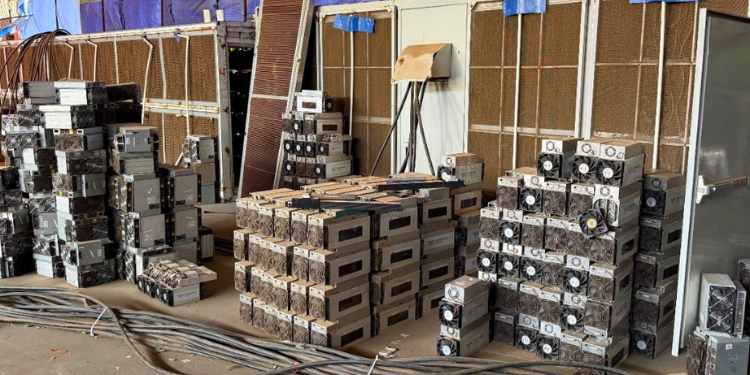
In Angola, investigators shut down two illegal cryptocurrency mining centres, arrested nine suspects, and seized more than 2,000 cryptocurrency mining devices, as well as six illegal power transformation stations.
The seized electrical infrastructure was valued at more than USD 1 million (Ksh129.8 million).
Nigerian authorities arrested a suspect linked to a phishing and business email compromise operation that harvested software credentials and collected about 2.1 million email addresses.
Investigators also recovered a luxury vehicle believed to have been purchased using proceeds from the criminal activity.
Victims and Losses
A separate investigation in Nigeria targeted an international investment fraud scheme promoted through messaging applications.
The probe resulted in the arrest of a suspect and revealed the movement of more than USD 2.4 million in suspected criminal proceeds, much of it allegedly laundered through cryptocurrency transactions.
Elsewhere, authorities dismantled a malicious mobile loan application scheme in Tanzania, disrupted a social media-based vehicle import fraud network in Gabon, and arrested 30 suspects linked to a cybercrime operation in the Republic of Congo.
“Operation Serengeti III reinforces a clear message: while cybercrime is increasingly borderless, international cooperation remains one of the most effective tools for disrupting criminal networks, recovering criminal assets and protecting communities from digital harm,” INTERPOL Director of Cybercrime Neal Jetton added.
Several investigations arising from Operation Serengeti III remain active as authorities continue efforts to identify additional suspects, trace illicit proceeds and examine digital evidence seized during the operation.
Inside INTERPOL
Founded in 1923, INTERPOL is the world’s largest international police organisation, bringing together 196 member countries to support cross-border law enforcement cooperation.
Also Read: Former Education CS Appointed University Chancellor
Headquartered in Lyon, France, it helps police agencies share intelligence, access global criminal databases, coordinate international investigations and track suspects operating across multiple jurisdictions.
The organisation provides operational support, forensic expertise, analysis services and training through its global programmes on financial crime and corruption, counter-terrorism, cybercrime, and organised and emerging crime.
Rather than making arrests itself, INTERPOL supports national police services by facilitating cooperation and information-sharing among member countries.
Follow our WhatsApp Channel and X Account for real-time news updates.