Margaret Mbai, widow of the late Kenyan scholar Dr Crispin Odhiambo Mbai, has appealed to President William Ruto after her family missed the opportunity to receive her husband’s posthumous national honor during the Mashujaa Day celebrations.
Speaking to the media on October 21, Margaret explained that she was in Kisumu attending to her ailing brother when the national Honors were announced.
In addition, she emphasized that the family had not been informed in advance about the arrangements for receiving the award.
She expressed disappointment at missing the occasion, saying she would have arranged to attend had she known that her late husband was among those being honored.
“As a family, nobody told us that my husband was going to be honored. So we missed that chance to go and receive the award on his behalf. So I am just wondering who was supposed to tell us what the procedure is when somebody is being honored?” Margaret Mbai questioned.
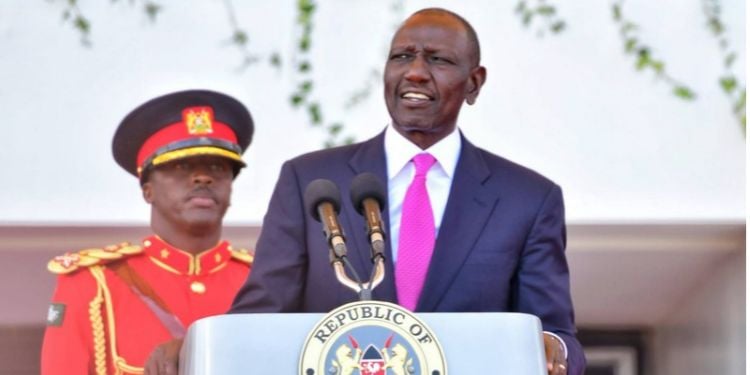
President Ruto presided over the Mashujaa Day celebrations, during which the government honored 264 Kenyans, including the late Kenyan law scholar.
Margaret Appeals for Chance to Receive Husband’s Award
Margaret Mbai has appealed to President William Ruto for a chance to meet him and receive the national honor posthumously awarded to her late husband in recognition of his contribution to Kenya’s constitutional reform process.
However, the widow said that if she cannot meet the president, the family is open to alternative ways to receive the award.
“I would really love to meet the president, honestly, to receive that award, if I am given that chance. If that is not possible, then I believe they would let me know the chance through which I would be able to receive the award,” Margaret said.
Additionally, the widow has called out the untimely communication regarding awards of the late constitutional scholar, noting that the Mashujaa incident is not the first honor ceremony they have missed.
Also Read: Ruto’s Last Mashujaa Day 2026: Complete Text of the Eldoret Address
Beyond her appeal over the Mashujaa Day honor, Margaret also called on county governments to ensure that devolution delivers meaningful benefits to ordinary citizens.
She urged county administrations to focus on improving people’s lives and ensuring that the promise of devolution translates into tangible results for communities.
National Heroes Council Explains Award Presentation Process
Responding to Margaret Mbai’s concern, the National Heroes Council Chief Executive Officer Charles Wambia explained that not every recipient or family representative attends the main national ceremony.
He added that the council selects a limited number of representatives to receive Honors at the main event, and then contacts other recipients or their families later to arrange separate presentations.
“Our procedure is to invite only a few selected representatives of the honorees to attend the main Mashujaa Day celebrations. All the others on the list are contacted later, and that is when the media are invited to our offices to capture the award presentation ceremonies. That is our transparent procedure, and nothing is being concealed,” Wambia explained.
Also Read: Eldoret Traders Report New Opportunities as Kipchoge Keino Stadium Set to Host Mashujaa Day
Dr Crispin Odhiambo Mbai’s Death
Dr Mbai was a university professor who played a role in Kenya’s constitutional reform process.
According to a High Court judgment, he chaired the Committee on Devolution of Power at the Constitution of Kenya Review Commission.
His work on devolution was part of the wider review of Kenya’s constitutional framework and how power and responsibilities should be distributed across the country.
Dr Mbai was shot at his home in Adams Arcade Estate, Nairobi, on September 14, 2003.
According to the Kenya High Court judgment in Criminal Case No. 185 of 2003, he was shot in the head and chest at approximately 2:30 p.m.
He was taken to Nairobi Hospital but died that evening while undergoing treatment, with the court identifying the cause of death as gunshot wounds to the head and chest, accompanied by brain hemorrhage, lung collapse and haemothorax.
During the subsequent murder trial, the court heard evidence from witnesses, police officers and medical personnel.
The prosecution also examined whether the killing was politically motivated. However, an investigating officer testified that investigators had not obtained convincing evidence linking the killing to a political assassination.
In its judgment, delivered on April 28, 2005, the High Court found that the prosecution had failed to prove the murder charge against the three accused persons beyond reasonable doubt.
The court acquitted them and ordered their release unless they were lawfully held otherwise.
Follow our WhatsApp Channel and X Account for real-time news updates