A safari in Meru National Park took an unexpected turn when visitors spotted something unusual, prompting them to raise the alarm to the the Kenya Wildlife Service (KWS).
The incident unfolded on Tuesday morning in the Muguongo area, where the visitors came across a male lion in distress.
“What began as a safari experience in Meru National Park took an unexpected turn when visitors spotted a male lion in distress in the Muguongo area yesterday morning,” KWS said.
KWS Respond After Visitors Spot Lion in Distress in Meru National Park
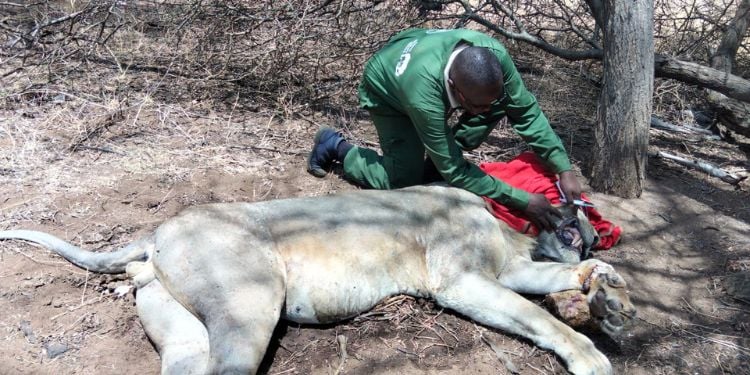
In a statement, the KWS said the 7–8-year-old male lion had a wire snare deeply embedded around its left hind leg, threatening its mobility.
Visitors who spotted the lion in distress immediately alerted Born Free personnel and KWS security officers, who responded to the incident.
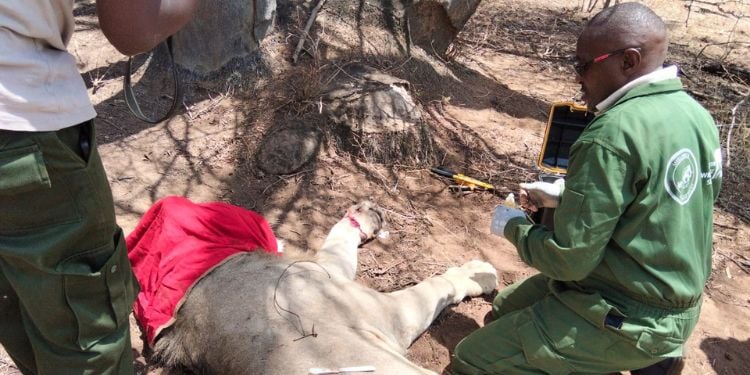
KWS said its veterinary team safely immobilised the lion before removing the embedded snare.
“The 7–8-year-old lion had a wire snare deeply embedded around his left hind leg, threatening his mobility. The visitors immediately alerted Born Free personnel and KWS security officers, who swiftly responded. The KWS veterinary team safely immobilised the lion,” the statement read.
Also Read: How to Import Milk Buffaloes from India to Kenya: Costs, Licenses and Process
The team then cleaned and treated the wound while closely monitoring the animal as it recovered.
The wildlife agency reported that the lion had a good prognosis following the treatment.
Inside Meru National Park, Home to Lions and More Than 300 Bird Species
Meru National Park covers approximately 870 square kilometres in Meru County, about 350 kilometres northeast of Nairobi. KWS manages the park, which is known for its wildlife and conservation history.
The park lies east of Meru town, below the Nyambene Hills and northeast of Mount Kenya. Its boundaries include the Tana River to the south, the Ura River to the southwest and the Rojeweru River to the east.
Meru National Park features savanna grasslands, riverine forests, swamps, wooded areas and hilly terrain. The diverse landscape supports a wide range of wildlife and bird species.
The park is home to the Big Five: elephants, lions, leopards, buffaloes, and rhinos. Other wildlife found in the protected area includes cheetahs, hippos, crocodiles, giraffes, zebras and antelopes.
Also Read: How Much Kenyans Will Pay to Visit National Parks Under New KWS Fees
Meru National Park also hosts more than 300 bird species and northern Kenya wildlife, including Grevy’s zebra, reticulated giraffe, Somali ostrich, Beisa oryx, and gerenuk.
Established in 1966, the park is closely associated with conservationists Joy and George Adamson and Elsa the lioness. Elsa’s story inspired Born Free, which brought international attention to wildlife conservation.
According to the provided fee information, East African citizens pay KSh 800 per adult and KSh 500 per child or student. Kenya residents pay KSh 1,100 per adult and KSh 675 per child or student, while African citizens from outside East Africa pay US$40 per adult and US$20 per child.
Non-resident adults pay US$70, while children pay US$20 according to the KWS fee information provided. Visitors should confirm applicable rates before travelling, particularly where published fee guides differ.
The conservation fee is valid for 24 hours from entry. KWS directs visitors to use its cashless payment system, KWSPay through eCitizen, to pay park entry fees.
Follow our WhatsApp Channel and X Account for real-time news updates.