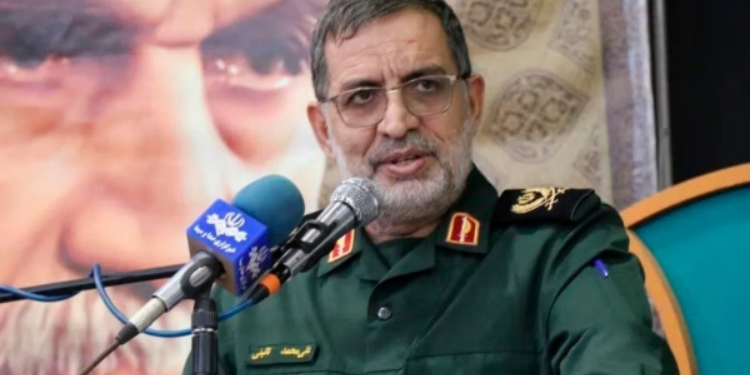
The spokesperson for Iran’s Revolutionary Guards Corps (IRGC), Ali Mohammad Naini, was killed in early Friday strikes.
Iran’s state TV confirmed Ali Mohammad Naini’s death on Friday.
Naini served as the chief spokesman from 2024 until his death.
He had been the public face of the IRGC’s media operations, where he managed its relationships with Iranian state broadcasters and the foreign press.
He succeeded Brigadier-General Ramazan Sharif, inheriting a position that required both rhetorical firepower and ideological discipline.
Iran’s Revolutionary Guards Spokesperson Ali Mohammad Naini Killed in Strikes
According to reports, Ali Mohammad Naini’s death came hours after he was quoted as defending Iran’s missile capabilities.
He argued that Tehran still had the capability to produce missiles despite strikes from Israel and the United States.
“Our missile industry deserves a perfect score… even under wartime conditions, we continue missile production,” said Ali Mohammad Naini.
Also Read: Trump Critic Links SAVE America Act to Voter Crackdown Amid Iran War Costs
Ali Mohammad Naini added that the conflict would continue until the ‘enemy’ is completely exhausted.
Naini’s killing marks the fourth major loss for Iran’s leadership in recent days.
Among those previously killed are senior figures such as Ali Larijani, Gholamreza Soleimani, and Esmail Khatib.
Iran Attacks Qatar’s Liquefied Natural Gas (LNG) As Geopolitical Conflict Intensifies
Since February 28, U.S. and Israeli forces have carried out airstrikes on Iranian territory, prompting retaliatory missile and drone attacks by Iran targeting Israeli territory and U.S. military facilities across the region.
The conflict has already resulted in significant casualties on multiple sides and has expanded across parts of the Middle East.
It has also heightened risks to critical infrastructure, particularly around the Strait of Hormuz.
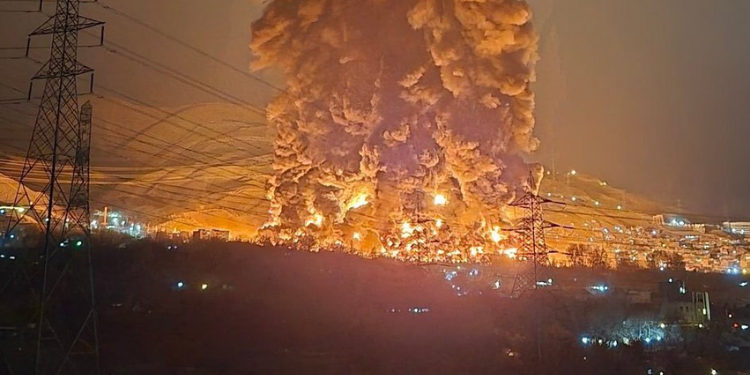
Earlier, Israel struck Iran’s South Pars gas field, prompting Iran to retaliate by targeting Qatar’s Ras Laffan LNG facility, one of the world’s largest gas hubs.
Also Read: Netanyahu Struggles to Maintain Control as Israelis Protest in Tel Aviv Over Iran War
Although Israel did not officially claim the South Pars strike, US President Donald Trump attributed it to Israel and said Iran’s gas infrastructure would not face further attacks.
He also distanced himself from the Israeli strike on Iran’s South Pars Gas Field, stating that the US had no prior knowledge of the attack and that Qatar was not involved.
Trump argued that the attack was carried out “out of anger” over escalating tensions in the Middle East.
He, however, warned that if Iran continues to hit Qatar’s energy assets, the US would respond forcefully.
Meanwhile, Israeli Defence Minister Israel Katz signalled more strikes ahead, promising further “surprises” after claiming responsibility for killing intelligence minister Khatib in an earlier operation.