The government has activated a nationwide emergency response plan ahead of the expected El Niño rains, placing security agencies and the Kenya Defense Forces (KDF) on standby as authorities work to reduce the risk of loss of life and property damage.
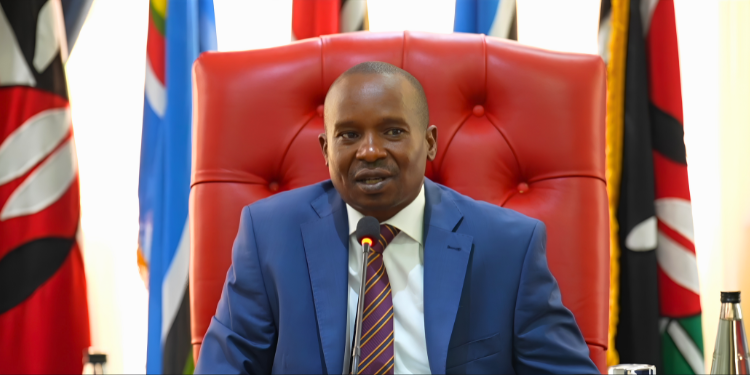
The move follows a high-level meeting chaired by Deputy President Kithure Kindiki in his capacity as chair of the government’s Ad Hoc Cabinet Committee on El Niño Preparedness and Response, which is overseeing a national contingency plan covering flood mitigation, evacuation arrangements, drainage clearance, protection of critical infrastructure and the pre-positioning of emergency supplies ahead of the expected rains.
Deputy President Kithure Kindiki said ministries, state departments and government agencies were already working together to ensure the country is ready for the expected weather conditions.
Kindiki said experts had warned that the rainfall could be significant, with potentially serious consequences across different parts of the country.
“We expect high precipitation associated with the El Niño phenomenon, and the experts have also confirmed that the precipitation will be strong,” he said.
He added that the government’s objective was to minimize the loss of lives as well as damage to property, crops and livestock through early preparation and coordinated action.
El Niño Emergency Plan Activated
Kindiki described the situation as a matter of national security and urged the public to cooperate with instructions issued by authorities during the rainy season.
Also Read: The Three Types of El Niño That Could Shape Kenya’s Future
He said security agencies, disaster management teams and local administrators had been directed to enforce safety measures aimed at protecting lives, particularly in areas vulnerable to flooding and other weather-related emergencies.
“A situation like this is a matter of national security,” Kindiki said.
The Deputy President said members of the public must comply with evacuation orders when issued and avoid actions that could expose them to danger, including attempts to cross flooded rivers.
The government has also activated the National Disaster Operations Center, bringing together personnel from relevant agencies to coordinate preparedness efforts and emergency response operations across the country.
According to Kindiki, both interior and homeland security agencies have been placed on standby, alongside the Kenya Defense Forces, to support response activities as needed.
The government has further organized shelter points and evacuation centers that can be used in the event communities are displaced by floods or other disasters linked to the heavy rains.
Flood Mitigation Measures
Kindiki said authorities had taken special note of the risks facing urban areas, particularly Nairobi, where drainage blockages and rapid population growth could worsen flooding.
Also Read: Fuliza-Style Lending Explodes as Digital Loans Hit Ksh110 Billion
He said government agencies were working to unclog drainage systems and remove choke points in Nairobi and other urban centres as part of efforts to reduce flooding.
Climate WorX teams and Green Army youth groups have also been mobilized to support the drainage improvement program in the capital.
The Deputy President identified Nairobi, Mombasa, Kisumu, Busia, northern Kenya and low-lying coastal areas among regions likely to experience significant impacts from the weather phenomenon.
He said areas highly prone to mudslides and landslides had already been identified and residents were being sensitized on measures to take in the event of emergencies.
The government is also implementing measures to protect food production, including providing crop dryers to reduce post-harvest losses and vaccinating livestock against diseases that may emerge during the wet season.
Kindiki said relief food and non-food supplies had already been pre-positioned in vulnerable parts of the country, including remote regions that could become difficult to access once heavy rains begin.
Plans are also underway to position fuel supplies where required to support emergency operations.
He urged Kenyans not to panic, saying the national government, county governments, development partners and humanitarian agencies were working together to ensure the country is prepared for any eventuality arising from the expected El Niño rains.
Nairobi Governor Sakaja Johnson has also deployed earth-moving equipment to flood-prone areas across the city and intensified drainage works as the county government steps up preparations for the expected El Niño rains.
“We cannot wait for the rains to come before we act. We must be proactive,” Sakaja said.
He urged residents in riparian areas to relocate to safer locations. He said the response will follow a “One County, One Plan, One Command” approach, with a four-day multi-agency simulation exercise planned later this month to test the city’s emergency response capacity.
Follow our WhatsApp Channel and X Account for real-time news updates.