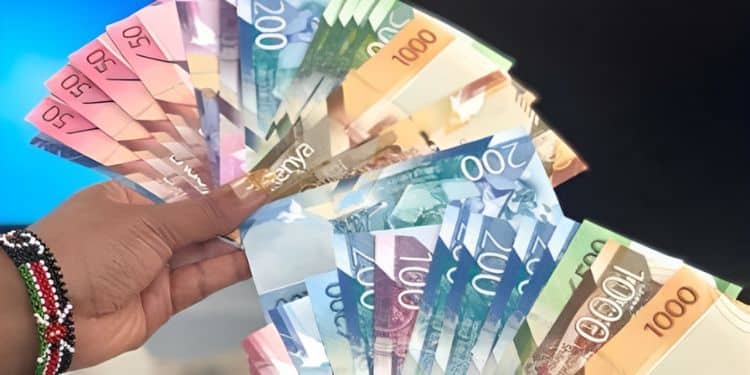
Major global banks have warned that the Kenyan shilling remains one of the most vulnerable currencies in Africa, citing rising pressure from elevated oil prices driven by the ongoing global conflict.
Analysts from Citigroup Inc., Standard Chartered Plc, and Société Générale SA quoted by Bloomberg say the currency could face further weakness in the coming months.
Standard Chartered projects that the Central Bank of Kenya (CBK) may be forced to allow the shilling to depreciate further.
It warns that the currency could weaken to as low as 132 against the US dollar by the end of the year, according to Razia Khan, its head of Africa and Middle East research.
Citigroup’s Chief Africa Economist, David Cowan, made it clear that the risk is real and immediate. He noted that if oil moves back above USD100 a barrel, roughly Ksh12,910, and stays there, the shilling could fall to Ksh135 against the dollar within this calendar year.
“If oil moves back above $100 and stays there, the currency could slide to 135 shillings this year, a level last seen two years ago, should Kenyan authorities let it move to that,” highlighted Cowan.
The shilling traded at about 129.11 per dollar on Tuesday, April 21, posting a marginal gain of less than 0.1 percent.
Also Read: Kenyan Shilling Dips Toward 130: What Kenyans Need to Know
CBK Projects Kenyan Shilling Stability on $619 Million Balance-of-Payments Surplus
This comes days after CBK Governor Kamau Thugge said the Kenyan shilling is expected to remain stable against the U.S. dollar, supported by a $619 million balance-of-payments surplus and robust foreign exchange reserve.
During a Monetary Policy Committee briefing, Thugge said the institution has already factored in potential external shocks in its projections for the balance of payments.
He noted that the bank has taken a cautious approach, including assumptions of much lower export growth, slower remittance inflows, and reduced growth in tourism receipts.
It projected a current account deficit of about $4.4 billion in 2026, alongside inflows of approximately $5 billion, resulting in an overall balance-of-payments surplus of about $619 million.
“We have indeed factored in, and I think we’ve been very cautious in our projections of the balance of payments. We have taken into account much lower export growth and have assumed a deceleration in remittances and lower growth in tourism receipts, yet we still have a balance of payments surplus of $619 million,” he said.
The Governor added that strong buffers and foreign exchange reserves will help the country withstand shocks and stabilize the exchange rate. He revealed that foreign exchange reserves are about $13.4 billion, or 5.7 months of import cover.
Also Read: CBK Allays Fears Over Kenyan Shilling Stability Amid Global Shocks
Kenyan Shilling Hits 130 Mark
The Kenyan shilling in the first week of April weakened to Ksh 130 against the US dollar, marking the end of a 20-month period of relative stability around the Ksh 129 mark.
CBK quoted the currency at Ksh 130 to the dollar on Tuesday, April 7, signaling a gradual loss of ground after more than a year of relative stability at the lower level of 129.
This was the first time the local unit had touched the 130 mark since August 2024, following consistent depreciation largely driven by the Middle East conflict.
The Kenyan shilling remained broadly stable against major international and regional currencies in the week ending April 2, 2026.
The local unit began retreating from the 130 mark in late July 2024 after a sustained strengthening streak from its historic low of 160 recorded in early February 2024.
In the first quarter of 2024, the Kenyan shilling recorded its sharpest depreciation, weakening against the US dollar to trade above Ksh 160 in January, then recovering to Ksh 144 by mid-February and later strengthening to Ksh 127 in April 2024.