Safaricom has adjusted Fuliza M-Pesa overdraft limits for a section of its customers, triggering mixed reactions across the country as users woke up to either increased access or sharp reductions on April 27 and April 28.
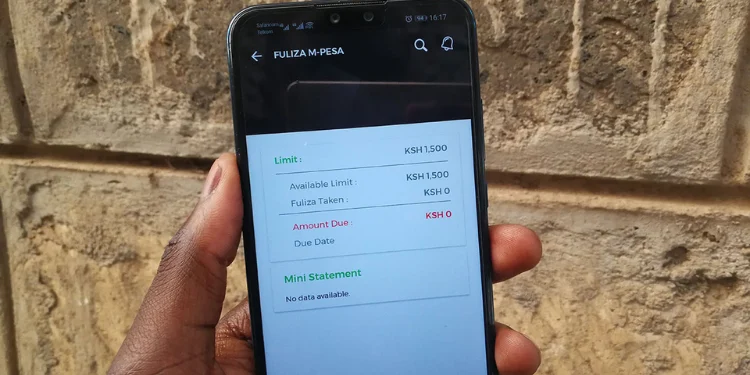
The changes, which appeared without prior public notice, quickly became a major topic on social media, with beneficiaries sharing screenshots of revised Fuliza balances.
While some celebrated higher limits, others complained that their borrowing power had been reduced or reset to zero, sparking confusion and frustration.
Fuliza is Safaricom’s overdraft service that allows M-Pesa users to complete transactions even when their account balance is insufficient.
Limits vary from customer to customer and are reviewed periodically using automated systems.
Safaricom Adjusts Fuliza Limits
From early Monday morning, several users reported sudden changes to their Fuliza limits.
Some accounts rose from as low as Ksh100 to Ksh2,000 or more, while others jumped from Ksh2,000 to Ksh10,000.
Also Read: KRA Ends Manual Declaration of Export Figures in VAT Returns
At the same time, a section of customers said their limits had dropped significantly, in some cases from amounts above Ksh1,500 to zero.
Social media platforms were flooded with reactions, with many users questioning how the decisions were made.
Josh, an X user, said his limit was reduced from KSh1,800 to zero, calling the change unfair and blaming an unpredictable system.
Another user, Einstan, shared a screenshot showing that his Fuliza limit had increased to KSh3,500, noting he had previously been capped at KSh1,000.
Alex, commenting on the same thread, said his Fuliza limit had increased from KSh2,000 to KSh10,000, while Owango Sino noted that his limit had jumped from KSh120 to KSh5,000.
Other users said they had used Fuliza consistently for years and always repaid on time, making the reductions difficult to understand.
However, others welcomed the increases, describing them as a relief amid rising living costs.
A section of users accused Safaricom’s system of being unfair and opaque, saying the changes came without explanation.
Several customers tagged Safaricom Care, demanding clarity on why loyal users would be penalized while others received higher limits.
In response, Safaricom Care reiterated that Fuliza limits are automatically reviewed and encouraged users to continue transacting on M-Pesa and repaying overdrafts promptly to improve their chances in future reviews.
Also Read: Safaricom Reveals How Users Can Increase Their Fuliza Limit
The company did not provide individual explanations but instead pointed to a system-based review process.
How Safaricom Determines Fuliza Limits
Safaricom has previously explained that Fuliza limits are not fixed and can fluctuate based on customer behavior.
The company says reviews are conducted regularly using a data-driven model that considers several factors.
These include how often a customer uses M-Pesa, the value and frequency of transactions, and how quickly Fuliza balances are repaid.
Use of other Safaricom services, such as voice calls, data bundles, and airtime top-ups, also plays a role.
Customers who save through linked products like M-Shwari or KCB M-Pesa are also considered lower risk.
Late repayment or carrying an outstanding Fuliza balance for extended periods can result in reduced limits during a review cycle.
Safaricom has also warned that opting out of Fuliza and then opting back in may reset a customer’s limit to zero, a fact many users say they learn only after it happens.
Credit risk indicators also affect the outcome.
Fuliza is backed by partner banks, so broader credit information may be considered when limits are reviewed.
This is why some long-term users still experience reductions despite frequent M-Pesa use.
Despite the backlash, Safaricom maintains that Fuliza is a credit facility, not a guaranteed income.
The company argues that adjusting limits helps manage risk and encourages responsible borrowing.