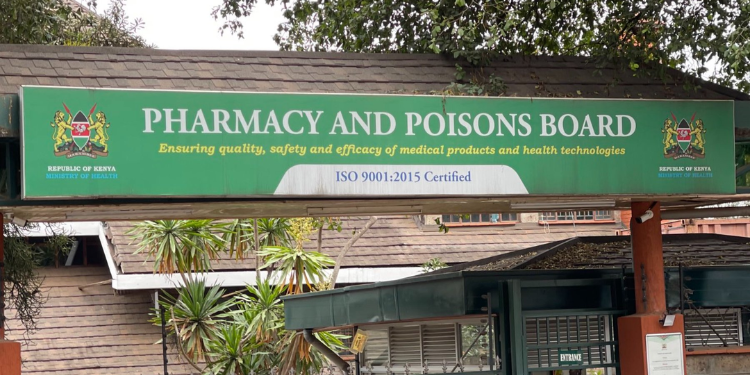

The Pharmacy and Poisons Board (PPB) has put on notice owners and managers of supermarkets, cosmetic shops, online outlets, and other general retailers, warning against the sale of unregistered or prescription-only medicines.
In a public notice dated December 12, PPB reminded manufacturers, importers, distributors, wholesalers, retailers, and supermarkets that it is illegal to import, stock, distribute, sell, or use any unregistered, falsified, counterfeit, or recalled health product or technology within Kenya.
“Supermarkets, cosmetic shops, household goods stores, online sellers and general retailers are not authorized to stock, sell or supply prescription-only medicines.”
According to PPB, possession or sale of such products attracts serious consequences, including prosecution and criminal liability for superintendent pharmacists, pharmaceutical technologists, employees acting under their supervision, managers, persons in charge, and the directors or owners of the premises.
PPB warns supermarket and cosmetic shop owners
The board also warned that offenders risk suspension or revocation of licenses and closure of their premises. It cautioned that supermarkets, cosmetic shops, household goods stores, online sellers, and general retailers are not authorised to stock, sell, or supply prescription-only medicines.
“Any outlet found in contravention shall be liable to regulatory sanctions, including prosecution of the owners, managers, and directors,” the notice adds.
Businesses unsure which products they are permitted to stock have been advised to seek guidance directly from PPB via the provided email addresses.
Meanwhile, the board is urging the public to report any suspected unregistered, falsified, or counterfeit medicines, as well as any adverse drug reactions, through its online portal, USSD code, mobile app, email contacts, or telephone line.
Also Read: Poisons Board Issues Fresh Guidelines for November Professional Exams
The notice comes months after the Ministry of Health cautioned investors in the pharmaceutical sector against dealing in unregistered medical products within the country.
While addressing stakeholders at Nyayo Gardens in Nakuru County on August 5, 2025, Health Cabinet Secretary Aden Duale instructed all players in the industry to stop handling unregistered pharmaceutical products and ensure that every item in their custody is appropriately registered and approved by PPB.
Ministry of Health targets illegal chemists
Duale also directed authorities to intensify an ongoing crackdown targeting unlicensed pharmacies and unqualified practitioners. He noted that the operation—led jointly by PPB and the National Police Service—would focus on illegal chemists, distributors, and sellers of counterfeit or substandard medicine.
The CS reiterated that anyone operating without the required licenses or dealing in unregistered pharmaceuticals would face arrest, prosecution, confiscation of goods, and closure of their premises.
He further cautioned absentee superintendent pharmacists who leave licensed outlets in the hands of unqualified staff, warning that disciplinary action awaits those who fail to comply.
“Essentially, you cannot use other people to commit a crime while you are comfortable somewhere,” he warned.
Also Read: PPB Confirms that the Cough Syrup Flagged by WHO is not in Kenya
Duale, who pledged to oversee a crackdown on rogue operators, noted that PPB is actively monitoring the market and will not hesitate to act against individuals who violate the law.
He added that the government remains troubled by the circulation of fake and counterfeit medicine, improper drug storage, and dispensing without qualified professional oversight, saying these practices endanger public safety.
“The government is also urging the public to remain vigilant and report any suspicious pharmaceutical activity to the authorities,” he appealed.
The CS highlighted that PPB has already developed guidelines on good distribution practices, pharmaceutical transportation, and safe disposal of pharmaceutical waste. He encouraged health workers to familiarize themselves with these standards.
He also emphasized the importance of the health safety code 21031 displayed in registered pharmacies, advising the public to use it to verify the legitimacy of any premises where they purchase medication.
Duale stressed that coordinated efforts between the government and professionals in the health sector remain essential in combating the circulation of harmful drugs.
“Do not dispense unregistered or unprescribed drugs over the counter. We must also have a good record of all the drugs dispensed,” he advised.
The CS further warned wholesalers supplying pharmaceutical products without proper documentation, saying the Ministry, through PPB, would shift its focus to distributors who provide drugs to illegal outlets without verifying the credentials of buyers.
Follow our WhatsApp Channel and X Account for real-time news updates.