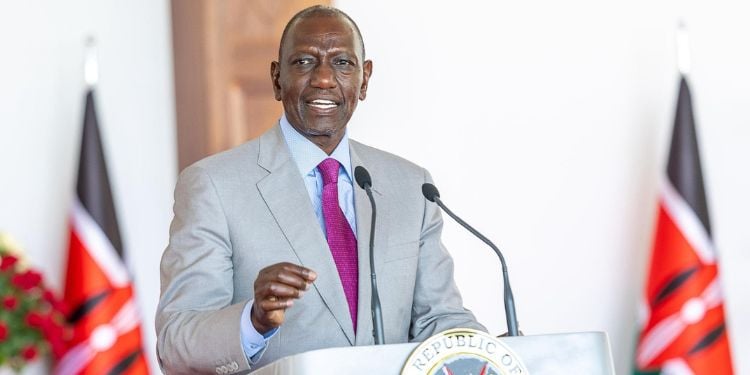
President William Ruto on Thursday, 27, 2026, raised concerns about the growing number of court decisions nullifying government policies, saying Kenya must balance constitutional oversight with the ability of elected institutions to implement their mandates.
Speaking during this year’s Katiba Day celebrations at KICC, Ruto posed a series of questions on how constitutional review should be exercised without undermining the effective functioning of government, while at the same time maintaining confidence in the country’s system of checks and balances.
The President asked how the Executive and Parliament should respond when courts find that a policy violates the Constitution and how courts can continue protecting rights while remaining conscious of institutional roles, public resources and the practical consequences of their decisions.
“How do we preserve constitutional review without unnecessarily paralyzing legitimate government action? How do we ensure that checks and balances remain instruments of accountability and holding government to account, rather than pathways to institutional gridlock?” Ruto posed.
His remarks came against the backdrop of several court rulings that have upset key government programs and policies over the past four years, including legal battles over the Housing Levy, the Finance Act, healthcare reforms under SHA, and other flagship projects.
He added that all arms of government derive their authority from the people and must exercise that authority in service of wananchi.
The President maintained that when government actions are found to be unlawful, the state has an obligation to obey court decisions and take corrective measures.
“Where a government acts unlawfully, it must obey the court and correct its course,” he said.
Reflections on Gen Z protests
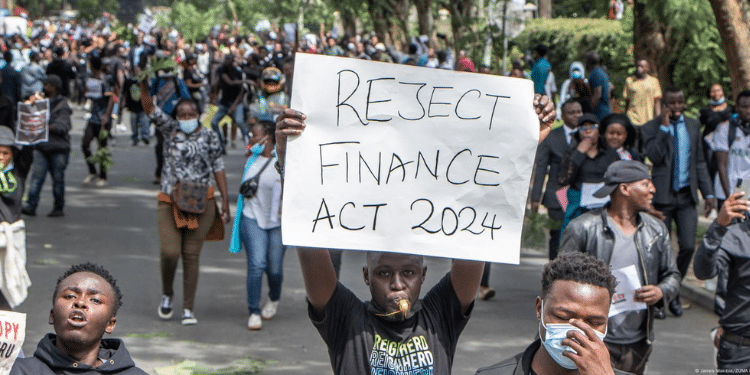
Ruto also devoted a significant portion of his address to reflecting on the anti-government protests witnessed in 2024 and the periods that followed.
Also Read: 4 Changes Ruto Made After the 2024 Gen Z Protests
He acknowledged that young Kenyans and other citizens who took part in the demonstrations were exercising rights guaranteed under the Constitution, including the freedoms of expression, assembly, picketing and petitioning public authorities.
According to the President, the demonstrators were demanding greater accountability, better governance and a meaningful role in shaping the country’s future.
“Their message was clear: they wanted to be heard. They demanded greater accountability, better government, and a meaningful place in shaping the future of their nation,” he said.
Ruto said such demands should not be viewed as threats to democracy, arguing that peaceful protest, criticism and dissent remain essential pillars of a democratic society.
At the same time, he acknowledged the pain left behind by the demonstrations, noting that some families lost loved ones and that serious concerns emerged regarding unlawful arrests, enforced disappearances and the alleged use of excessive force.
The President said credible allegations of human rights violations should never be ignored and called for independent, transparent and thorough investigations.
“We cannot honor the Constitution by looking away from such allegations. Every credible allegation of a human rights violation must be investigated independently, thoroughly, and transparently,” he said.
He added that individuals found culpable should be held accountable under the law.
Rights and responsibilities
While defending the constitutional right to protest, Ruto distinguished between peaceful demonstrations and criminal conduct.
Also Read: Home of American Couple Killed in Kenya Chopper Crash Raided: Cars and Jewelry Stolen
He noted that Article 37 of the Constitution protects peaceful and unarmed assemblies but does not shield individuals who engage in arson, looting, violence, intimidation or the destruction of property.
“We must neither criminalize protest because of the actions of a few, nor legitimize criminal conduct merely because it occurs in the course of a protest,” he said.
The Head of State argued that constitutional rights and civic responsibilities must go hand in hand.
According to him, citizens exercising the right to protest have a responsibility to remain peaceful, while law enforcement agencies must uphold life, dignity and the rule of law when maintaining public order.
He added that governments have a duty to listen to citizens, while those exercising democratic freedoms must help preserve the institutions through which national disagreements are resolved.
Ruto further stated that Parliament, the courts and other state institutions belong to the people and should be subjected to criticism and scrutiny without being undermined or destroyed.
“Our national task, therefore, is not to choose between liberty and order. It is to build an order founded on liberty and to exercise liberty in a manner that preserves the constitutional order,” he said.
The President concluded by stating that the Constitution binds all Kenyans equally and that accountability must ultimately be measured not only through procedures and reports but also through outcomes that improve people’s lives.
Follow our WhatsApp Channel and X Account for real-time news updates.