


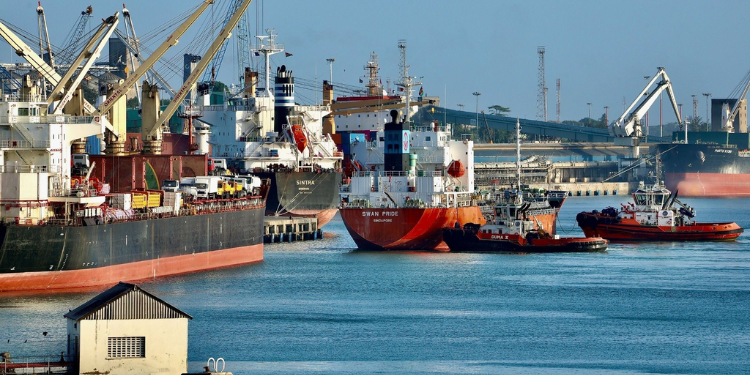
The Port of Mombasa is experiencing renewed congestion, with more than 20 ships reportedly waiting offshore as operations struggle to keep up with rising cargo volumes.
Cabinet Secretary for Transport, Davis Chirchir, met stakeholders on February 13 at Kenya Ports Authority (KPA) headquarters to address the crisis and improve efficiency.
Shipping Agents Count Heavy Losses
The congestion is causing major financial losses that continue to rise with each additional day vessels remain stuck offshore, according to the Kenya Ships Agents Association (KSAA) CEO, Elijah Mbaru.
Speaking to the media on Friday, February 13, Mbaru warned that the delays are hitting the industry hard, especially at a time when global shipping costs remain unpredictable.
“The biggest loser in the whole thing is the shipping agent because when a ship waits per day, it is about 60000 USD loss,” said Mbaru.
He added, “This translates to about 7M plus, and when a container is not returned into the fleet of the shipping line, the opportunity cost lost is between 80 to 300 USDs per day, depending on the region or country.”
Mbaru explained that such losses affect not only shipping lines but also traders who depend on timely cargo delivery.
The delayed turnaround of vessels disrupts shipping schedules, slows down import and export flows, and increases the overall cost of doing business.
Stakeholders warn that if the situation continues, some shipping lines may start diverting vessels to alternative ports in the region, placing Mombasa at a competitive disadvantage.
Also Read: 3 Oil Tankers Dock at Kipevu Mombasa, Securing Fuel Supply for Kenya and the Region
Government Moves to Ease Port Pressure
Roads and Transport CS Davis Chirchir said the Government is committed to keeping the Mombasa Port efficient as cargo numbers increase. He stressed the need for teamwork among agencies to improve port systems and keep trade moving smoothly. The CS noted that earlier efforts had reduced vessel waiters from 20 at the beginning of the year to seven, but the latest surge has brought pressure back to the port.
He also outlined several short‑ and long-term measures already underway, including new berths at the Dongo Kundu Special Economic Zone, full use of the Port of Lamu, more equipment purchases, and greater automation.
Chirchir further stated that some delays are caused by scanners being placed too close to the port.
“We are the ones causing congestion by having the scanner too soon at the port. We probably need to create more space for scanning; it doesn’t need to be inside the port,” he said.
He urged all cargo handlers to adopt 24/7 operations to align with KPA’s schedule and clear goods faster.
KPA Acquires New Equipment to Improve Efficiency
KPA Managing Director Capt. William Ruto announced that the Authority has awarded tenders for new cargo‑handling equipment to boost productivity.
Also Read: KRA and Kenya Ports Authority Launch Major Reforms to Decongest Mombasa Port
The purchases include 14 Reach Stackers, 43 Terminal Tractors, and 11 Forklifts. He also disclosed tenders for 10 Rubber Tyred Gantry Cranes and two Ship‑to‑Shore Gantry Cranes. Capt.
Ruto said this equipment is part of a capacity-building programme meant to handle rising cargo volumes and reduce pressure during peak periods.
Transport Principal Secretary Mohamed Daghar praised KPA for its improved performance, noting that the port handled 45.46 million tons of cargo in 2025, up from 41 million tons in 2024.
Government Reforms to Improve Mombasa Port Management
CS Chirchir mentioned ongoing reforms under the Government Owned Enterprises (GOE) Act, which will see commercially viable agencies such as KPA operate as Public Limited Companies to improve efficiency and accountability.
“The GOE will be a big game changer to allow organizations like KPA to be run like the private sector,” said Chirchir.
The Mombasa Port is very vital, as it serves Kenya and many countries in the region, so delays affect many people and businesses.
Fixing these challenges quickly will help protect Mombasa’s reputation as a main shipping hub in East Africa.
Follow our WhatsApp Channel and X Account for real-time news updates.



![Tsc Jss Teacher Qualifications 2026: Kcse Grades, Degrees And Subjects Required [Full List]](https://cdn.thekenyatimes.com/2026/07/Stakeholders-TSC-X-2026-06-09-36.png "Tsc Addresses Circular On Deployment Of Degree And Diploma Teachers To Junior School")