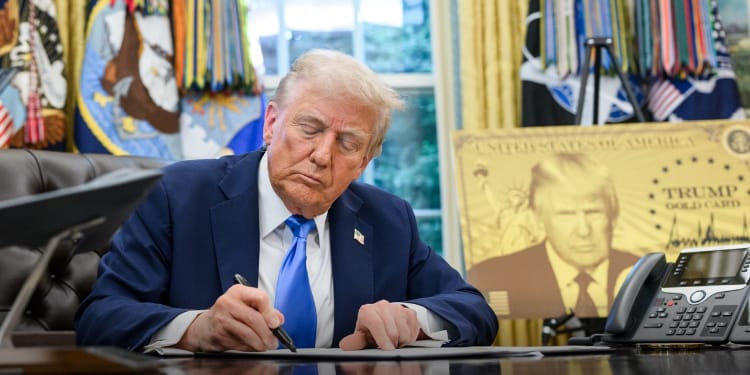
President Donald Trump has nominated a new Chairman of the Board of Governors of the Federal Reserve.
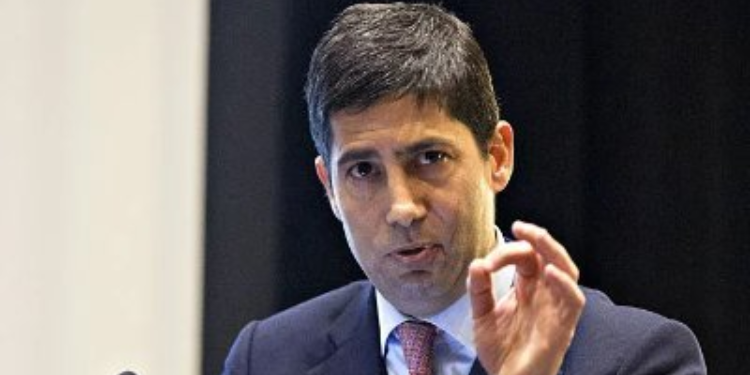
In a statement posted on his Truth Social platform on Friday, January 30, Trump announced the nomination of former Federal Reserve Governor Kevin Warsh to serve as the next Chairman of the Board of Governors of the Federal Reserve System.
The President praised Warsh’s experience in monetary policy, finance, and government service, with the nomination setting the stage for a leadership transition at the United States’ central bank later this year.
Warsh is expected to succeed Jerome Powell, whose term as Fed Chair expires in May 2026, subject to Senate confirmation.
According to Trump, Warsh brings a combination of academic, public-sector, and private-sector experience. The 55-year-old currently serves as the Shepard Family Distinguished Visiting Fellow in Economics at the Hoover Institution and as a lecturer at the Stanford Graduate School of Business.
Trump highlights Kevin Warsh’s experience
Warsh is also a partner at Duquesne Family Office LLC, working alongside investor Stanley Druckenmiller. Trump highlighted the nominee’s previous tenure at the Federal Reserve, noting his early rise within the institution.
“Kevin Warsh became the youngest Fed Governor, ever, at 35, and served as a Member of the Board of Governors of the Federal Reserve System from 2006 until 2011, as the Federal Reserve’s Representative to the Group of Twenty (G-20), and as the Board’s Emissary to the Emerging and Advanced Economies in Asia,” the Head of State said.
The Fed Chair nominee also held the role of Administrative Governor, overseeing the Board’s operations, personnel, and financial performance.
Also Read: Senator Klobuchar Launches Bid for Minnesota Gubernatorial Race
Before joining the Federal Reserve, Warsh served in the White House National Economic Council from 2002 to 2006 as Special Assistant to the President for Economic Policy and Executive Secretary of the Council.
He worked in the Mergers and Acquisitions Department at Morgan Stanley & Co. earlier in his career, where he rose to the rank of Vice President and Executive Director.
Warsh holds an A.B. from Stanford University and a J.D. from Harvard Law School. Trump also cited Warsh’s international policy work, including an independent report he authored for the Bank of England proposing reforms to the conduct of monetary policy, recommendations that were later adopted by the UK Parliament.
“I have known Kevin for a long period of time and have no doubt that he will go down as one of the GREAT Fed Chairmen, maybe the best. On top of everything else, he is “central casting,” and he will never let you down.”
Federal Reserve System
The Board of Governors of the Federal Reserve System, headquartered at the Eccles Building in Washington, D.C., is the main governing body of the U.S. central bank.
It is an independent federal agency responsible for overseeing monetary policy, banking supervision, financial stability, and the nation’s payment systems.
All seven governors sit on the Federal Open Market Committee (FOMC), which sets interest rates and manages the money supply to pursue maximum employment and stable prices.
The Board also supervises state-chartered banks that are members of the Federal Reserve System, monitors systemic financial risks, and oversees emergency lending facilities such as the discount window.
Members of the Board are nominated by the president and confirmed by the Senate, serving 14-year staggered terms designed to protect the institution from short-term political pressure.
The Fed operates independently of congressional appropriations, funding its operations through earnings on government securities and service fees.
As of January 30, 2026, the Board’s leadership includes Jerome Powell as Chair, Philip Jefferson as Vice Chair, and Michelle Bowman as Vice Chair for Supervision, alongside Governors Michael Barr, Lisa Cook, Christopher Waller, and Stephen Miran.
Warsh is widely known for his role during the 2008 financial crisis, when he acted as a key liaison between then-Fed Chair Ben Bernanke and Wall Street institutions during interventions involving firms such as Bear Stearns and AIG.
He has since argued for changes in how the Federal Reserve conducts policy, including a smaller balance sheet and reduced market intervention.
Follow our WhatsApp Channel and X Account for real-time news updates