


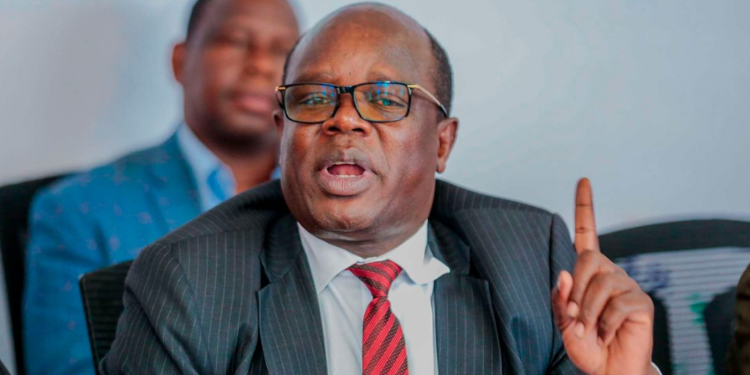
The Employment and Labor Relations Court has upheld a Public Service Commission (PSC) directive setting a new retirement age framework for lecturers and researchers in public universities, handing the Universities Academic Staff Union (UASU) a major setback in a closely watched labor dispute.
The ruling means professors and associate professors in public universities will retire at 70, while lecturers, senior lecturers and research scientists with doctoral qualifications will retire at 65.
Other staff will continue to retire at age 60, in line with public service regulations.
UASU Loses Retirement Age Dispute
The dispute arose after the PSC issued a circular on March 2, 2026, introducing revised retirement ages for academic staff in public universities.
The commission said the move was aimed at creating uniformity and compliance across the public service while retaining experienced academics for longer periods.
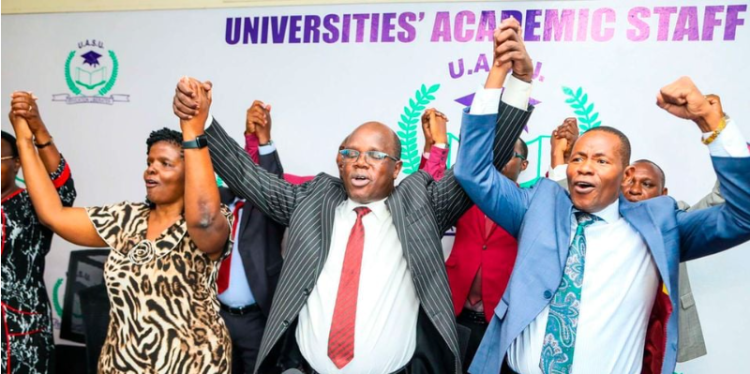
UASU challenged the directive in court, arguing that the changes interfered with existing collective bargaining agreements and had been introduced without adequate consultation with stakeholders.
Also Read: Has Kibabii University Banned Relationships with Freshers? Truth Behind The Viral Memo
The union also warned that implementation could disrupt teaching, examinations, postgraduate supervision and ongoing research programs.
Initially, Justice Jacob Gakeri granted conservatory orders suspending implementation of the circular pending the hearing and determination of the petition.
UASU argued that some senior academic staff were entitled to continue serving under the terms of existing agreements and practices within universities.
The union maintained that the PSC had exceeded its mandate by altering already-negotiated retirement conditions.
However, the court found that the PSC is the body legally mandated to formulate and oversee human resource policies within the public service.
The judge held that the commission had the authority to issue the retirement-age framework affecting public universities.
Based on the ruling, the retirement limits set out in the PSC circular remain valid and enforceable.
The decision represents a significant victory for the PSC as it seeks to standardize employment practices across public institutions.
It also clarifies the position of public universities, many of which had been uncertain about how to implement retirement policies following the court’s temporary suspension orders.
PSC’s Justification and Rawal Case Citation
A key aspect of the case was the court’s reliance on principles established in the retirement-age dispute involving former Deputy Chief Justice Kalpana Rawal.
Also Read: Explained: How TSC Awards Marks During Recruitment of Junior Secondary Teacher Interns
In that case, Kenyan courts held that legitimate expectation cannot override clear legal provisions governing retirement in public service.
The courts further found that the retirement age is determined by law and the applicable statutory framework.
Applying the same reasoning, the court rejected UASU’s argument that lecturers had a legitimate expectation of continuing to work beyond the age limits set by the PSC.
The judge held that where the law grants PSC authority to determine retirement policy, employees cannot rely on past practice or expectations to defeat a valid statutory directive.
PSC said the revised retirement-age framework is intended to retain highly skilled and experienced personnel across all categories of university staff, not just professors.
The commission argued that public universities were losing valuable expertise through the retirement of employees who were still capable of making meaningful contributions to teaching, research, administration and institutional development.
The policy seeks to recognize differences in academic qualifications and responsibilities by providing varying retirement ages for different staff.
According to PSC, the changes are aimed at preventing the loss of critical skills, strengthening research and innovation, improving postgraduate supervision, and ensuring that universities continue to benefit from the knowledge and experience of seasoned academics and professionals.
The commission maintained that many university employees remain productive beyond the traditional retirement age and continue to play an important role in mentoring younger staff and supporting institutional growth.
Follow our WhatsApp Channel and X Account for real-time news updates.




What will happen to this members of staff who are living with disability, either registered or unregistered?