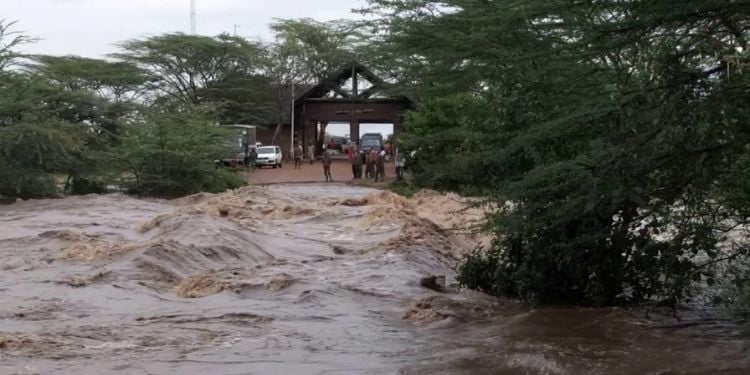
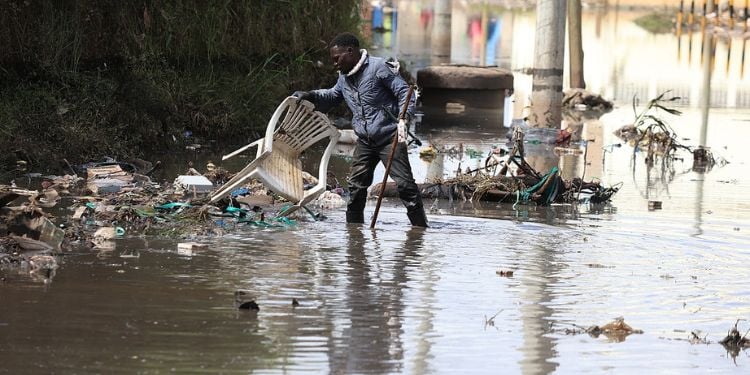
The Kenya Meteorological Department (KMD) has forecast rainfall across several parts of the country for the week of March 17–23, 2026, with intensity expected to increase from Thursday onward. In a statement on March 16, Kenya Met listed areas expected to experience heavy rainfall this week, following the heavy rains in Nairobi on March 15 that triggered flooding across several estates and major roads in the city.
“The Kenya Meteorological Department forecasts continued rainfall over several parts of the country, with intensity expected to increase from Thursday,” read the Kenya Met statement in part.
Kenya Met Lists Areas to Experience Rainfall
According to Kenya Met, the affected regions include the Highlands East and West of the Rift Valley, Lake Victoria Basin, Rift Valley, South-eastern lowlands, and the Coastal region, with isolated heavy rainfall expected in some areas.
Parts of North-eastern and North-western Kenya are likely to remain mostly sunny and dry, although occasional rainfall cannot be ruled out.
“Dry & Sunny Areas Parts of North-eastern and North-western Kenya are likely to remain mostly sunny and dry, although occasional rainfall cannot be ruled out,” the weatherman explained.
Rainfall activity is expected to gradually increase during the forecast period, with most regions experiencing a mix of sunny intervals at the start of the week, then transitioning to morning rain and afternoon-to-night showers and thunderstorms, especially from Thursday.
Temperature Outlook
According to Kenya Met, daytime temperatures above 30°C are expected in several areas, including the Coast, North-eastern and North-western Kenya.
Also Read: Ministry Lists 37 Nairobi Areas at Risk of Flooding Amid Heavy Rains
Night-time temperatures below 10°C are likely in parts of Highlands East of the Rift Valley, Central Rift Valley, Parts of the North Rift and areas near Mt. Kilimanjaro
Specific Areas and When To Expect Rain
In the Highlands West of the Rift Valley, the Lake Victoria Basin, and the Rift Valley, conditions will begin with mainly sunny intervals. Morning rains are expected over a few areas from Thursday, followed by afternoon and night showers and thunderstorms that may spread to several places.
In North-western Kenya, including Turkana and Samburu, the week will start with sunny, dry conditions. However, isolated morning rains and afternoon-to-night showers and thunderstorms are expected in a few areas, occasionally extending to additional locations.
Also Read: Kenya Met Announces When Long Rains Season Will Start and Breakdown of Rainfall Distribution
In the Highlands East of the Rift Valley, morning rains are likely in some areas, with afternoon and night showers and thunderstorms expected over a few places, at times spreading more widely.
Further, in North-eastern Kenya, early conditions will be largely sunny and dry. This will shift to include morning rains and afternoon and night showers and thunderstorms in a few areas, with occasional expansion in coverage.
In the South-eastern lowlands, the period will begin with sunny, dry weather. Morning rains are expected in some areas, particularly from Thursday, followed by afternoon and night showers and thunderstorms in a few places.
Coastal region, morning, afternoon, and night showers are likely to occur in a few areas throughout the forecast period.
Recent Developments
Commuters in Nairobi were stranded after heavy overnight rainfall triggered flooding across several estates and major roads in the city on March 15.
According to the Kenya Red Cross reports, the heavy downpour has triggered flooding in several parts of Nairobi.
Reportedly, both the Nairobi and Ngong rivers overflowed, leading to riverine flooding in several parts of Nairobi.
At the time of reporting, Aqua Rescue teams had been deployed, with 11 people rescued from a marooned matatu along Bunyala Road and two children evacuated from a flooded house in Kilimani.
As of March 15, authorities confirmed the flood death toll had risen to 62 as the Ministry of Interior noted that heavy rains continue across Kenya, increasing the risk of flooding in both rural and urban areas, with Nairobi among the most affected.
Authorities warn that rising water levels along major rivers have heightened the likelihood of flooding in several parts of the capital, listing 37 Nairobi neighbourhoods identified as flood Hotspots Amid heavy rains.