
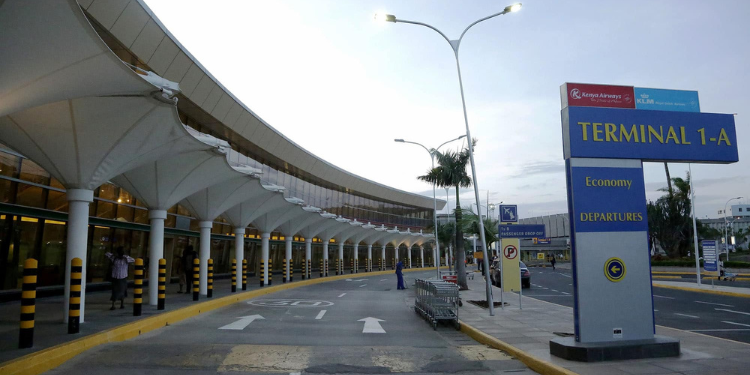
The government, through the Ministry of Interior, has introduced new rules at Jomo Kenyatta International Airport (JKIA) on baggage handling and airport operations to improve efficiency and strengthen security.
In a statement on September 9, the Kenya Airports Authority (KAA) has directed airlines to ensure baggage is properly identified and processed either as passenger luggage or cargo, depending on its classification.
Passengers heading to Nairobi have been warned against combining their luggage with that of other travellers, and any such baggage will be returned at the passenger’s own cost.
“The government has moved to tighten controls and enhance operational efficiency at the Jomo Kenyatta International Airport (JKIA), with a range of measures being implemented to improve passenger processing and overall airport operations,” read part of the statement.
JKIA Tightens Baggage Rules as Government Moves to Improve Airport Operations
According to the Ministry of Interior, cargo must be processed through designated terminals and follow established procedures.
Airlines found facilitating the movement of cargo outside authorized channels will face regulatory action, including suspension where applicable.
The measures target irregular baggage handling practices, including transporting luggage beyond permissible passenger baggage limits and violating aviation safety and baggage size requirements issued by the International Air Transport Association (IATA) and individual airlines.
Additionally, the government said the measures are part of efforts to improve passenger processing and overall operations at JKIA.
The airport is also deploying the Automatic Terminal Information Service (ATIS), which will support the identification and management of arriving and departing domestic and international flights.
Under the optimization plan, terminals will have a centralized system for airline check in and passenger screening, alongside clearer designations for arrivals and departures.
KAA said construction of a new terminal is also underway, with the contractor already on site. The project is expected to take 54 months to complete and will add capacity for approximately 10 million passengers annually.
The government is also advancing the implementation of the Advanced Passenger Registration (APR) system to improve information sharing and operational awareness. The associated data control facilities are expected to be operational within the next month.
Also Read: JKIA Facelift Moves to Next Level as Kenya Inks Deal with Another Global Firm
Why the Measures Were Put In Place
The measures are part of the KSh154.2 billion JKIA modernization programme, which seeks to expand airport capacity, improve operational efficiency and strengthen Kenya’s position as a regional aviation hub.
JKIA currently handles approximately 8.8 million passengers and more than 358 kilotonnes of cargo annually, with about 60 per cent of passengers processed at the airport being transit passengers.
The optimization programme is expected to increase JKIA’s passenger handling capacity from approximately eight million to 12 million passengers annually.
Also Read: Kenya Rejects Zimbabwean Billionaire Wicknell Chivayo’s Links to JKIA Upgrade
Principal Secretary for Internal Security and National Administration Raymond Omollo, who chairs the Border Control and Operations Coordination Committee (BCOCC), called on government agencies to fully implement the committee’s resolutions.
Immigration Principal Secretary Belio Kipsang called for closer coordination among agencies through an intelligence-led approach to strengthen national security without disrupting travel and trade.
“We need a relationship between all the agencies. We need a coordinated approach; one that is intelligence-led, walk together, knowing that we have a common focus on ensuring that our country is able to secure itself, while ensuring that we don’t compromise on travel and trade,” he said.
Follow our WhatsApp Channel and X Account for real-time news updates.