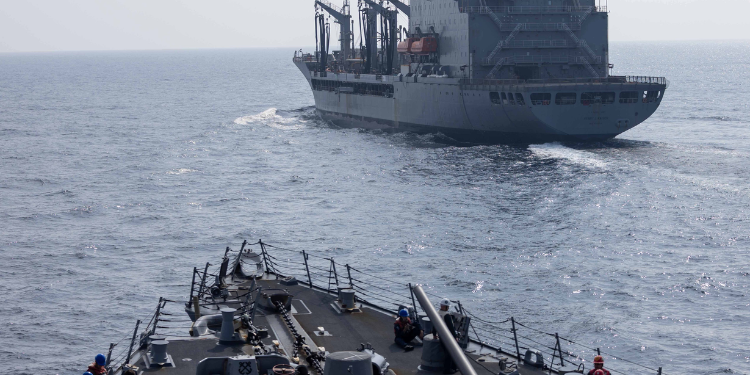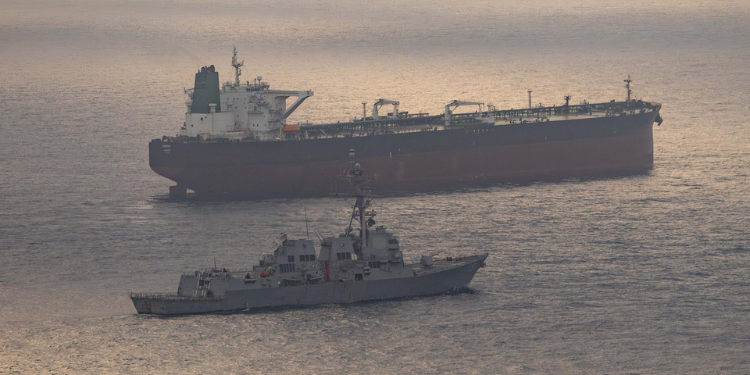
U.S. forces fired a Hellfire missile into the engine room of a Gambia-flagged cargo ship in the Gulf of Oman after its crew ignored more than 20 warnings and tried to push through the American naval blockade toward an Iranian port.
The strike happened on Friday, May 29. The vessel, M/V Lian Star, was moving through international waters when U.S. Central Command forces spotted it heading for Iran.
Military personnel issued repeated radio warnings telling the crew the ship was violating the U.S. naval blockade, but the crew kept going anyway.
U.S. Forces Enforce Naval Blockade in Gulf of Oman
A U.S. aircraft then launched a Hellfire missile that struck the engine room, disabling the ship. According to the CENTCOM report, the ship is now adrift and no longer heading to Iran. U.S. forces did not board the vessel.
“U.S. forces operating in the Gulf of Oman enforced blockade measures by disabling a Gambia-flagged maritime vessel,” CENTCOM said in a statement released Saturday.
This marks the fifth commercial vessel U.S. forces have disabled since tightening enforcement of the blockade.
So far, 116 other ships have been redirected after warnings. This is happening while a fragile ceasefire between the United States and Iran holds.
The blockade targets Iranian ports in the strategically vital Gulf of Oman region near the Strait of Hormuz.
The blockade was announced to put pressure on Iran over its nuclear program and shipping at the Strait. U.S. officials said the restrictions would remain in place until Tehran met the conditions.
Also Read: Trump Signals Possible Cash to Iran Amid Looming Deal — Then Drops This Twist
The Lian Star incident follows similar actions in recent weeks. Earlier, vessels, some Iranian-flagged oil tankers, were stopped using gunfire aimed at rudders or smokestacks.
In those cases, U.S. Navy F/A-18 Super Hornets from aircraft carriers carried out the strikes.
The blockade has already cost Iran billions in lost oil revenue. Ships trying to slip through risk being disabled or turned away, creating a major deterrent for commercial traffic.
Iran has not yet commented publicly on the latest strike. Tehran has repeatedly called the U.S. blockade illegal and accused Washington of trying to strangle its economy.
Iranian officials have also pushed back against U.S. and allied efforts to control movement through the Strait of Hormuz, one of the world’s most important oil chokepoints.
The ceasefire has held since April, but tensions remain high in the Middle East. Diplomatic talks continue in the background, with both sides discussing extending the ceasefire for an additional 60 days.
Also Read: Iran Claims Downing American Aircraft in Fresh Escalation
They are also discussing possible terms to have the Strait of Hormuz fully opened, ease the naval pressure, and address Iran’s nuclear ambitions.
President Trump has signaled he wants a deal that permanently ends Iran’s path to a nuclear weapon, while keeping strong enforcement in place until that happens.
U.S. naval blockade and air assets in the region remain in place for now. Commanders have stressed that forces will continue to take action against any vessel that ignores warnings.
CENTCOM did not release details about the cargo or the crew’s nationality. However, maritime tracking data showed the Lian Star as a bulk carrier operating under Gambian registry, a flag often used by vessels in international trade.