Secretary of State Marco Rubio announced Tuesday that Operation Epic Fury, the U.S. military campaign against Iranian missile, naval, and defense targets, has ended with all its main goals met.
“Operation Epic Fury is concluded. We achieved the objectives of that operation,” Rubio said during his May 5 media briefing, adding that the administration now wants to move toward a diplomatic deal, but Iran has not taken that path so far.
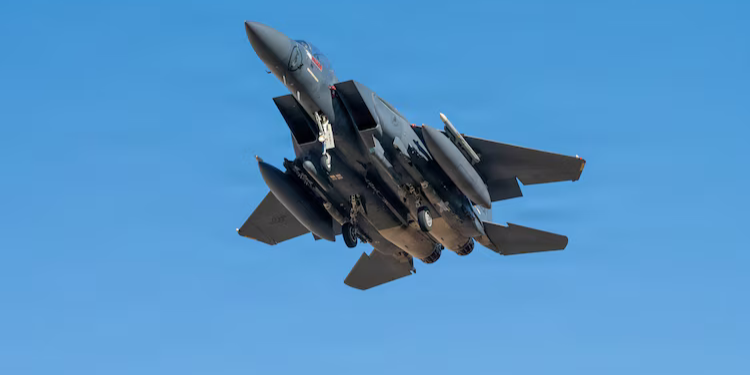
The operation began on Feb. 28 and ran for several weeks. U.S. forces teamed up with Israeli Forces and struck Iranian ballistic missile sites, production facilities, navy vessels, and air defenses.
What Epic Fury Operation achieved
Pentagon reports said the Epic Fury campaign hit more than 7,000 targets and damaged or destroyed over 100 Iranian vessels.
Rubio also noted that the U.S. does not seek further conflict with Iran or any other state in the Middle East.
“We’re not cheering for an additional situation to occur. We would prefer the path of peace,” he said. “What President Trump would prefer is a deal.”
The Trump administration described the strikes as a limited mission under a “peace through strength” approach.
Officials said the goal was never regime change but to ensure Iran does not achieve its nuclear weapon goals and remove its ability to threaten shipping lanes and neighbors with missiles and drones.
Also Read: U.S. Ships Defy Iran’s Threats, Cross the Strait of Hormuz
The Strait of Hormuz, a key oil route, remained a central concern throughout the operation. Iran shut down the passage a few days after the fight started.
No exact casualty figures for Iranian forces were released in Rubio’s statement. U.S. officials have said American losses were minimal. About 13 U.S. service members died.
The announcement comes as the region stays tense. Iran has not publicly accepted a formal ceasefire, though some shipping activity has resumed in parts of the Gulf.
Separate U.S. efforts, known as Project Freedom, have worked to keep commercial lanes open.
Rubio’s comments signal a shift in focus after revealing that the administration wants negotiations; however, he says it will respond to any new threats. “Iran has chosen confrontation up to now, he noted.
Epic Fury Operation’s long-term value raised questions
The Epic Fury operation elicited mixed reactions, especially after its end goal was not vividly highlighted by the Trump administration, and also after reports that U.S. Forces were to storm parts of Iran and carry out ground operations.
Both Democrats and Republicans questioned the operation’s long-term value, with some calling it a risky escalation. Conservatives such as Tucker Carlson said U.S. Forces were literally fighting for Israel. Carlson opined that President Trump was being controlled by Israeli Prime Minister Benjamin Netanyahu.
Trump’s supporters and White House officials said the operationt sent a clear message and protected U.S. interests without a full-scale war.
Also Read: Third U.S Supercarrier Crosses into Mediterranean as Operation Epic Fury Intensifies
The conflict drew in longstanding rivalries in the Middle East as Iran targeted its immediate neighbors, who host U.S. bases, and also blamed Israel and the U.S. for the attacks. Oil prices jumped during the height of the strikes but have eased in recent days.
Diplomats from several countries have quietly urged both sides to talk. European leaders and Gulf states had warned that further fights could disrupt energy supplies and raise prices worldwide.
Now that the military phase is over, the question is what happens next. The Trump Administration says they remain open to negotiations but will judge Iran by its actions, not its promises.
It also noted that more focus will be on the Strait of Hormuz to ensure commercial ships sail through without Iran’s interference and targeted attacks.
Meanwhile, U.S. forces remain on alert in the region, as the Pentagon has not announced any troop withdrawals.