The U.S. military is restoring the original name of its largest combatant command, shifting back from U.S. Indo-Pacific Command to U.S. Pacific Command, or USPACOM.
The Department of War announced the change on Tuesday, June 16. The command, based in Hawaii, will once again use the designation created by President Harry S. Truman in 1947.
Pentagon Restores Historic USPACOM Name
Officials say the move honors the command’s long history and aims to build pride among those who serve there.
USPACOM operated under that name for more than 70 years before the switch to USINDOPACOM in 2018.
At the time, Defense Secretary Jim Mattis described the update as a way to recognize growing ties between the Indian and Pacific oceans.
The 2018 change was largely symbolic and came as the U.S. sought to highlight India’s role in the broader region.
The area covered by the command has not changed. It stretches from the U.S. West Coast to the western edge of India, covering more than 100 million square miles, roughly half the Earth’s surface.
Mission, Territory, and Operations Remain Unchanged
The command oversees operations across this vast theater, from the Arctic to Antarctica.
It remains the oldest and largest of the U.S. unified combatant commands, with responsibility for more than 375,000 service members.
Command officials stated that the name change brings no shifts in mission or day-to-day operations.
The focus stays on maintaining a free and open region through work with allies and partners. That includes joint training, humanitarian aid, and readiness to face any contingencies.
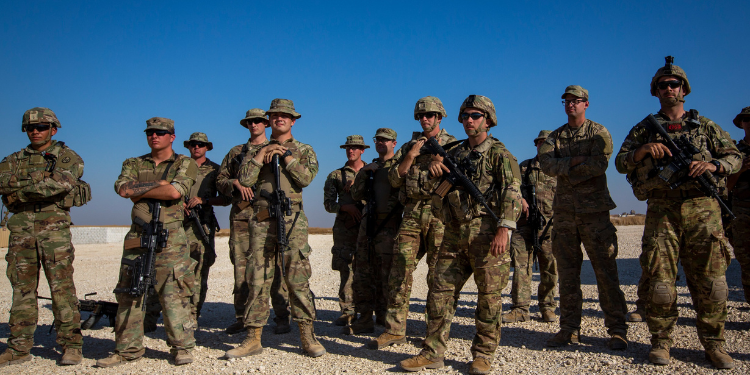
The restoration points back to the command’s roots right after World War II. Established on Jan. 1, 1947, it helped shape security across the Pacific during the early Cold War.
Forces under its banner played major roles in the Korean War and Vietnam War. Over the decades, the command has also led responses to typhoons, tsunamis, and other disasters across the region.
Along with the name, the command is bringing back its classic emblem featuring an eagle over a globe focused on the Pacific. The symbol has been part of the command’s identity for generations.
The 2018 rename reflected changing Pentagon priorities. U.S. officials at the time pointed to increased economic and security links across the two oceans.
India’s growing military and economic weight factored into the decision. The updated name was intended to signal that American interests reached beyond the traditional Pacific islands and East Asia.
China Tensions and the Strategic Pacific Landscape
The decision comes amid ongoing debates about how the U.S. should approach security in Asia.
High tensions with China persist across the region, from the South China Sea to Taiwan.
The United States conducts joint patrols and exercises with allies such as Japan, South Korea, Australia and the Philippines.
Also Read: Did Iran Really Hit a U.S. Base in Bahrain? CENTCOM Sets the Record Straight
Some observers have been saying the fundamental problems in the region have little to do with what the command calls itself.
Ship deployments, aircraft patrols and alliance-building will continue as they have.
The command’s headquarters sits at Camp H.M. Smith in Hawaii. From there, it directs five component commands: U.S. Pacific Fleet, Pacific Air Forces, Army Pacific, Marine Forces Pacific, and Space Forces Indo-Pacific.
The change comes at a time when the U.S. military continues to adjust its footprint across the Pacific.
New basing agreements, missile deployments, and joint training initiatives remain active regardless of the command’s title.
Follow our WhatsApp Channel and X Account for real-time news updates.