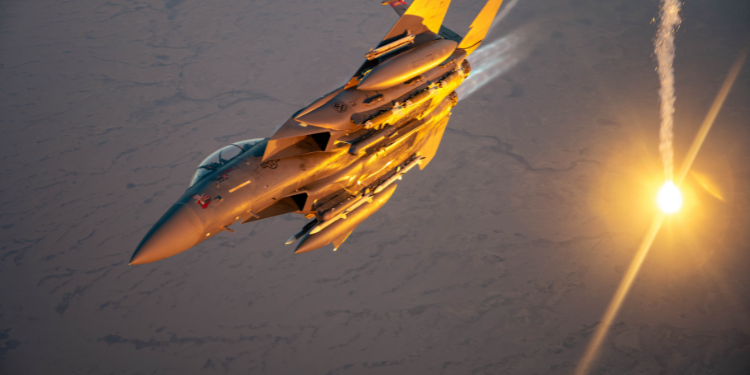
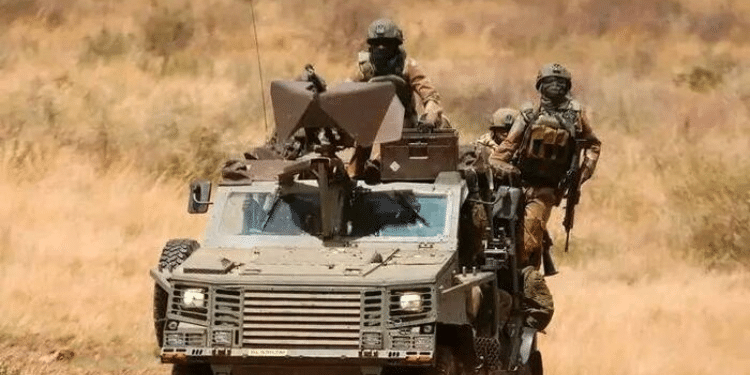
Washington and Tehran traded sharp claims on Wednesday, June 3, as fresh fighting threatened to unravel a fragile ceasefire in the Gulf. Iran’s Revolutionary Guard said its forces fired missiles and drones at the U.S. Navy’s Fifth Fleet headquarters in Bahrain and at least one other American air base in the region.
U.S. Central Command fired back quickly, calling the Iranian statements false.
CENTCOM Says All Attacks Were Intercepted or Failed
No independent evidence has surfaced so far to back up Tehran’s version. CENTCOM said all Iranian projectiles aimed at U.S. and partner forces were either intercepted or failed before reaching their targets.
“All Iranian attacks against U.S. forces failed,” the command said. Two missiles bound for Kuwait fell short or disintegrated, and American and Bahraini defenses shot down three aimed at Bahrain.
The exchange comes after days of tit-for-tat strikes. Tehran launched the latest barrage in what it called retaliation for U.S. action on Qeshm Island in the Strait of Hormuz.
Also Read: California Tech Executive Arrested as DOJ Unveils Alleged Iran Nuclear Supply Operation
American forces hit targets there after spotting Iranian attempts to attack U.S. assets and commercial shipping. No U.S. personnel were reported hurt in the latest round.
Bahrain hosts the headquarters of the Navy’s Fifth Fleet at Naval Support Activity Bahrain, a key hub for American operations across the Middle East.
The base sits near Manama and has come under Iranian fire before, during periods of high tension. Kuwait also hosts U.S. troops and aircraft at bases like Ali Al Salem.
Conflicting Narratives Deepen Gulf Tensions
Iranian state media and the IRGC released statements claiming direct hits on the Fifth Fleet compound and other sites. Some Iranian accounts shared images they said were of successful strikes.
CENTCOM dismissed those outright. Similar claims and denials have recurred in recent weeks, leaving many observers unsure whom to believe.
Public trust in official statements from both sides has taken a beating. After earlier Iranian attacks on Kuwait, videos and local reports showed damage at Kuwait International Airport despite initial U.S. and allied assurances that everything had been intercepted.
That incident fueled sharp criticism of CENTCOM’s early messaging. On the other hand, Tehran has a long record of inflating its military successes for domestic audiences.
“Iran claimed today that it did not attack the passenger terminal at Kuwait International Airport, and a U.S. missile interceptor instead caused damage. Totally FALSE,” CENTCOM cleared the air. “TRUTH: Iran struck the civilian airport with drones in a deliberate, calculated, and unjustified attack.”
Also Read: Pray for Our Troops: Greene Urges Trump to End “Pointless War” as Iran Targets U.S. Troops
Washington, on the other hand, aims to show that its defenses work and to keep partners like Bahrain and Kuwait calm.
The U.S. Navy keeps several warships in the Gulf at any time, including destroyers and aircraft carriers when tensions rise.
These vessels help enforce freedom of navigation and, more recently, a tightened naval blockade on Iranian ports ordered earlier this year. Tehran has tried to disrupt that effort with missiles, drones, and small boats.
So far, no visuals from Bahrain have emerged showing major damage at the Fifth Fleet headquarters.
Bahraini officials have condemned previous Iranian actions and called for calm.
Ceasefire Strained as Iran and U.S. Exchange Strikes
U.S. officials say they do not seek wider war but will defend forces and partners. Tehran’s leadership has vowed to keep responding to what it calls American aggression.
A ceasefire brokered months ago by Pakistan has held in some areas but looks increasingly strained.
Residents near U.S. bases in the Gulf reported hearing air defenses activate and seeing contrails overhead.
Some flights were delayed or diverted.