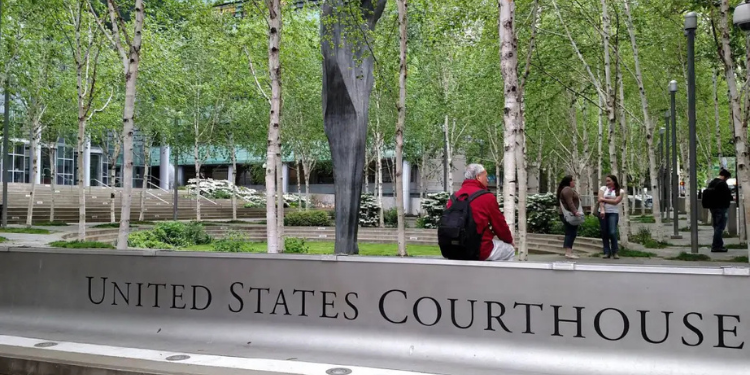
A King County jury in Washington state has found a Kenyan man guilty on all 11 counts in a case involving a fraudulent nursing scheme that prosecutors say put vulnerable patients at risk in long-term care facilities across the United States.
The jury convicted David Mungai Njenga of running a criminal operation that used stolen identities of licensed nurses to place unqualified individuals in nursing homes and other care facilities.
Prosecutors said the scheme was designed to deceive healthcare providers and exploit gaps in staffing systems that depend heavily on temporary nursing agencies.
Kenyan National Convicted in Major U.S. Nursing Fraud Case
Njenga was convicted of one count of leading organized crime, a Class A felony, as well as five counts of first-degree identity theft, one count of second-degree identity theft, three counts of first-degree theft and one count of second-degree theft.
The verdict was delivered on May 28, 2026, after a trial in King County Superior Court.
The case is the first Medicaid fraud trial in Washington state history to include a conviction for leading organized crime under these circumstances, according to the state Attorney General’s Office.
Prosecutors said Njenga created a fake staffing agency, Heritage Medical Staffing, Inc., based in Kent, Washington.
Also Read: American Women Arrested in $21 Million Fraud Scheme That Funneled Funds to Kenya
The company was later renamed Pro Med Alliance Medical Staffing, Inc. Through the agency, prosecutors said he recruited unlicensed workers and presented them as qualified registered nurses to long-term care facilities.
Facilities across Washington, including locations in Yakima, Bothell, Redmond, Shoreline, Vashon Island, and North Bend, were among those that received staff through the operation.
According to court evidence, Njenga obtained personal information belonging to at least five licensed nurses in Washington state.
Prosecutors said he used the stolen identities to create fraudulent documentation, including identification materials and credentials that made the workers appear legitimate.
In some cases, fake fingerprints linked to one individual were used repeatedly to support the false records.
The nursing homes involved paid Njenga’s companies under the belief that they were hiring qualified, licensed medical professionals.
However, investigators said the individuals sent to work in these facilities were not trained or licensed to provide the required level of nursing care.
Patient Safety Risks Highlighted During Trial Testimony
The trial heard about instances where some of the unqualified workers failed to do basic medical tasks such as taking blood pressure readings and administering medication as directed.
Prosecutors argued that these failures created serious risks for elderly and vulnerable residents who depend on proper medical care in long-term facilities.
Attorney General Nick Brown said the verdict proved the efforts by investigators and prosecutors to crack down on Medicaid fraud and protect patients in care facilities.
He said the case demonstrates the importance of holding individuals accountable when public health systems are exploited for financial gain.
Sentencing Set for June as Authorities Highlight Ongoing Fraud Crackdown
Njenga is scheduled to be sentenced June 16 in King County Superior Court. He could be sentenced to 149 months, or about 12 years, to 198 months, or about 16 and a half years, in prison and fined up to $50,000.
The investigation was handled by the Washington State Medicaid Fraud & Abuse Division, also known as the Medicaid Fraud Control Unit.
The unit is responsible for investigating and prosecuting cases involving fraud in Medicaid-funded services as well as abuse or neglect in long-term care settings.
Officials said the division has increased enforcement efforts in recent years. Since October 2018, it has filed 127 criminal cases and secured 104 convictions.
During the same period, it has recovered approximately $81 million through civil enforcement actions tied to Medicaid fraud.
The case against Njenga was initially referred to the Attorney General’s Office in 2019 by the Pierce County Prosecutor’s Office.
Also Read: Trump Ignores Kenyan Courts, US Citizens to Be Quarantined for 21 Days in Laikipia
That referral came after another individual connected to the staffing network was charged with using fraudulent identification documents to impersonate a licensed nurse. Investigators later tracked the documents back to Njenga’s operation.
Prosecutors said the scheme operated between May 2017 and October 2019. During that time, the staffing agencies allegedly supplied unqualified workers to multiple healthcare facilities while collecting payments intended for legitimate nursing services.
A co-defendant, Everlyn Njuki, was not part of the trial. Authorities said she left the country, and a bench warrant has been issued for her arrest.
The court also entered default judgments against the two staffing companies linked to the case.
The Kenyan man will remain in custody pending sentencing later this month.