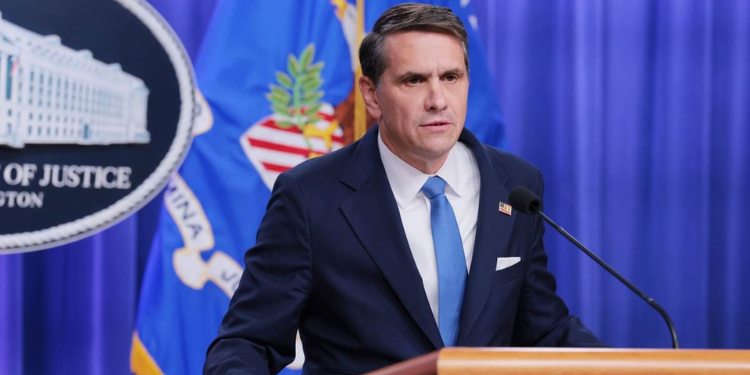
Stanley Woodward, the associate attorney general, replied “We’re on it” at 10:45 p.m. Tuesday to a post by Sen. Lindsey Graham, R-S.C., suggesting that victims of alleged weaponization could seek compensation through existing claims under the Federal Tort Claims Act.
The post was removed from Woodward’s X account by Wednesday morning.
The exchange occurred shortly after Acting Attorney General Todd Blanche testified before a House Appropriations subcommittee on June 2 and stated that the department was abandoning the proposed fund.
“We’re not moving forward with the fund, period,” Blanche said during the hearing.
The Anti-Weaponization Fund was established as part of a settlement in which President Trump agreed to drop a $10 billion lawsuit against the IRS related to the leak of his tax returns, along with civil claims tied to the Russia investigation from his first term and the 2022 FBI search of his Mar-a-Lago residence.
The fund, estimated at roughly $1.8 billion, was intended to compensate people who allege they were improperly targeted by the Justice Department or other federal agencies under the previous administration.
Also Read: Trump’s DOJ Scraps $1.776B Anti-weaponization Fund
Critics from both parties raised concerns that the mechanism lacked sufficient safeguards and could be used to pay individuals involved in the January 6, 2021, Capitol riot or other Trump allies.
A federal judge had already issued a temporary pause on the fund amid legal challenges.
Woodward, who signed off on the original settlement as the department’s third-ranking official, has represented multiple Trump associates and January 6 defendants in private practice before joining the administration.
A DOJ spokesperson did not respond to requests for comment on why Woodward’s post was deleted or whether the department is actively directing potential claimants toward the Federal Tort Claims Act process.
The Federal Tort Claims Act allows individuals to sue the federal government for certain torts committed by employees acting within the scope of their duties, subject to numerous exceptions and a rigorous administrative review process.
It has been used in past cases involving alleged government misconduct, but payouts require proving negligence or wrongdoing and often face long delays and high bars for success.
Also Read: Trump Ignores Kenyan Courts, US Citizens to Be Quarantined for 21 Days in Laikipia
During Tuesday’s congressional hearing, Democrats pressed Blanche on whether the administration would commit in writing to ending the fund. Blanche declined to provide a formal written assurance but reiterated the department’s position orally.
Republicans have long argued that the Biden Justice Department engaged in selective prosecution, citing the handling of the Trump-Russia probe, the suppression of information about Hunter Biden’s laptop, and differing treatment of protests in 2020 compared with January 6.
Democrats counter that the fund represented an improper effort to reward political allies and circumvent normal legal processes.
The settlement and fund proposal drew criticism from some fiscal conservatives concerned about the use of taxpayer money without clear congressional oversight.
House Republicans working on spending bills had expressed unease about the potential cost and the precedent it could set.
Woodward’s brief public comment revived questions about the administration’s intentions even as Blanche signaled a retreat in testimony.