
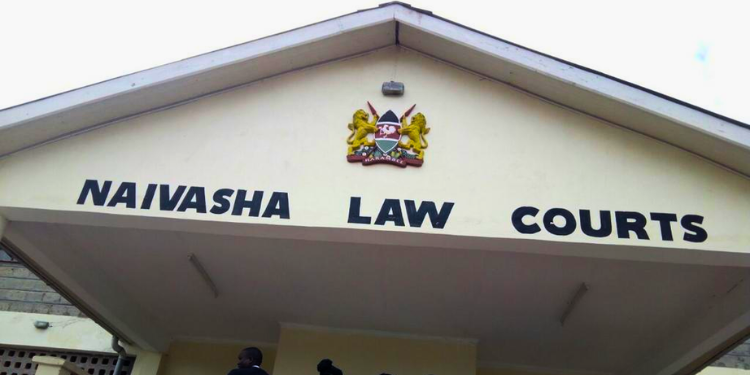
Nine students linked to the deadly Utumishi Girls Academy dormitory fire, which claimed 16 lives, will be held for 21 days at the Nakuru Children’s Remand Home after a Naivasha court denied them bail, allowing detectives more time to complete their investigations.
The case will be mentioned on June 24, 2026.
The minors, who appeared before the Naivasha Law Courts under heavy security, had opposed a prosecution request to detain them for 30 days at the Nakuru Remand Children’s Home.
However, the court ruled that the students be held as investigations continue into one of the country’s deadliest school fires in recent years.
Prosecutors had argued that releasing the suspects at this stage would risk interference with witnesses and compromise ongoing inquiries.
The defense maintained there were no compelling reasons to keep the girls in detention.
The ruling marks a significant step in the case, which has now shifted fully into the criminal justice system following the May 28 tragedy in Gilgil, Nakuru County.
CCTV Evidence and Utumishi Girls Probe Deepens
Investigations into the fire have intensified in recent days, with detectives relying heavily on forensic analysis and CCTV footage recovered from the school.
Prosecutors had told the court that the case was still at a sensitive stage, warning that releasing the suspects could compromise key witnesses and disrupt efforts to piece together events leading to the May 28 tragedy.
Also Read: Where CCTV Cameras Should Not Be Installed Under Kenyan Law
The prosecution also told the court that the police are actively pursuing murder and arson charges among other related charges.
“Every action that is taken within this period, that the court might grant, be also made known to the victims,” said Macharia Mbugua, the victims’ lawyer.
In opposing the application, the defense argued that the accused were students with no capacity to interfere with the investigations and urged the court to allow their release under appropriate conditions.
The DCI also told the court that they need more time to continue their investigations, as they are still pursuing additional suspects believed to have played a role in the plan to set the dormitory on fire.
How Kenyan Law Treats Minors in Serious Criminal Cases
Under Kenyan law, the nine suspects are treated as minors, a status that significantly shapes how the justice system handles both their trial and any possible sentence.
While children can be charged with serious offenses such as murder and arson, the law requires courts to prioritize rehabilitation over punishment.
The Constitution and the Children Act prohibit courts from imposing the death penalty on individuals under 18.
Also Read: GSU Officer’s Family Breaks Silence After Sudden Death Following Madaraka Day Parade
This means that even if the prosecution succeeds in pursuing murder charges, the maximum punishment cannot be execution.
Instead, courts are guided toward custodial and corrective measures designed to reform the child.
If found responsible, the suspects could be committed to a borstal institution or another juvenile rehabilitation facility.
These institutions focus on discipline, education and behavioral change, rather than conventional imprisonment.
The court may also issue custodial orders under structured supervision, with periodic reviews to assess the child’s progress.
In determining any sentence, the court must consider several factors, including the age of the suspects, their level of involvement, and the extent of harm caused.
The law also requires the court to examine whether the child has the capacity for reform and reintegration into society.
Even in serious cases involving loss of life, Kenyan courts are expected to balance accountability with the long-term welfare of the child.
This approach is part of a broader legal principle that children, regardless of the offense, must be afforded an opportunity for rehabilitation and a chance to rebuild their lives.
Follow our WhatsApp Channel and X Account for real-time news updates.