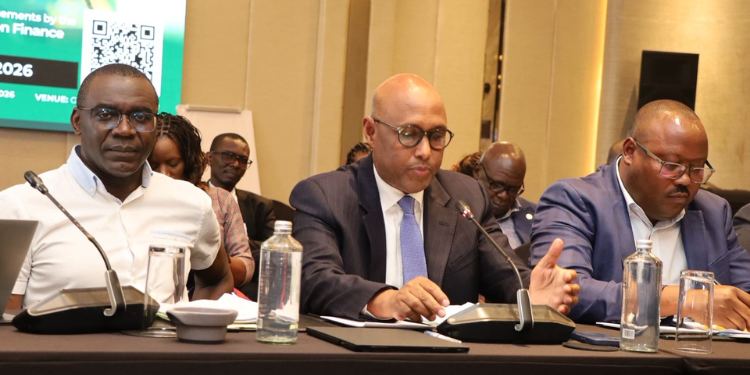
Kenyans are following developments surrounding the Finance Bill 2026, which is currently before Parliament, as debate intensifies over its impact on taxes, businesses, and the cost of living.
The Bill, published on April 30, outlines measures to help the government raise an estimated KSh3.63 trillion in revenue for the 2026/2027 financial year while managing a projected budget deficit of 5.3 percent of GDP, up from 4.7 percent in the previous year.
At the centre of the discussion is how the government plans to balance revenue collection with the need to ease pressure on households and businesses.
Among the most talked-about measures is the plan to exempt low-income earners from Pay As You Earn (PAYE), alongside proposals affecting smartphones, digital payments, and the mitumba sector.
- PAYE Reduction
Kenyans have raised concerns that the expected tax relief for salaried workers is not clearly reflected in the current Bill, saying they had anticipated a restructuring of PAYE tax bands.
Also Read: Finance Bill 2026 Unpacked: Key Tax Changes Every Kenyan Should Know
There are also questions about how the government will offset revenue losses if taxes for low-income earners are scrapped.
The government, however, has reaffirmed its intention to provide relief.
President William Ruto announced that workers earning up to KSh30,000 per month will not pay income tax if Parliament approves the proposal, up from the current threshold where those earning KSh24,000 pay 10 percent PAYE.
The government says the measure is aimed at increasing disposable income, protecting vulnerable workers, and stimulating the economy.
Treasury Cabinet Secretary John Mbadi has cautioned that the move could reduce government revenue by about KSh40 billion, but the administration maintains that supporting low-income earners remains a priority.
- Smartphone Tax
The Finance Bill proposes a 25 percent excise duty on mobile phones, to be charged at the point of activation rather than at importation.
Kenyans have expressed concern that the move could drive up smartphone prices, noting that phones are no longer a luxury but essential tools for communication, business, mobile banking, and access to government services.
Also Read: Treasury Responds to Viral Finance Bill 2026 Tax Claims
There are also concerns about potential double taxation and privacy risks tied to device activation.
The government has clarified that the proposal is not an additional tax, but a replacement of multiple existing charges, including VAT, import duty, and other levies that currently apply to phones.
The government says this new approach is intended to:
- Simplify how phones are taxed
- Eliminate overlapping taxes
- Ensure all devices in use are taxed fairly, including those entering informally
The broader goal, according to the government, is to create a more transparent and predictable system while supporting growth in the digital economy.
- M-PESA Proposals (Digital Payments)
Kenyans have raised concerns over changes affecting mobile money and digital payment services, fearing that the proposals could make transactions more expensive.
Many rely on platforms such as M-PESA for daily transactions, and there are concerns that additional costs could undermine financial inclusion, especially for low-income users.
There have also been concerns about possible new taxes or hidden charges on money transfers.
The government, however, has moved to clarify the issue, saying no new charges are being introduced on M-PESA transactions.
CS Mbadi said the focus of the proposals is on platform providers and digital payment systems, not ordinary users.
“The platforms that we are targeting are these card providers; these people who provide the platform,” Mbadi said.“We are not introducing any other extra charges that are going to affect money transfer through M-PESA,” he added.
According to the government, the changes are meant to clarify how existing tax laws apply to digital service providers, ensuring fairness between fintech companies and traditional financial institutions.
Mbadi says the goal is to reduce ambiguity, improve compliance, and strengthen the digital economy, without increasing the cost of everyday transactions for users.
4. Mitumba Sector Concerns in Finance Bill 2026
The Bill proposes a new tax framework for imported second-hand clothes, commonly known as mitumba, moving to a presumptive tax system at the point of entry.
This has raised concerns among Kenyans who fear the model could be unfair, as it assumes a 5 percent profit margin regardless of whether traders make a profit or incur a loss.
There are also worries that upfront taxes could lead to higher prices, affecting low-income households that depend on affordable second-hand clothing.
The government says the changes are meant to simplify and standardize taxation in the sector.
Under the proposal:
- A 16 percent VAT is charged for importation
- A 5 percent profit margin is assumed
- The profit is taxed at 30 percent as a final tax
The government says this system will:
- Replace multiple and unclear tax demands
- Reduce repeated enforcement and inspections
- Make it easier for traders to plan their businesses
The government adds that the reforms will also help address underreporting and create a level playing field in the sector.
5. VAT Zero-Rated to VAT Exempt
Proposed changes shifting some goods from zero-rated VAT to VAT-exempt status have also drawn attention in the Finance Bill 2026.
Kenyans have expressed concern that this could increase business costs, as businesses may be unable to claim input VAT, potentially leading to higher consumer prices.
The government has defended the changes, saying they are part of broader efforts to streamline the VAT system, close loopholes, and improve tax collection efficiency.
At the same time, officials point out that the Bill includes several relief measures to lower costs and support key sectors.
These include:
- VAT exemptions on dialysis equipment to reduce healthcare costs
- Relief on agricultural inputs and animal feed to support farmers
- Tax incentives for clean energy technologies like solar and electric transport
The government says these measures are intended to support households, reduce production costs, and encourage investment.
- Pension & Data Privacy Issues
Concerns have also emerged regarding pensions and data privacy, particularly regarding proposals that would allow tax authorities to use multiple data sources in tax assessments.
Some Kenyans worry this could lead to misuse of personal financial information or increased surveillance.
The government, however, says the measures are aimed at improving compliance and closing tax loopholes, especially in an increasingly digital economy.
The government has emphasized that:
- Existing data protection laws remain fully in force
- There is no provision granting access to personal mobile money transaction data
On pensions, the Bill proposes full tax exemption on benefits paid to dependants after the death of a contributor, ensuring families receive their entitlements without deductions.
The government says this is intended to strengthen social protection and support households during difficult times.
Treasury Cabinet Secretary John Mbadi is expected to further explain the Finance Bill 2026 proposals during a public discussion on an RMS X Space scheduled for June 4 at 8:00 p.m.
Kenyans have been encouraged to tune in to better understand the proposals and their implications.
Follow our WhatsApp Channel and X Account for real-time news updates.