Kenyans are expressing support for several proposals contained in the Finance Bill and Budget 2026, with education, healthcare, agriculture and social protection emerging as the biggest winners.
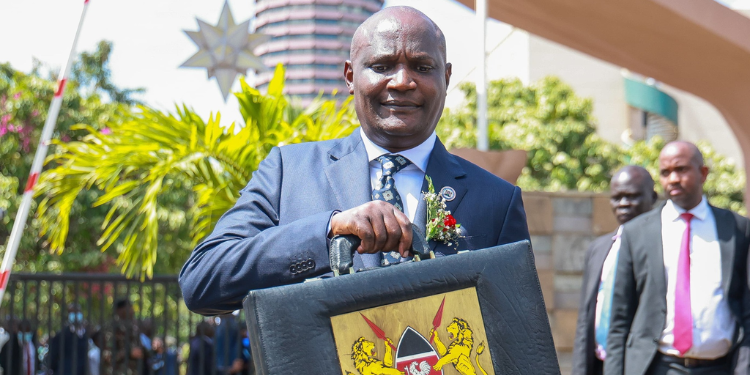
Treasury Cabinet Secretary John Mbadi presented a KSh4.84 trillion budget for the 2026/27 financial year on June 11, one of the largest spending plans in Kenya’s history.
According to public discourse highlights released alongside the budget proposals, citizens, businesses and sector stakeholders have welcomed several spending measures aimed at improving livelihoods, creating jobs and expanding access to essential services.
- Increased Education Funding
Education emerged as the most supported sector, with parents, students and stakeholders welcoming increased funding.
President William Ruto stated the education sector has been allocated KSh784.5 billion in the 2026/27 budget, up from KSh526 billion in the 2021/22 financial year before his administration took office.
Speaking during a church service at the Seventh-day Adventist Church in Kajiado County on June 14, the President noted that the government’s focus on education financing aligns with long-term development goals and that countries have made economic progress.
Kenyans view the allocation as evidence that the government is prioritizing learning, skills development, and the future of young people.
Also Read: Finance Bill 2026: 5 Major Proposals Kenyans Are Talking About
- Allocation Towards Madrasa and Duksi Education
Additional funding for Madrasa and Duksi institutions has been praised by Muslim clerics and community leaders.
Mbadi presented the budget allocation to integrate traditional Dugsi and Madrassa schools into Kenya’s mainstream education system.
The initiative seeks to formalize these community-based Islamic institutions, improve access to quality education, and bridge the gap between religious and formal learning, particularly in Muslim-majority regions.
As part of the KSh4.82 trillion national budget, Mbadi announced that the education sector received the largest share at KSh784.5 billion.
The supporters say the move promotes inclusivity and ensures learners from diverse backgrounds receive greater recognition within the education system.
- Increased HELB and Scholarship Funding
University and TVET students have welcomed increased allocations to the Higher Education Loans Board (HELB) and scholarship programs.
Many believe additional funding will improve access to higher education and ease the financial burden on learners.
Education was the biggest beneficiary of government spending, receiving Sh784.5 billion in the 2026–27 national budget, an increase of Sh81.8 billion from the Sh702.7 billion allocated in the previous financial year.
The allocation accounts for 26.4 percent of the national budget, positioning the sector as the largest recipient of public funding despite concerns from stakeholders about the financing of learning institutions and programs.
Presenting the 2026–27 Budget Statement in the National Assembly, Mbadi dismissed claims that the government was defunding education.
- Conversion of 20,000 Teacher Interns to Permanent Jobs
The government’s plan to convert 20,000 teacher interns into permanent and pensionable employees has received widespread support.
Stakeholders say the move will improve job security while helping address teacher shortages in schools.
Treasury Cabinet Secretary John Mbadi announced that the government will allocate KSh 4.9 billion to facilitate the conversion of 20,000 intern teachers to permanent and pensionable terms beginning in January 2027.
Speaking while presenting the 2026/27 Budget Statement in Parliament, Mbadi said the funding forms part of the government’s effort to address teacher shortages, improve learning outcomes, and strengthen the country’s education sector.
- Continued Fertilizer Subsidy and Increased Seed Allocation
Farmers have backed the continuation of fertilizer subsidies and the increased distribution of seed.
Treasury allocated Sh64 billion to the agriculture sector in the 2026/2027 financial year, channeling funds to national programs that support food security, agricultural production systems, and value chains across the country.
The farmers argue the measures will lower production costs, improve yields and strengthen national food security.
- Increased Healthcare Funding
Many Kenyans have welcomed increased investment in the healthcare sector, particularly funding to support Universal Health Coverage (UHC).
Also Read: Treasury Responds to Viral Finance Bill 2026 Tax Claims
The allocation is expected to support healthcare workers, disease control programs, immunization efforts and critical illness interventions.
Referral hospitals emerged as the biggest winners in the 2026/2027 Health budget, with the National Treasury allocating them Sh45.3 billion, even as the overall ministry allocation rose from Sh138.1 billion to Sh177.2 billion.
Treasury CS said the increased allocation was designed to advance Universal Health Coverage (UHC) and strengthen essential services.
- Increased Social Protection Funding
Vulnerable households have expressed support for increased funding towards cash transfer programs.
The additional resources are expected to strengthen social safety nets for the elderly, orphans and other at-risk groups.
President William Ruto said social protection cannot wait until 2030 when the country is expected to have achieved its economic blueprint, the Kenya Vision 2030.
Speaking when he opened this year’s Kenya Social Protection conference at the Kenya School of Government, Lower Kabete, Nairobi, the President said that development achieved at the expense of, or in exclusion of, social protection will be hollow and fragile.
- Support for Small Businesses (MSMEs)
Small and medium-sized enterprises have welcomed measures to improve access to financing, saying stronger businesses can create jobs and support economic growth.
- Investment in the Blue Economy
The government’s continued investment in fisheries and aquaculture has been seen as an opportunity to create jobs, especially for youth and coastal communities.
President Ruto announced on May 24 that the government is investing more than Ksh.10 billion in various blue economy projects along the Coast.
These include five major fish landing sites along the Kenyan coast at a cost of Ksh.840 million; three fish markets worth Ksh.350 million; 272 modern fishing boats distributed to fishermen across the region; a Ksh.1.5 billion hatchery; and a Ksh.2 billion Shimoni Fish Port, both in Kwale County.
President Ruto said these are intentional investments aimed at strengthening the economic backbone of many families in the region who depend on fishing.
The stakeholders also see it as boosting food security and increasing incomes along the fisheries value chain.
- Funding for Village Elders
The allocation of KSh 3.9 billion for village elders has also been widely welcomed, with citizens viewing it as long-overdue recognition of their role in community leadership and implementation of government programs at the grassroots level.
CS Mbadi proposed the allocation of 3.9B for village elders.
According to Mbadi, the elders will be part of the National Government Administration Officers ( NGAO’S) under the Interior Ministry.
The CS added that the elders would enhance local administration, and the stipend is an appreciation and recognition for the role the play in addressing societal changes and security.
Follow our WhatsApp Channel and X Account for real-time news updates.