
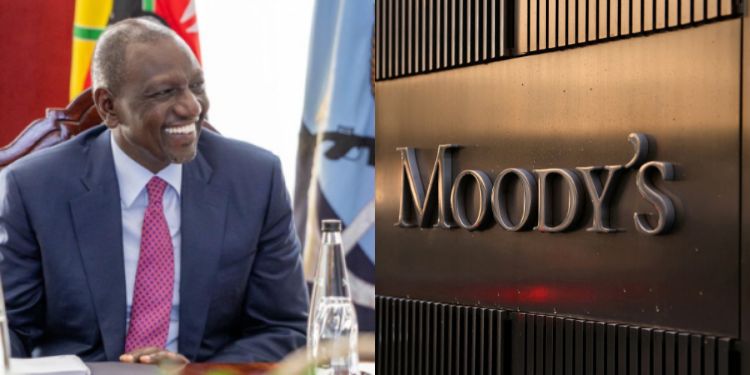
Moody’s Ratings has upgraded Kenya’s long-term issuer ratings, both local and foreign currency, and its foreign currency senior unsecured debt ratings to B3 from Caa1, and revised the outlook to stable from positive.
In a statement on January 27, 2026, the ratings agency highlighted that stronger external liquidity has supported the upgrade.
Kenya’s foreign exchange reserves have risen, the current account deficit has narrowed, and the exchange rate has stabilised. Moody’s noted that the government’s return to external bond markets, including two Eurobond issuances totalling USD 3.0 billion in 2025, has reduced near-term refinancing pressures.
“External liquidity has strengthened, reflected in higher foreign-exchange reserves, a narrower current account deficit, and a more stable exchange rate.”
According to the statement, the rating action also reflects improved domestic financing conditions. Lower borrowing costs and strong investor demand for government securities have enhanced Kenya’s ability to meet fiscal needs locally, reducing reliance on external borrowing.
Despite these improvements, Moody’s emphasised that debt affordability remains weak and fiscal deficits are high, limiting further rating advancement.
Stronger External Liquidity Supports Credit Profile, Moody’s
Kenya’s Eurobond activities in 2025 enabled the government to repurchase USD 1.12 billion in bonds maturing between 2026 and 2028. This smoothed the external maturity profile and pushed the next major bond repayment to 2030.
Moody’s expects the government to continue relying on a mix of external financing sources, including concessional multilateral and bilateral funding, as well as market-based borrowing.
“These developments have eased balance of payments pressures and increased funding flexibility.”
Also Read: New Safaricom Data Bundles Product, Stanbic Bank Changes and Kenya’s Credit Rating Upgrade
The ratings agency cautioned that external liquidity remains sensitive to exchange-rate fluctuations and global financial conditions.
Annual external amortisations of USD 2.5–3.0 billion over the remainder of the decade keep refinancing needs elevated and expose Kenya’s credit profile to shifts in investor sentiment.
Domestic Financing Flexibility and Fiscal Challenges
Additionally, improved domestic liquidity has strengthened Kenya’s ability to fund fiscal needs in the local market.
Also Read: Kenya’s Credit Rating Affirmed at ‘B-’ by Global Agency
Bond auctions have remained oversubscribed, and Treasury bill yields declined from 19.3% to below 18% in December 2025.
Monetary easing and better liquidity transmission supported these conditions.
“Improved domestic financing conditions further support the government’s ability to fund sizeable fiscal needs in the local market, reducing reliance on external financing.”
However, Moody’s noted that high domestic borrowing costs, interest payments absorbing about 40% of revenue, and limited fiscal consolidation constrain debt affordability. The agency projects the fiscal deficit to remain around 6% of GDP, with public debt broadly stable at approximately 67% of GDP.
Follow our WhatsApp Channel and X Account for real-time news updates.