Kenya and China have agreed to strengthen a zero‑tariff trade arrangement aimed at reducing a wide trade gap and improving access for Kenyan goods to the Chinese market.
In a statement on March 24, the Ministry of Foreign Affairs confirmed Kenya’s renewed push, following high-level engagements between the two countries, during which both sides expressed a commitment to improving the trade balance and strengthening investment cooperation.
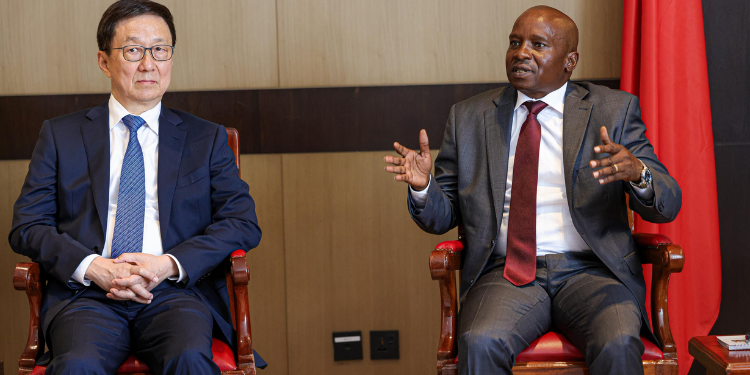
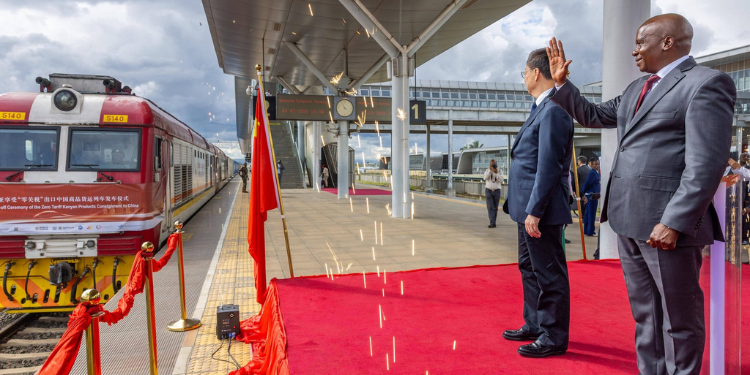
According to the statement, the engagement involved Kenya’s Deputy President, Kithure Kindiki, and China’s Vice President, Han Zheng, with both supporting the zero‑tariff approach as a practical way to increase Kenyan exports and reduce a trade deficit estimated at more than KSh500 billion.
“Kenya’s Deputy President and China’s Vice President lent political weight to efforts to address a trade deficit estimated at over KSh500 billion (USD 4 billion), underscoring the urgency of translating policy agreements into measurable economic outcomes,” read part of the statement.
The Ministry said the discussions focused on ensuring existing trade agreements deliver real economic benefits, especially for Kenyan producers and exporters who have faced challenges accessing the Chinese market on competitive terms.
Zero‑Tariff Access for Kenyan Exports
The Ministry of Foreign Affairs said the zero‑tariff arrangement is expected to increase exports of products that Kenya already produces in large quantities. These include tea, coffee, avocados, macadamia nuts, and horticultural products such as flowers, fruits, and vegetables.
The Ministry said removing import taxes will make Kenyan goods cheaper in the Chinese market and help increase the amount of goods sold to China, which is one of the world’s largest markets.
Even though trade between the two countries has grown over the years, the Ministry said it remains uneven. Kenya continues to buy far more goods from China than it sells, leading to a long‑standing trade imbalance.
In 2024, Kenya imported goods worth about KSh580 billion from China. These imports mainly included machinery, electronics, construction materials, and motor vehicles. During the same period, Kenya exported goods worth about KSh26.6 billion to China.
Most of Kenya’s exports to China are agricultural or partly processed products, while imports from China are mainly finished, high‑value goods. This difference in the type and value of goods traded has played a major role in creating the large trade gap.
The Ministry said the zero‑tariff framework is meant to change this situation over time by increasing exports and encouraging Kenya to process and add value to its products before selling them abroad
Kenya Focuses on Investment and Business Readiness
He said businesses need stronger links with Chinese companies, better product standards, and simpler processes to help them compete in China.
The statement said Kenyan producers will only benefit from the zero‑tariff arrangement if they are ready to meet market requirements, including product quality and consistency.
According to the Ministry, China’s Vice President said that China supports closer economic cooperation and is ready to facilitate the entry of Kenyan goods into the Chinese market and to improve trade logistics and supply chains.
The statement added that China is encouraging its companies to invest in Kenya, especially in areas that support industrial growth and job creation.
Also Read: 79% Digital: Kenya Leverages 5G and Mobile Money to Lead East Africa’s Trade Revolution
Kenya is presenting itself as a regional centre for manufacturing and transport and has invited Chinese companies to invest in areas such as agro‑processing, cold‑storage facilities, light manufacturing, and industrial production.
The investments are being directed to Export Processing Zones and Special Economic Zones, where businesses receive incentives to produce goods mainly for export.
The Ministry of Foreign Affairs said that attracting investment in processing and manufacturing will help Kenya reduce its trade gap by enabling the country to sell higher‑value products rather than raw materials.
The Ministry added that stronger investment cooperation will support the zero‑tariff arrangement by building local capacity, creating jobs, and increasing export earnings.
“While challenges remain in narrowing the trade gap, the coordinated push by Nairobi and Beijing reflects cautious optimism that sustained cooperation anchored in zero‑tariff access and industrial partnerships can gradually rebalance one of Africa’s most significant bilateral economic relationships.”