
National and extra-county schools may soon face limits on the number of students they admit and the streams they operate under, following a motion tabled in the National Assembly.
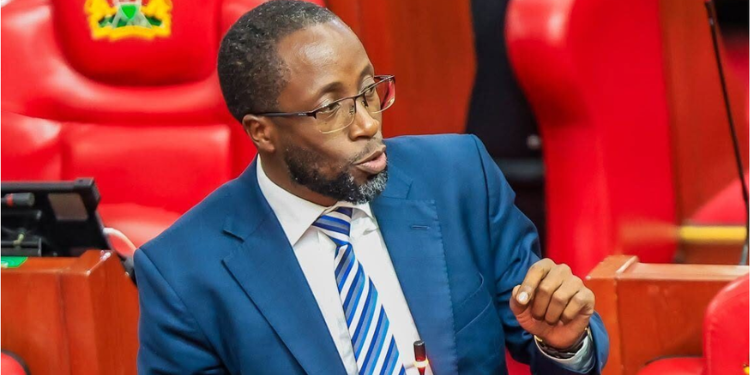
The motion proposed by Kitutu Masaba MP Clive Gisairo calls for changes to the current senior school admissions and funding system, arguing that overcrowding in top-performing schools has stretched infrastructure, increased teachers’ workload and affected the quality of learning under the Competency-Based Curriculum (CBC).
Gisairo says although Kenya has expanded access to education over the years, enrolment remains heavily concentrated in Category One (C1) and Category Two (C2) schools, leaving many Category Three (C3) and Category Four (C4) schools with vacant spaces.
He says many parents continue to choose national and extra-county schools because of their better infrastructure, boarding facilities and academic performance.
Senior School Admissions: MPs Seek Cap on Grade 10 Intake, School Streams
Gisairo said some Category One (C1) and Category Two (C2) schools admitted more students than they were designed to accommodate during the first placement of Grade 10 learners into senior schools in January 2026.
At the same time, many Category Three and Category Four schools recorded low enrolment despite having enough space to accommodate more learners.
“Parental preference for Category One (C1) and Category Two (C2) schools, due to their improved infrastructure and boarding facilities, has led to over-enrolment in those institutions,” Gisairo said.
“During the inaugural admission of Grade 10 learners into senior schools under the Competency-Based Curriculum (CBC), some C1 and C2 schools admitted learners at more than double their approved capacity. This trend has left many Category Three (C3) and Category Four (C4) schools severely under-enrolled, with some operating below their viable enrolment capacity.”
According to the motion, the Ministry of Education introduced an online learner placement portal in December 2025 to streamline school transfers and broaden access to available spaces.
However, the MP says many learners, especially those from rural areas, still face digital barriers that limit access to the platform.
“We are aware that Kenya’s education sector has faced escalating infrastructure pressures, culminating in overstretched facilities, particularly in boarding schools. Concerned that, despite the introduction of an online learner placement portal in December 2025 by the Ministry of Education to widen access and expedite transfers among schools, there continues to be an inequitable outcome disproportionately disadvantaging rural learners who suffer digital exclusion,” he said.
Also Read: Govt Mulls Changing University and Colleges Funding to Guaranteed Student Loans: How It Will Work
What the Motion Proposes on Senior School Admissions
The MP now wants the Ministry of Education, together with other government agencies, to revise the capitation formula so that funding is based on each school’s infrastructure capacity instead of enrolment alone.
He says the changes would help distribute learners more evenly across different categories of schools.
The motion also proposes limits on the number of streams schools can operate.
If approved:
* Category One (C1) schools will be limited to 10 streams.
* Category Two (C2) schools will have a maximum of eight streams.
* Category Three (C3) schools will be limited to five streams.
* Category Four (C4) schools will have a maximum of three streams.
Each stream will also be capped at 40 learners.
Also Read: Principals Take Stand on Push to Introduce Same Uniforms for All Kenyan Schools
Funding Model Questioned
Gisairo also wants the government to review the current capitation formula, which allocates funding based on the number of learners enrolled in each school.
He says the model does not account for the actual infrastructure available in schools, allowing some institutions to admit more learners to receive higher capitation.
According to the motion, overcrowding has pushed teacher-to-learner ratios beyond the recommended one teacher for every 40 students, increased teacher burnout, reduced individual learner attention, and put pressure on classrooms, dormitories and other facilities.
The motion also says congestion has raised safety concerns, particularly during emergencies.
Upgrading C3 and C4 schools
The motion also calls for faster infrastructure development in Category Three and Category Four schools.
The proposed improvements include additional classrooms, laboratories, ICT hubs, boarding facilities, sanitation amenities and other essential infrastructure.
Gisairo says improving facilities in C3 and C4 schools will make them more attractive to parents and reduce pressure on national and extra-county schools.
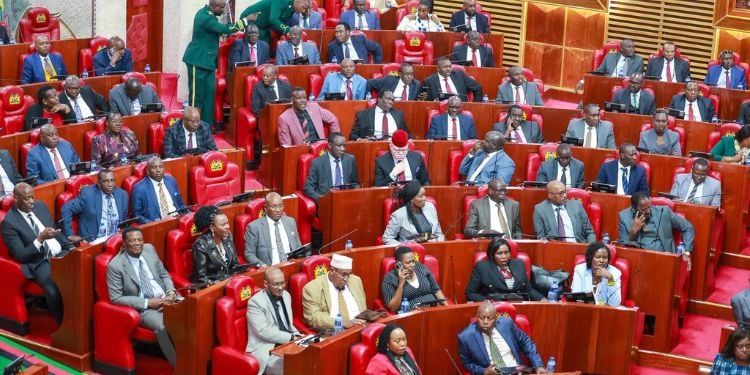
If adopted by the House, the proposals will change how learners are distributed among senior schools, how public schools receive capitation funding and how infrastructure projects are prioritized across the education sector.
Follow our WhatsApp Channel and X Account for real-time news updates.